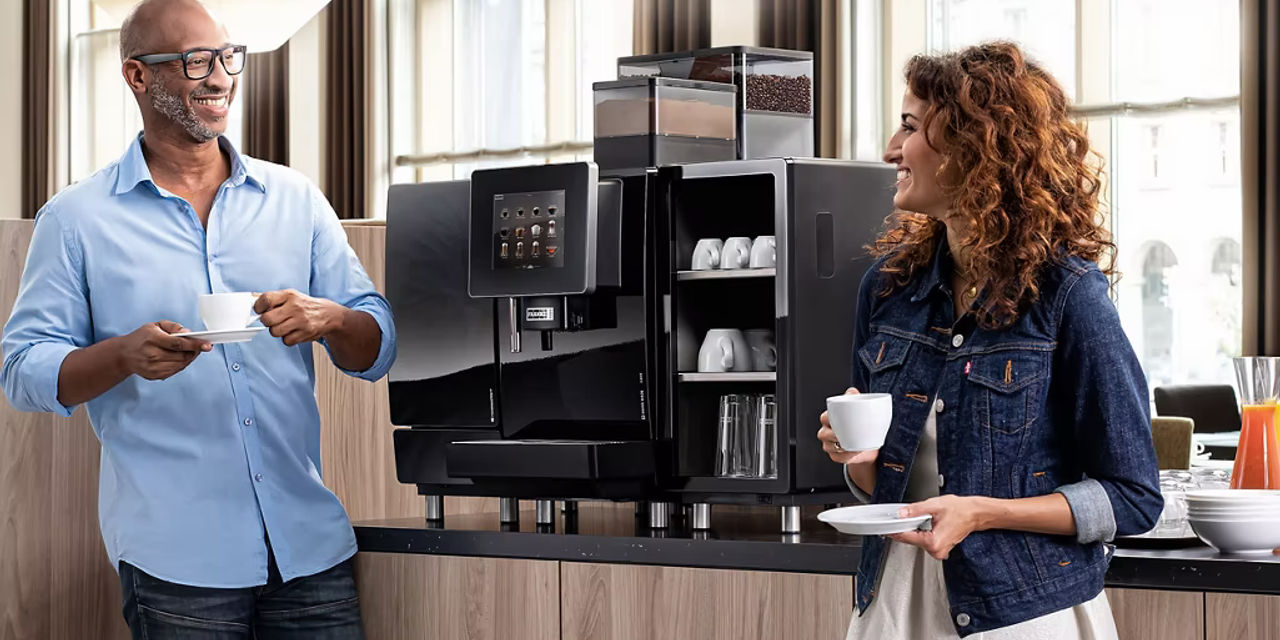
Commercial Coffee Machines & Programs in Canada: Bean‑to‑Cup ROI for Cafés, QSR, and C‑Stores
See how Canadian cafés, QSRs, and c‑stores use commercial coffee machines to earn 80%+ gross profit with 6–12 month payback. Compare coffee programs, machine types, and ROI with TFI.

Commercial coffee has shifted from an add‑on beverage to one of the most profitable programs in Canadian foodservice, with well‑designed programs often reaching 80%+ gross profit and 6–12 month equipment payback. With the right commercial coffee machines and menu strategy, cafés, QSRs, and c‑stores can turn coffee into a reliable profit engine instead of a side category.
This guide explains how to design a high‑margin coffee program in Canada, which machine types fit different concepts, and how TFI and Franke bean‑to‑cup systems help operators go from bean to measurable ROI. For a deeper dive into restaurant‑specific setups, see TFI’s Guide to Franke Coffee Machines for Restaurants in Canada.
Quick Comparison: Coffee Programs by Concept
Different concepts need different coffee setups, even when they use similar bean‑to‑cup technology.
Concept Type | Typical Daily Cups | Machine Style | Main Goals |
|---|---|---|---|
Independent cafés | 120–300+ | Super‑automatic + steam wand or hybrid | Quality, variety, latte art, specialty beverages |
QSR / fast casual | 80–250 | Fully automatic bean‑to‑cup | Speed, consistency, minimal training |
C‑stores / gas bars | 40–200 | Self‑serve bean‑to‑cup kiosk | Grab‑and‑go convenience, low labour |
Hotels & offices | 50–150 | Compact bean‑to‑cup | 24/7 reliability, simple operation |
For concept‑specific planning and checklists, explore:
Coffee shop startup roadmap: Coffee Shop Equipment List: Start a Café in Canada
Freshness, labour, and ROI advantages: Benefits of Bean to Cup Coffee Machines
How automation boosts restaurant ROI: How Coffee Automation Boosts Restaurant ROI
You can also compare brands and machine categories in TFI’s guide to the Best Commercial Coffee Equipment Companies in Canada.

Why Bean‑to‑Cup Coffee Wins in Canada
Bean‑to‑cup systems grind whole beans on demand and brew each drink fresh, which improves flavour, consistency, and perceived value for guests. For Canadian operators, this technology also simplifies staffing and supports scalable coffee programs across multiple locations.
Key advantages:
Freshness and quality: Whole beans are stored in sealed hoppers and ground seconds before brewing, preserving volatile oils and aroma compounds that standard batch brewing can waste.
Labour savings: Super‑automatic Franke systems create barista‑style drinks at the touch of a button, significantly reducing the need for advanced barista training and allowing general staff to run the program.
Menu variety: With multiple hoppers, flavour options, and milk systems (including cold foam), the same platform can produce hot, iced, and specialty beverages that support premium pricing.
Franke A Series and S Series platforms offered by TFI are engineered for Canadian foodservice environments, with automatic cleaning, modular add‑ons, and high cup capacities suited to rush periods. To see current models, visit TFI’s Automatic Bean to Cup Coffee Machines page.
The ROI Math: From Bean to Payback
A commercial coffee program should be evaluated with simple, transparent math: cups per day, average selling price, ingredient cost, and labour impact. TFI and Franke programs in Canada are typically designed to deliver both strong margins and fast payback periods.
Typical performance benchmarks:
80%+ gross profit per cup when using premium beans and consistent recipes.
6–12 month equipment payback, depending on daily cup volume, menu mix, and labour savings from automation.
Example scenarios:
A c‑store selling around 80 cups per day can often pay off a compact Franke A400 Fresh Brew in under a year when priced and promoted correctly.
A busy café or QSR serving 150–250 cups per day with upsells like iced beverages, syrups, and larger sizes typically recovers the cost of a mid‑ or high‑capacity unit within 6–12 months.
TFI’s team builds custom ROI models that factor in selling price, ingredient costs, labour time per drink, and upsell strategies such as flavours, alternative milks, and cold foam. For a practical example of budget and ROI planning, see the Coffee Shop Equipment List guide.

Best Commercial Coffee Machines for Cafés, QSR, and C‑Stores
Franke A Series: High‑Performance Bean‑to‑Cup Workhorses
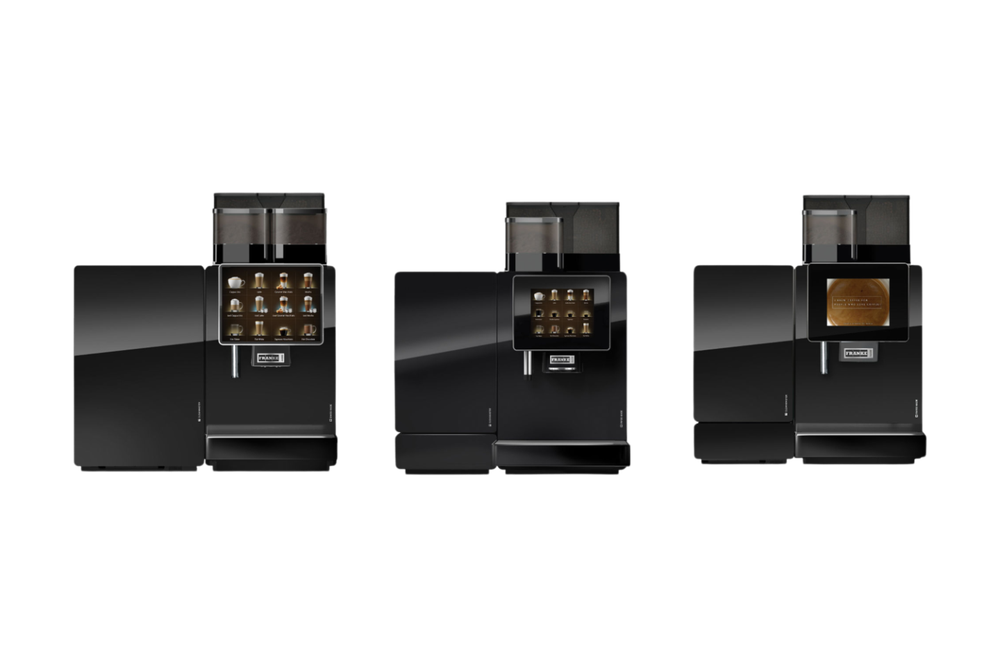
The Franke A Series is TFI’s primary bean‑to‑cup platform for Canadian cafés, QSRs, c‑stores, hotels, and workplace coffee programs. These machines combine Swiss engineering with automation to deliver consistent, high‑margin beverages across a wide range of concepts.
Highlights:
A400 Fresh Brew: Compact unit designed for up to roughly 100 cups per day, ideal for smaller cafés, offices, and low‑ to mid‑traffic locations.
A600 & A800 Fresh Brew: Mid‑ to high‑volume systems capable of approximately 170–250 cups per day, with multiple hoppers and support for both hot and iced drinks.
A1000 & A1000 Flex: Premium models with FoamMaster milk technology and iQFlow extraction, built for up to 300 cups per day and complex beverage menus.
Key A Series technologies include:
On‑demand grinding and sealed hoppers for freshness and flavour consistency.
Automatic CleanMaster systems that simplify daily cleaning and support strong food‑safety practices.
Modular add‑ons such as flavour stations, refrigerators, and payment integrations that can be customized over time.
Explore the full lineup at Franke Bean to Cup Commercial Coffee Machines in Canada.

Franke S700: Hybrid Craft + Automation for Specialty Cafés
The Franke S700 blends super‑automatic brewing with a traditional steam wand, making it ideal for specialty cafés that want latte‑art flexibility plus the consistency of automation. It allows operators to protect beverage quality during peaks while still giving baristas control over milk texture and presentation.
What sets the S700 apart:
Capacity of up to around 160 cups per day, balancing specialty café volume with premium presentation.
Super‑automatic espresso extraction paired with a manual steam wand, so staff can create micro‑foam and latte art while automating shot quality.
Learn more at the Franke S700 Commercial Coffee Machine page.

Designing Your Coffee Program: Cafés vs QSR vs C‑Stores
Independent Cafés and Bakery‑Cafés
Independent cafés need equipment that supports signature drinks, consistent quality, and efficient workflows in tight spaces. They often target higher average checks and repeat visits with seasonal beverages, plant‑based options, and specialty foam.
Typical setup:
A Franke A600, A800, or S700 as the primary espresso and coffee engine, depending on daily cup volume and menu complexity.
Supporting equipment such as grinders for limited manual offerings, refrigerated milk modules, and flavour stations to execute seasonal menus.
This configuration lets cafés lean on automation during peak times while still offering crafted beverages when service allows. For a full roadmap, review TFI’s Coffee Shop Equipment List: Start a Café in Canada.
QSR and Fast Casual Restaurants
QSRs prioritize speed, consistency, and minimal training overhead, especially in high‑traffic breakfast and drive‑thru environments. Coffee needs to integrate seamlessly into broader menu operations without adding friction for staff.
Program design priorities:
One‑touch drink selection to keep queues and drive‑thru lines moving quickly.
Tight integration into breakfast and all‑day menus, including combos and upsell prompts at the POS.
Simple cleaning processes and clear maintenance routines that fit into existing closing checklists.
Many QSR concepts in Canada deploy mid‑ to high‑capacity A Series machines to support 150+ cups per day with minimal staff intervention. For capacity bands and model comparisons, see the Guide to Franke Coffee Machines for Restaurants in Canada.
Convenience Stores and Gas Stations
C‑stores need coffee programs that run almost like self‑checkout: intuitive, reliable, and attractive at any hour. Because many locations operate with lean staffing, equipment must be easy to clean and robust enough for high self‑serve usage.
Key features to prioritize:
Self‑serve touchscreens that guide guests through hot and iced options with clear visuals.
Configurations that support multiple cup sizes, quick cleaning, and small footprints near the front counter.
Durable components designed for extended hours and frequent customer interaction.
TFI currently serves more than 94% of Canadian convenience store chains with specialty equipment, using that experience to design profitable coffee programs that mirror the success of frozen beverage platforms.

How TFI Supports Your Coffee Program End‑to‑End
Program Design: From Beans to Menu Board
TFI helps operators design coffee programs that connect equipment decisions with menu, operations, and ROI. This includes sizing machines correctly, planning daypart strategies, and aligning coffee quality with brand positioning.
Areas TFI supports:
Matching machine capacity and model to projected traffic, dayparts, and growth plans.
Building a beverage lineup (hot, iced, espresso‑based, seasonal) tailored to Canadian consumer trends.
Planning layout and workflow, including placement relative to ordering, pickup, and self‑serve beverage islands.
For strategy content on automation and coffee trends, see the article on How Coffee Automation Boosts Restaurant ROI and TFI’s broader coffee business guide.
Installation, Training & Service
The value of a coffee program depends on uptime, consistency, and guest experience. TFI’s service model is designed to support long‑term performance across Ontario and Atlantic Canada.
With TFI, operators benefit from:
Factory‑certified technicians who install and calibrate Franke systems to local utility and foodservice standards.
Staff training for daily operation, cleaning cycles, and basic troubleshooting to protect beverage quality.
Planned‑maintenance subscriptions and OEM‑quality service that help prevent outages and extend equipment life.
For an overview of TFI’s role as Canada’s largest Franke supplier, see Canada’s #1 Franke Commercial Coffee Machine Supplier.

Frequently Asked Questions (FAQ)
Are commercial bean‑to‑cup coffee machines worth it in Canada?
For most cafés, QSRs, and c‑stores, bean‑to‑cup systems are worth it because they combine premium quality with 80%+ gross profit per cup and a typical payback window of roughly 6–12 months. Operators also benefit from reduced training time, lower waste, and consistent recipes that support loyalty, upselling, and multi‑unit scalability.
How do I choose the right Franke machine for my location?
Start with projected daily cup volume and menu complexity, then match capacity and features accordingly. Smaller venues often choose the A400, mid‑volume operations lean toward the A600 or A800, and high‑volume or premium concepts typically prefer the A1000 or S700 for maximum flexibility.
TFI’s team can recommend specific models and configurations based on your floorplan, utilities, staffing model, and growth plans. Use the Franke Coffee Machines Restaurant Guide as a starting point.
Can I run a coffee program without baristas?
Yes. Franke super‑automatic and bean‑to‑cup machines are designed so non‑barista staff can produce consistent, high‑quality beverages using intuitive touchscreens. This makes coffee programs viable for QSRs, c‑stores, and smaller teams that cannot support dedicated barista roles.

Ready to Build a High‑ROI Coffee Program?
A well‑designed coffee program can anchor your breakfast business, increase average ticket size, and drive repeat visits across multiple dayparts. The right combination of bean‑to‑cup equipment, menu strategy, and service support turns coffee into a predictable ROI driver instead of a risky capital expense.
To move from idea to implementation:
Explore TFI’s Franke lineup and compare models at Canada’s #1 Franke Commercial Coffee Machine Supplier.
Review detailed specs for the Franke A Series and Franke S700.
Plan your full café or restaurant setup with the Coffee Shop Equipment List: Start a Café in Canada.
If you’re comparing brands, use TFI’s overview of the Best Commercial Coffee Machines & Brands in Canada.
Partnering with TFI for commercial coffee machines and programs in Canada gives you a clear path from bean selection to measurable ROI, backed by national‑brand experience and category‑leading equipment. To get a free equipment quote, reach out to TFI today!

Nicole Camposeo-Cheung is the Director of Marketing, People & Culture at TFI Food Equipment Solutions, Canada’s leading provider of premium commercial foodservice equipment. She combines her expertise in business management and fashion arts to foster a dynamic, innovative, and people-centric corporate culture. Passionate about empowering teams, building strong client relationships, and driving growth through creativity and collaboration, Nicole plays a key role in shaping TFI’s brand and workplace culture. She also shares her industry expertise and insights through the TFI blog, helping foodservice professionals stay informed about the latest trends, best practices, and innovations in commercial food equipment.
Add a comment
This will be publicly visible.
Your email address will not be published.
Your comment will be reviewed by an admin before it is published.


