
Commercial Gas Flat Top Grill: A 2026 Buyer's Guide for Canadian Operators
A Canadian operator's buyer guide to commercial gas flat top grills, covering specs, sizing, BTU output, total costs, and how Taylor two-sided gas grills outperform traditional single-sided flat tops.

A commercial gas flat top grill is one of the most productive pieces of equipment in any high-volume Canadian kitchen, capable of cooking burgers, breakfast plates, sandwiches, vegetables, and proteins on a single uninterrupted surface. With Canadian foodservice sales reaching $101.4 billion in 2025 and burgers and sandwiches still leading the most-ordered eating-out items, the right gas griddle is foundational to throughput, food cost control, and menu flexibility in 2026. This guide breaks down the specs, sizing logic, total cost of ownership, and brand-level differences that matter for restaurants, food trucks, c-stores, and ghost kitchens in Ontario and Atlantic Canada.
Looking to spec a gas grill for your kitchen? Request a free equipment consultation from TFI's team in Mississauga or Dartmouth, or browse Taylor commercial gas grills available in Canada.
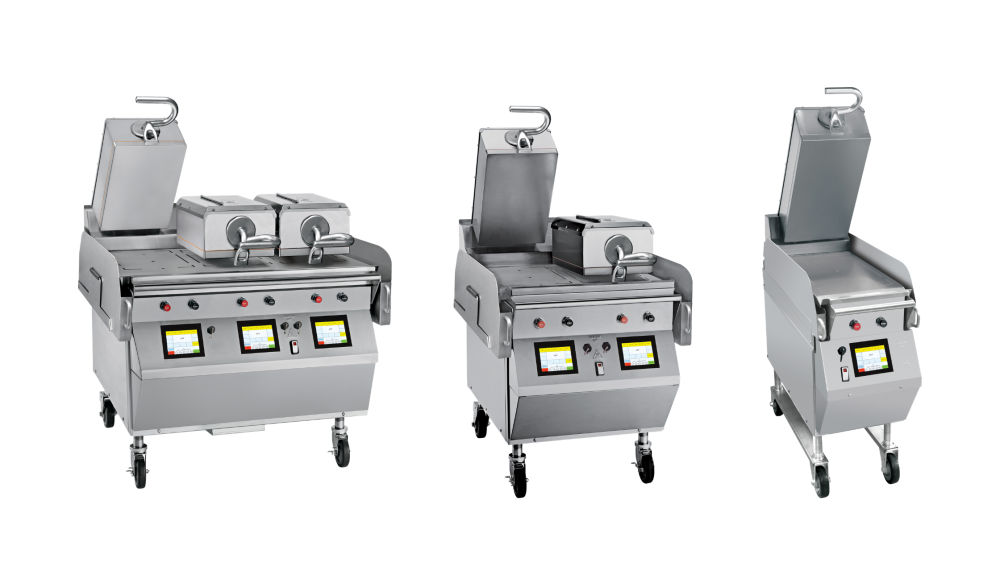
What Is a Commercial Gas Flat Top Grill (and Why Operators Choose Gas)
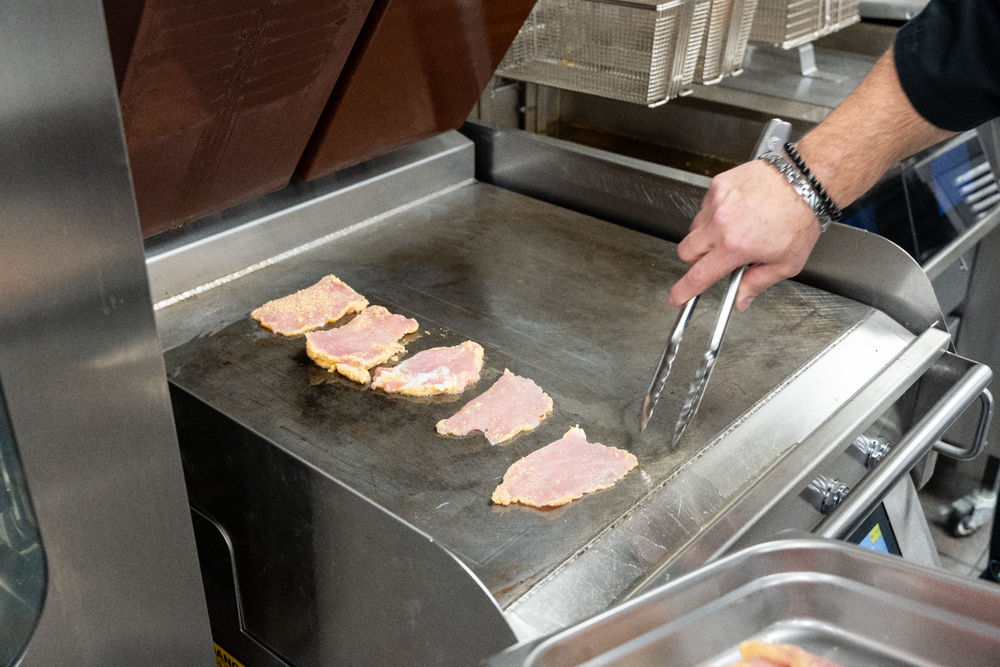
A commercial gas flat top grill, also called a gas griddle or restaurant flat top, is a heavy-duty cooking surface heated by natural gas or liquid propane burners located beneath a steel or chrome plate. The flat plate distributes heat evenly across the cooking area, allowing operators to cook eggs, pancakes, smash burgers, philly steaks, vegetables, and grilled sandwiches simultaneously without flame contact. Gas models heat faster, recover faster after a load of cold proteins hits the surface, and run on a fuel source that is often less expensive per BTU than electricity in most Canadian provinces.
The global commercial griddle category is sized at USD 1.45 billion in 2025 and projected to grow at a 5.88% CAGR through 2033, driven by quick-service expansion, breakfast daypart growth, and the continued rise of menu items that depend on flat-top execution. In Canada specifically, QSR held 53% market share in 2025, with burger, sandwich, and breakfast formats leading the segment. Most of those QSR concepts run on a gas flat top.
Commercial gas flat top grills account for the majority of new griddle purchases in Canadian QSR and breakfast-focused operations because gas heats faster, recovers faster, and typically costs less per BTU than electric in Ontario, Quebec, and Atlantic Canada.
Operators choose gas over electric for four practical reasons: faster preheat times (typically 8 to 12 minutes versus 15 to 20 for electric), faster heat recovery during peak rush, lower per-BTU operating costs in most provinces, and the ability to install in kitchens where the electrical service cannot support a 208V or 240V high-amperage griddle circuit.

Gas vs. Electric: Which Is the Better Investment for Canadian Operators
The gas-versus-electric question is the first decision in any flat top spec. Both produce excellent food. The difference shows up in throughput, utility costs, and where you can put the unit. The table below summarises the practical trade-offs for a Canadian operator running breakfast, lunch, or all-day service.
Factor | Gas Flat Top | Electric Flat Top |
|---|---|---|
Preheat time | 8 to 12 minutes | 15 to 20 minutes |
Heat recovery after a cold load | Faster (open burner heat) | Slower (element conduction) |
BTU output range | 60,000 to 180,000+ BTU | 5,000 to 12,000 watts (17,000 to 41,000 BTU equivalent) |
Operating cost per hour | Generally lower in ON, NB, NS, PEI, NL | Higher in most provinces |
Installation | Requires gas line and Type I or Type II hood | Requires 208/240V high-amp circuit; sometimes hood-free |
Best fit | High-volume, all-day service, food trucks (with propane) | Front-of-house cooking, demo kitchens, small footprint operations |
For most Canadian QSR, breakfast, and burger operations, gas is the default because it handles peak rush better. Electric flat tops are a strong choice for operations where ventilation is limited, where the kitchen is buildout-constrained, or where natural gas is not available. If you are torn between the two, run a one-year utility comparison using your local rates against the unit's BTU or wattage rating; the number tends to point clearly in one direction.
The 7 Specs That Define a Quality Commercial Gas Flat Top Grill
Not all commercial gas flat top grills are built the same. The specs below are what separate a grill that lasts five years from one that lasts fifteen, and what determines whether you can run breakfast, lunch, and dinner without bottlenecks.

1. Plate Material: Steel, Chrome, or Composite
Steel is the workhorse plate material used in the majority of commercial gas flat tops. It is durable, holds seasoning, sears well, and tolerates heavy scraping. Chrome plates are polished steel with a chrome layer that reflects heat back to the food, holds temperature more evenly, and is dramatically easier to clean. Chrome plates also keep the kitchen cooler because less radiant heat escapes upward, which is a meaningful comfort factor in Ontario summer kitchens with limited HVAC. Composite plates (steel-aluminum-steel sandwiches) are newer and offer faster recovery and more even heat distribution at a higher purchase price.
2. Plate Thickness: 1/2", 3/4", or 1"
Plate thickness is the spec most operators underestimate. Thicker plates store more heat, recover faster after a cold load, and hold temperature steady across high-volume service. Half-inch plates are common on entry-level countertop units and are fine for breakfast lines that work primarily with eggs, pancakes, and sandwiches. Three-quarter-inch plates are the standard for QSR and full-service operations. One-inch plates are built for high-volume burger and steak operations and rarely warp under heavy use.
3. BTU Output and Heat Zones
BTU output is the heating power of the unit. Industry guidance for commercial grilling is 75 to 100 BTUs per square inch of cooking surface for fast, consistent recovery. A 36-inch commercial gas flat top grill typically runs three burners totaling 75,000 to 90,000 BTU. A 48-inch unit runs four burners at 100,000 to 120,000 BTU. Look for one burner per 12 inches of width to ensure independent zone control. This lets you run a 350°F egg zone, a 400°F pancake zone, and a 450°F burger sear zone on the same plate.
4. Surface Area and Sizing
Common commercial gas flat top grill widths are 24, 36, 48, 60, and 72 inches. Sizing should be driven by peak hour cover counts, not average covers. The sizing framework below works for most Canadian operators.
5. Control Type: Manual vs. Thermostatic
Manual controls are valves that adjust burner intensity from low to high. Thermostatic controls hold the plate at a precise set temperature regardless of load, which is essential for delicate items (eggs, fish) and consistent cook times across operators. For QSR and breakfast volume, thermostatic is the better investment; the unit cost premium is recovered quickly through reduced food waste and consistent product.
6. Construction Quality and Mobility
Look for stainless steel front, sides, and splash guards (not painted steel), heavy-gauge welded construction, removable grease trays large enough to hold a full shift of runoff, and 4 to 6 inch legs or casters depending on whether the unit is countertop or freestanding. Food trucks and ghost kitchens benefit from caster-mounted units that can be repositioned for cleaning behind and underneath.
7. Ventilation and Hood Compatibility
Almost every commercial gas flat top grill in Canada requires a Type I (grease) hood with mechanical exhaust, a fire suppression system, and approval from your local fire inspector. Some smaller countertop electric griddles are vent-hood-optional under specific conditions, but virtually no gas unit qualifies. Plan ventilation cost into your equipment budget; a Type I hood and suppression system can add $8,000 to $20,000 to a kitchen build-out depending on size and configuration.

Sizing Your Commercial Gas Flat Top Grill: A Capacity Framework for Canadian Kitchens
Choosing the right size is the second most common spec mistake after underestimating plate thickness. Use the framework below as a starting point, then adjust for menu mix and peak-hour cover concentration.
Operation Type | Peak Hour Covers | Recommended Width | BTU Range |
|---|---|---|---|
Food truck or ghost kitchen | 30 to 60 | 24 inch | 50,000 to 65,000 BTU |
Small cafe or breakfast spot | 60 to 100 | 36 inch | 75,000 to 90,000 BTU |
QSR, mid-volume restaurant, c-store kitchen | 100 to 200 | 48 inch | 100,000 to 120,000 BTU |
High-volume burger or breakfast operation | 200 to 350 | 60 inch | 130,000 to 150,000 BTU |
Multi-station QSR or banquet kitchen | 350+ | 72 inch or dual 48 inch | 160,000 to 220,000 BTU |
Two practical rules of thumb. First, never spec at average volume; spec at the busiest 90 minutes of your busiest day. Second, if your menu includes smash burgers, add 25% to the recommended width because smash burgers occupy roughly twice the plate area per cover (one ball flattens to roughly twice the diameter of an unsmashed patty).
What's the ROI of a Commercial Gas Flat Top Grill?
Burger and sandwich programmes built around a properly sized commercial gas flat top grill can deliver 60% to 70% gross food cost margins.
ROI on a flat top is driven by four levers: cover throughput per hour (a thicker, hotter plate cooks faster), food cost percentage (consistent temperature reduces waste), labour cost (one operator can work a 48-inch zone-controlled grill across breakfast, lunch, and dinner menus), and menu expansion (adding smash burgers, breakfast sandwiches, or grilled paninis to a menu that did not previously offer them).
Why Canadian Operators Are Upgrading from Single-Sided Flat Tops to Taylor Two-Sided Gas Grills
For 60+ years, TFI Food Equipment Solutions has been Canada's largest supplier of specialty foodservice equipment, partnering with virtually every major QSR chain and thousands of independent operators. Over the past decade, the most significant shift in flat top grilling has been the move from single-sided manual gas flat tops to two-sided clamshell gas grills, especially among burger, breakfast sandwich, and smash burger operators.
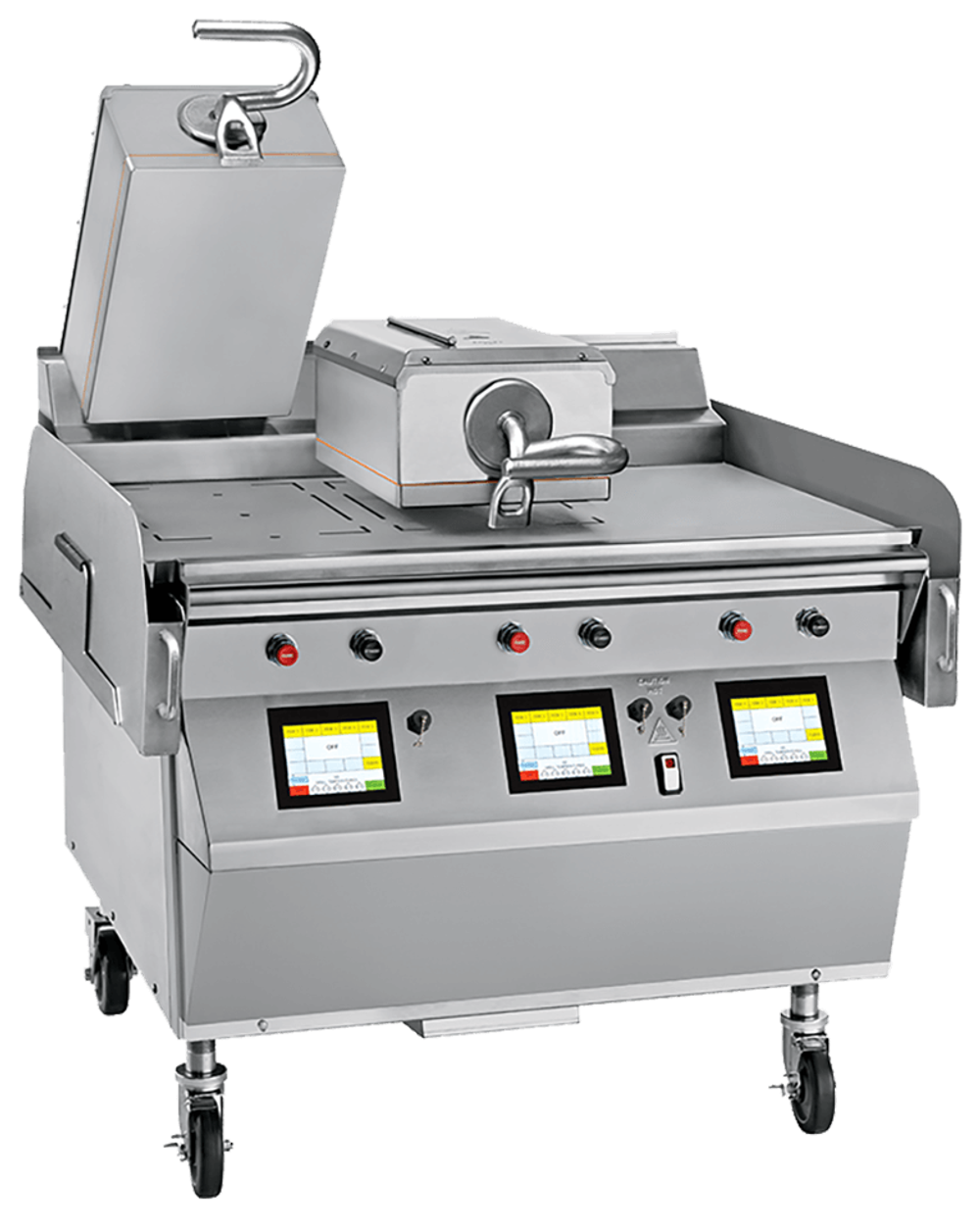
Taylor's commercial gas grill lineup is built around two-sided clamshell units that cook food simultaneously from above and below. The result, according to Taylor's published performance data, is a frozen patty that cooks two-thirds faster than on a traditional single-sided flat grill or charbroiler. For a Canadian operator running 300 burger covers at lunch, that throughput gain translates directly into shorter ticket times, lower labour cost per cover, and the ability to handle peak rush without adding a second cook station.
Taylor's gas-powered two-sided grill lineup includes:
Model L811 (gas lower, electric upper, three platens, 36 inch): The high-output workhorse for QSR and burger concepts, with programmable microprocessor controls, dual-zone capability, and automatic gapping that adjusts the upper platen to product thickness.
Model L813: A two-platen gas configuration for moderate-volume operations.
Model L820, L821, L822: Gas-bottom variants for kitchens that need full gas operation including the upper platen.
Browse TFI Canada's commercial gas grill lineup today.
Two-sided clamshell gas grills earn the upcharge through three measurable benefits. Cook time drops by roughly 66% on burgers and most proteins. Product consistency improves because both sides of the food contact heat at controlled pressure. And programmable controls eliminate the operator-to-operator cook variance that plagues manual flat tops. Taylor units sold through TFI come with sales, installation, training, and 24/7 factory-certified service across Ontario and Atlantic Canada.
For operators specifically targeting smash burgers (a category that continues to drive QSR growth in Mississauga and the GTA into 2026), TFI's commercial flat top grill for smash burgers guide covers Maillard reaction science, the 5-second smash rule, and full ROI modelling on the Taylor L813.
Buying New vs. Used: What to Look For
For operators with tight build-out budgets, certified used commercial gas flat top grills can deliver 40% to 60% savings versus new at the cost of remaining service life. The economics work when three conditions are met: the unit is from a manufacturer with strong parts availability (Taylor, Vulcan, Star, Wolf, Garland, MagiKitch'n), the unit has been refurbished to factory spec, and it carries a written parts-and-labour warranty.
TFI's used restaurant equipment programme sources off-lease and trade-in units, refurbishes them with OEM parts, and ships them with warranty coverage. For food trucks, ghost kitchens, and seasonal patio operations, used can be the right call (we cover the full mobile build-out in our food truck and ghost kitchen equipment guide). For permanent kitchens with 10+ year operating horizons, new generally pays back faster through utility savings and lower service spend.
If buying used outside the TFI programme, request the unit's service history, walk through the burner ignition sequence, check the plate for warping with a straight edge, and inspect the grease management system for corrosion. Avoid units that have been stored outdoors or have visible rust on the burner box.
Cleaning, Maintenance, and Total Cost of Ownership

A well-maintained commercial gas flat top grill lasts 12 to 20 years; a poorly maintained one fails in 4 to 6. Daily, weekly, and quarterly maintenance is what separates the two outcomes.
Daily: scrape the plate after every shift while the surface is still warm (between 200 to 250°F), apply a thin layer of food-grade oil to season the plate, empty and clean the grease tray, and wipe down the splash guards. Weekly: deep clean the plate using a manufacturer-approved griddle stone and food-safe degreaser, inspect burner ports for clogging, and clean the grease trough thoroughly. Quarterly: have a factory-certified technician verify burner output, calibrate thermostats, inspect gas connections, and clean the burner box.
For step-by-step daily cleaning instructions, including the chemical-free salt-and-water method that protects steel and chrome plates, see TFI's how to clean a Taylor grill guide.
Total cost of ownership over a 10-year horizon includes purchase price (15 to 25% of TCO), gas utility cost (35 to 45%), labour for cleaning and maintenance (10 to 15%), parts and service (10 to 15%), and end-of-life disposal or trade-in (5%). The largest single line is utility cost, which is why the 80 to 100 BTU per square inch sizing rule and a thicker plate often save more over a decade than the upfront price difference.
Ontario and Atlantic Canada: Local Service and Installation Notes
In Ontario and the Greater Toronto Area, gas flat top installation requires a TSSA-licensed gas fitter, a Type I commercial hood (sized to the grill plus any adjacent open-flame equipment), and approval from the local building department and fire prevention office. Mississauga, Toronto, Hamilton, Oakville, Brampton, and Ottawa each have specific permit pathways; budget 4 to 8 weeks from order to commissioning for a new build. TFI's Mississauga showroom offers live demos of the Taylor L811, L813, and L820 alongside installation quotes through our Mississauga restaurant equipment team.
In Atlantic Canada, gas installations in Halifax, Dartmouth, Moncton, Charlottetown, and St. John's follow provincial safety codes (NSUARB in Nova Scotia, OFC in New Brunswick) and require licensed gas technicians for natural gas connections. Propane is more common in rural Atlantic operations and food trucks, which simplifies installation in many cases. The Dartmouth restaurant equipment team handles equipment quotes, installation, and 24/7 service across Nova Scotia, New Brunswick, PEI, and Newfoundland & Labrador.
Commercial Gas Flat Top Grill Cheat Sheet
Operator Question | What to Spec | TFI Equipment or Programme Action |
|---|---|---|
What size do I need? | 24" food truck, 36" cafe, 48" QSR, 60" high-volume burger | Free sizing consultation through TFI's contact form |
Gas or electric? | Gas for QSR and high-volume; electric for hood-restricted spaces | Taylor gas commercial grills lineup |
How do I cut cook time on burgers? | Two-sided clamshell with programmable controls | Taylor L811, L813, or L820 (cooks 66% faster than single-sided flat tops) |
How do I protect margins? | Thermostatic controls, thick plate, programmable controls | Taylor profit programme: 70-80% gross profit margins |
New or used? | New for permanent kitchens; certified used for food trucks or budget builds | TFI used equipment with warranty |
How do I finance it? | Lease-to-own or rental for cash flow protection | |
Who services it? | Factory-trained, OEM parts, 24/7 emergency response | TFI repair services across Ontario and Atlantic Canada |
The single most consequential decision in spec'ing a commercial gas flat top grill is plate thickness combined with burner BTU per square inch. Get those two right and the unit will run consistently across breakfast, lunch, and dinner for a decade or more.
Frequently Asked Questions
What is the best commercial gas flat top grill in Canada?
The best commercial gas flat top grill in Canada is the one matched to your peak-hour throughput, menu, and ventilation constraints. For high-volume burger and breakfast operations, Taylor's two-sided gas clamshell grills outperform traditional single-sided flat tops by cooking up to two-thirds faster with programmable controls and dual-zone capability. For mid-volume operations, a 48-inch single-sided gas flat top with thermostatic controls and a three-quarter-inch plate is the standard.
What kind of griddle do restaurants use?
Most Canadian restaurants use commercial gas flat top grills with thermostatic controls, three-quarter-inch steel plates, and 75,000 to 120,000 BTU output depending on operation size. QSR and high-volume burger concepts increasingly use two-sided clamshell gas grills (such as the Taylor L811 or L813) because they cook faster and deliver more consistent product. Smaller cafes and food trucks typically run 24 to 36 inch countertop units.
What makes a grill commercial grade?
A commercial-grade gas flat top grill is built to operate 10 to 14 hours a day, 7 days a week, for 12 to 20 years. The defining specs are heavy-gauge stainless steel construction, BTU output of 75 to 100 BTU per square inch of cooking surface, plate thickness of three-quarters of an inch or more, thermostatic temperature control, food-safe certification (NSF or equivalent), gas safety certification (CSA in Canada), and the availability of OEM parts and factory-certified service from a national supplier. Residential gas griddles meet none of these standards.
What are the downsides of a commercial gas flat top grill?
The main downsides are high installation cost (Type I hood and gas connection can add $8,000 to $20,000), ventilation requirements that constrain placement, lack of grill marks (charbroilers handle that), and the daily and weekly cleaning workload required to keep the plate seasoned and food-safe. Two-sided clamshell grills mitigate some of these (faster cook times and more consistent product) but cost more upfront. For most QSR and burger operators, the throughput and ROI gains far outweigh the trade-offs.
How much does a commercial gas flat top grill cost in Canada?
Commercial gas flat top grills in Canada range from roughly $1,200 for entry-level 24-inch countertop manual units to $25,000+ for 72-inch thermostatic and two-sided clamshell models. Most QSR and full-service operators spec into the $3,500 to $9,000 mid-tier range (36 to 48 inch, thermostatic, three-quarter-inch plate). TFI offers lease-to-own financing and rentals so operators can preserve working capital while securing the equipment they need.
Gas or electric: which commercial flat top grill is better for a Canadian restaurant?
Gas is the better choice for the majority of Canadian restaurants and QSR operations because it heats faster, recovers faster after a cold load, and typically costs less per BTU than electric across Ontario, Quebec, New Brunswick, Nova Scotia, PEI, and Newfoundland & Labrador. Electric flat tops are preferable in three scenarios: when the kitchen has no gas line, when ventilation hood capacity is limited, or when the unit will be used in a front-of-house demo or small-footprint setting.
What size flat top grill do I need for a food truck or restaurant?
Spec your flat top by peak-hour cover count, not average. A food truck or ghost kitchen with 30 to 60 peak covers needs a 24-inch unit. A small cafe or breakfast spot with 60 to 100 peak covers needs 36 inches. A QSR or mid-volume restaurant with 100 to 200 peak covers needs 48 inches. A high-volume burger operation with 200 to 350 peak covers needs 60 inches. If your menu includes smash burgers, add 25% to the recommended width because smashed patties occupy more plate area per cover.
How do I clean and season a commercial gas flat top grill?
Daily cleaning happens at the end of each shift while the plate is still warm (200 to 250°F). Scrape the plate with a flat scraper, wipe with a grill cloth, apply a thin layer of food-grade oil to maintain the seasoning, empty the grease tray, and wipe down the splash guards. Weekly, deep-clean the plate with a manufacturer-approved griddle stone and food-safe degreaser. For Taylor flat top and two-sided grills, follow the chemical-free salt-and-water method covered in TFI's Taylor grill cleaning guide referenced earlier. Re-season the plate after every deep clean by heating to 350°F and applying multiple thin oil layers.
Take the Next Step
TFI Food Equipment Solutions supports Ontario, Nova Scotia, New Brunswick, Prince Edward Island, and Newfoundland and Labrador with sales, installation, training, rentals, leasing, and 24/7 OEM-quality service. Whether you are spec'ing your first commercial gas flat top grill for a food truck, scaling up to a 60-inch Taylor two-sided clamshell for a high-volume QSR, or planning a multi-unit rollout across the GTA or Atlantic provinces, our equipment specialists model the throughput, utility cost, and ROI before you sign a quote. We are Canada's leading distributor of Taylor, Franke, Henny Penny food equipment, and we maintain over 100 factory-trained technicians for ongoing service across our five-province coverage area.
Ask for an equipment demo at our Mississauga or Dartmouth showroom, or request a free quote today.

Nicole Camposeo-Cheung is the Director of Marketing, People & Culture at TFI Food Equipment Solutions, Canada’s leading provider of premium commercial foodservice equipment. She combines her expertise in business management and fashion arts to foster a dynamic, innovative, and people-centric corporate culture. Passionate about empowering teams, building strong client relationships, and driving growth through creativity and collaboration, Nicole plays a key role in shaping TFI’s brand and workplace culture. She also shares her industry expertise and insights through the TFI blog, helping foodservice professionals stay informed about the latest trends, best practices, and innovations in commercial food equipment.
Add a comment
This will be publicly visible.
Your email address will not be published.
Your comment will be reviewed by an admin before it is published.


