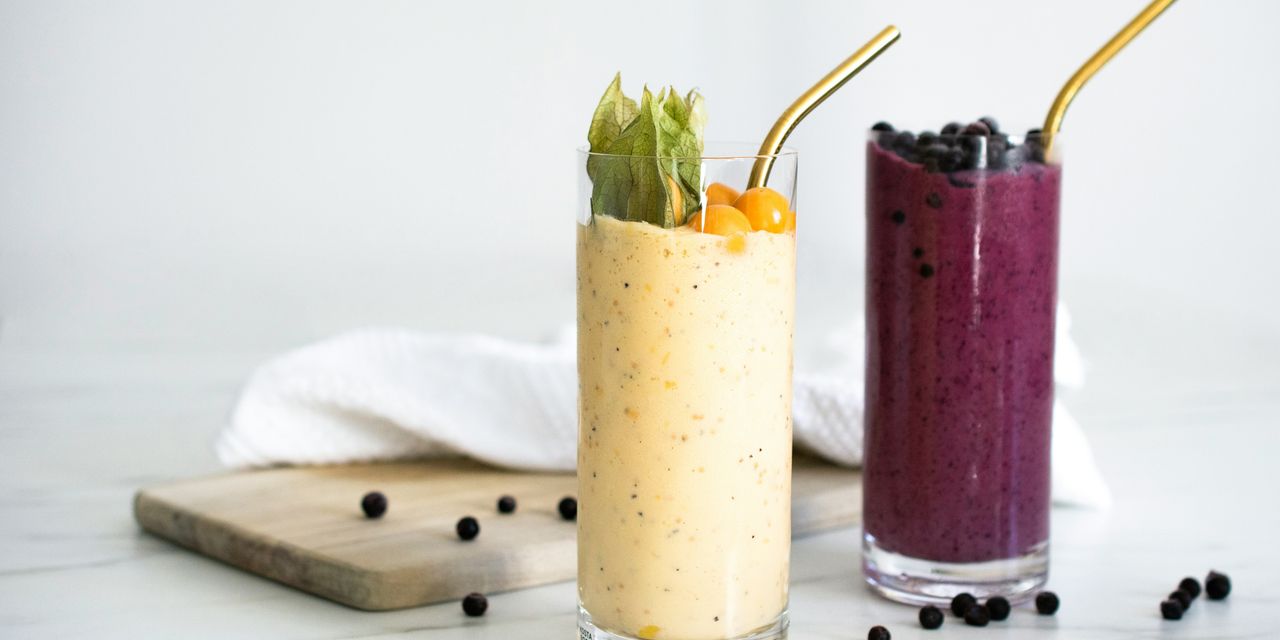
Commercial Machines for Smoothies: A 2026 Buyer's Guide for Canadian Operators
A 2026 buyer's guide to choosing the right commercial machine for smoothie service in Canada, covering blender vs frozen freezer formats, profit margins, payback periods, and the Taylor and Icetro equipment behind the country's fastest growing beverage programmes.

Choosing the right commercial machine for smoothie service in 2026 is one of the highest impact equipment decisions a Canadian foodservice operator can make. The Canada smoothies market is on track to reach USD 571.6 million by 2030, growing at a 9.3% compound annual rate, and the broader Canadian foodservice category cleared $96.5 billion in 2024 sales per Statistics Canada. Demand for cold, functional, and lower sugar beverages is reshaping menus across quick service, convenience, fitness, and grocery foodservice. This guide explains the two main equipment paths, the profit math behind a smoothie programme, and the specific Taylor and Icetro machines TFI Canada installs and services across Ontario and Atlantic Canada.
Looking to launch or upgrade a smoothie programme? Request a free equipment consultation from TFI's team in Mississauga or Dartmouth and get a same week capacity and ROI plan.
What Counts as a "Commercial Machine for Smoothie"?
A commercial machine for smoothie service is any equipment built for high volume, all day duty cycles, NSF or ETL sanitation listings, and three phase or single phase power suited to a foodservice kitchen, not a residential one. In practice, Canadian operators choose between two distinct equipment categories, and the right answer depends on volume, labour model, and how customizable the menu needs to be.
The first category is the high power commercial blender: a countertop unit with a heavy duty motor, sound enclosure, and a single jar that staff load with fresh ingredients per order. The second category is the frozen smoothie freezer: a closed system with one or more refrigerated cylinders that hold a pre mixed smoothie base, freeze it to a soft serve consistency, and dispense it to order with the pull of a handle.
Both categories belong on this shortlist. The wrong choice locks operators into either too much labour per cup or too little menu flexibility, and the difference shows up in margin within the first quarter.
The Canada smoothies market is forecast to add nearly USD 200 million in revenue between 2024 and 2030, and the operators capturing that growth are the ones matching equipment format to volume from day one.
The Two Equipment Paths: Blender vs Frozen Smoothie Freezer
The decision between a commercial blender and a frozen smoothie freezer comes down to how a smoothie reaches the customer. Each path has clear strengths.
High power commercial blenders prepare each smoothie individually from fresh or frozen ingredients. They handle a custom menu, accommodate ingredient swaps, and let staff add boosters like protein, collagen, or greens powders by request. The trade off is labour: every cup requires a staff member, every cup requires a cleaned jar, and throughput in peak windows is bounded by how fast a single operator can portion, blend, and pour.
Frozen smoothie freezers prepare smoothies in batches by holding a pre measured base in a refrigerated cylinder, churning it to a consistent semi frozen texture, and dispensing on demand. Throughput is far higher (a single barrel can serve hundreds of 12 oz cups before needing a refill), labour collapses to a one second pull, and the in cup experience is consistently thick because the texture is engineered, not whisked. The trade off is menu rigidity: the cylinder dispenses the recipe loaded into it, so operators rotate flavours weekly or daily rather than building each cup to order.

Most successful Canadian smoothie programmes run a hybrid. A frozen smoothie freezer dispenses two or three high volume signature recipes at speed; a single high power blender backstops the menu for premium build your own orders. This pairing converts walk by traffic at peak hours and protects margin on customisation upcharges.
Operators planning a frozen beverage line should also review how slush machines work, since frozen smoothie freezers and slush machines share the same refrigeration logic and many of the same operational requirements. The cold beverage habit itself is also deepening into winter, with 21% of past day cups now ordered cold even in December.
Capacity, Output, and Footprint: Matching the Machine to Your Volume
The single biggest mistake operators make is buying for opening day volume rather than month six volume. A smoothie machine that runs at 90% capacity by week three is a choke point; one that runs at 30% capacity all year is dead capital. The right size sits in the middle and leaves room for menu growth.
Use these planning benchmarks when evaluating a commercial machine for smoothie production:
Under 50 cups per day: A single high power commercial blender is the right starting point. Capital outlay is the lowest, the menu is fully flexible, and one trained staff member can run the station. Convenience locations adding smoothies as a small auxiliary line typically start here.
50 to 200 cups per day: A single barrel frozen smoothie freezer paired with a backup blender. The freezer carries the volume on a one or two flavour signature menu while the blender absorbs custom orders. This is the sweet spot for QSR add ons, hotel breakfast programmes, and gym/fitness centre cafes.
200 to 500 cups per day: A two or three barrel frozen smoothie freezer. Multi flavour variety becomes the differentiator and the labour savings versus all blender service start to compound.
500+ cups per day: A multi barrel frozen smoothie freezer plus dedicated blender stations for premium SKUs, supported by automated cleaning cycles. Smoothie focused QSRs and dedicated juice bars sit in this band.
Footprint matters as much as throughput. Countertop frozen smoothie machines typically occupy 18 to 30 inches of linear counter space; freestanding floor models require more square footage but free up counter for prep. Map the equipment against ventilation, drainage, and electrical access before committing, and confirm the machine's BTU output fits the kitchen's HVAC plan, especially for refrigerated units in summer service.

For operators evaluating a full beverage line, TFI also publishes a slush machine business guide that covers many of the same volume planning questions for adjacent frozen beverage formats.
Profitability: Margins, Payback, and the Math Behind a Smoothie Programme
Smoothies are one of the highest margin beverage categories on a Canadian menu when the equipment, recipe, and pricing line up. Frozen beverage programmes built around Taylor equipment typically deliver 70-80% gross profit with payback in 6 to 18 months, depending on volume and price point.
The economics work because three cost lines all push in the operator's favour:
Cost of goods. A 16 oz smoothie made from a frozen base or quality fresh/frozen fruit and dairy or plant milk runs $1.10 to $1.80 in food cost. Sold at $7.50 to $9.50 in most Canadian markets, the gross margin sits comfortably above 75%.
Labour per cup. A frozen smoothie freezer cuts labour from roughly 90 seconds per blender drink (load, blend, pour, rinse jar) to under 10 seconds per dispense. At even modest cup volumes, that delta funds the equipment.
Waste. Pre mixed bases dispensed from a refrigerated cylinder produce near zero waste compared with hand built smoothies, where ingredient overpours and unfinished jars are routine.
A frozen smoothie freezer running 100 cups per day at a $4 contribution margin clears roughly $144,000 per year in incremental gross profit, on equipment that often pays back inside a single fiscal year.
For a single location adding a smoothie line for the first time, the cleanest way to confirm the math is to model it for the actual menu, hours, and price point on the books. TFI's team will build that ROI projection at no cost as part of any equipment quote, which is why most operators ask for a free consultation before settling on a format.
Operators looking for the broader profit case on adjacent frozen menu items can also review TFI's analysis of soft serve profit margins for Canadian foodservice.

Health, Sugar, and Functional Beverage Trends Canadian Operators Should Plan For
Canadian smoothie demand is being pulled forward by two related consumer shifts: a structural move toward functional beverages, and an active retreat from added sugar. Both shifts favour operators with the right equipment.
Functional beverages, which include protein, electrolyte, gut health, and immunity drinks, are now consumed regularly by 80% of Gen Z and 75% of millennials according to Innova Market Insights, and the broader North America functional beverage market reached USD 58 billion in 2025 and is forecast to grow at 6.12% through 2031. For an operator, this translates to a willingness to pay $1 to $3 in upcharges for protein boosters, plant based milks, greens powders, or adaptogen add ins, which compound the per cup margin substantially.
The sugar story matters even more for the smoothie category specifically. Roughly 66% of consumers report shifting to lower sugar options, and 18% of new cold beverage launches in 2024 carried zero sugar claims, three times the share in 2017. Operators answering this trend with portion controlled, recipe verified frozen smoothie programmes (rather than ad hoc blender drinks of unknown sugar content) win the customer who reads the menu carefully.
The same operators are also seeing the cold beverage habit deepen year round, which mirrors what TFI observed in its broader Canadian consumer food trends report. Smoothies are no longer a summer category; they are a daily protein and breakfast replacement for a generation that orders cold even in February.
Taylor Frozen Uncarbonated Beverage Freezers: The Workhorse Format
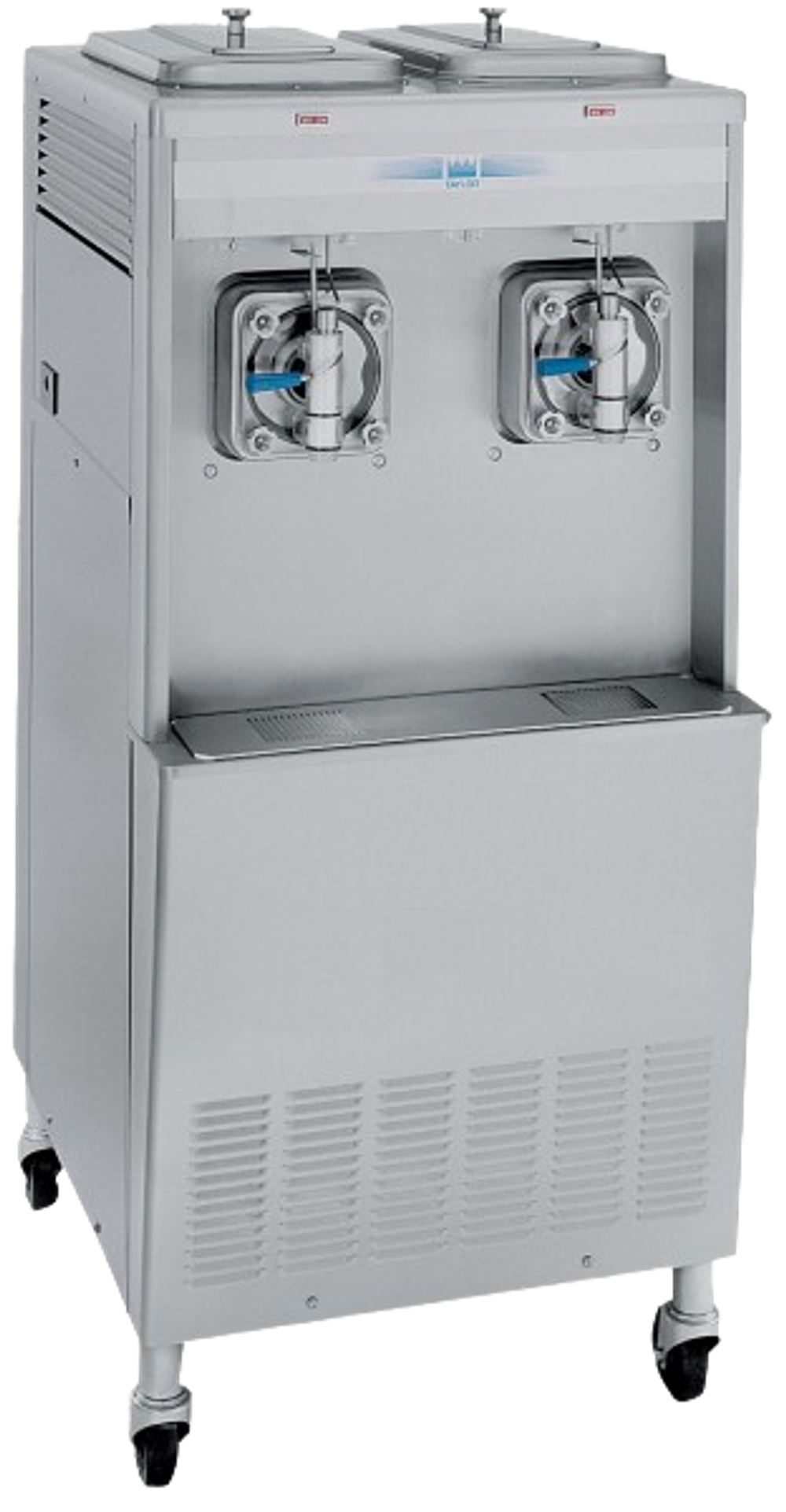
Taylor's frozen uncarbonated beverage freezers are the format Canadian QSR operators reach for when they need a smoothie line that runs reliably through a 12 hour shift, in a footprint that fits behind a service counter, and on a refrigeration platform that holds product at safe temperature for hours of standby between dispenses. TFI Canada is the authorized distributor for the full Taylor frozen uncarbonated beverage freezer line across Ontario and Atlantic Canada.
What makes the Taylor format the workhorse choice for smoothies:
Refrigeration that protects the recipe. Taylor's compressors hold the cylinder at a consistent serving temperature whether the machine dispenses 200 cups a day or sits idle for two hours between rushes. That consistency is what stops smoothie texture from drifting between the morning rush and the after work pickup window.
Self pasteurizing options on select models. Heat treatment cycles let operators run dairy based smoothie recipes without daily teardown, which is the single biggest labour saver in a multi ingredient programme.
Dispense control. Portion controlled draws keep the cup yield consistent, which removes the most common source of margin leak: overpours.
Service network depth. Every Taylor machine TFI installs is supported by factory trained, annually certified technicians using genuine OEM parts, with 24/7 emergency repair available for the cold side equipment a smoothie programme depends on.
The Taylor frozen uncarbonated platform also shares parts, training, and service routes with Taylor's soft serve and milkshake equipment. For operators planning a multi format frozen beverage menu, the operational simplicity of one brand and one service relationship is meaningful.
Icetro Smoothie and Slush Machines: The Flexible Counter Option
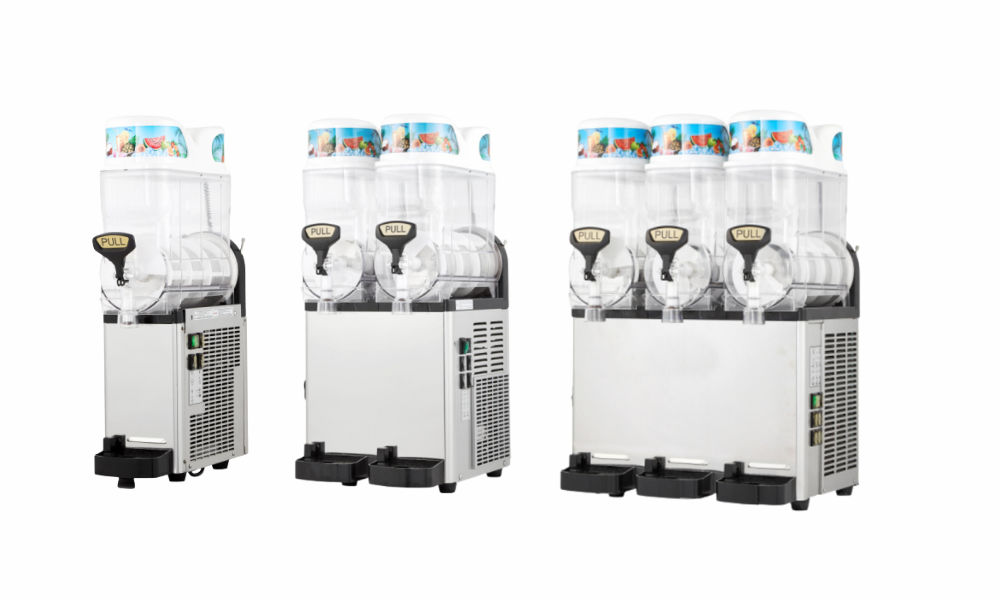
Icetro builds the format Canadian operators turn to when they need a flexible, technician friendly, lower capital alternative that still delivers a true commercial duty cycle. TFI is the Canadian distributor for the Icetro smoothie and slush machine line, including the SSM series.
The Icetro SSM platform covers three production tiers:
SSM-180: Single barrel countertop unit with a 3.2 gallon (~12 litre) bowl. Right sized for cafe, fitness centre, hotel breakfast, and convenience smoothie programmes serving up to a few hundred cups per day on a single signature flavour.
SSM-280: Two bowl countertop unit with 6.4 gallons total capacity (3.2 gallons per bowl). The two flavour format suits operators rotating a fruit forward smoothie alongside a protein or green base.
SSM-420: Three barrel premium model with 3.2 gallons per barrel. Built for higher volume programmes that need three concurrent flavours or a slush, smoothie, and frozen lemonade rotation under one footprint.
What Canadian operators tell TFI they value in the Icetro platform:
Technician friendly serviceability. Icetro's design philosophy makes routine cleaning and component access straightforward, which keeps in house staff productive and reduces service call frequency.
Metal gear motors and rapid freezing cycles. Components are built for commercial duty cycles, and the freeze down time after refilling means less idle counter time during a rush.
Overnight refrigeration mode. Operators can hold product safely overnight without a full daily teardown, dropping morning prep time substantially.
Tropical climate rating. The cooling system holds performance in warm kitchens and patio service environments common in Ontario and Atlantic summers.

Need a commercial smoothie machine? Get a free quote from TFI today!
Service, Warranty, and Total Cost of Ownership
The price on the equipment quote is only one line of the total cost of ownership. The line that determines whether a smoothie programme stays profitable in year three is service: how fast the machine is back in production after a fault, who supplies the parts, and whether the technician is trained on the specific brand and model on the counter.
TFI's service position is built around three commitments operators should ask any equipment dealer to match before signing:
24/7 emergency repair on cold side equipment. Frozen smoothie machines that go down during a peak rush convert directly to lost margin. TFI's service team supports emergency calls around the clock, which is one of the reasons over 100 experienced technicians (averaging close to a decade of tenure each) carry factory certified badges renewed annually. Operators can submit a service request online for both planned and emergency work.
Genuine OEM parts only. Aftermarket components are cheaper on the line item but cost more per service call once compatibility and warranty issues compound. TFI's repair service uses genuine Taylor and Icetro parts on every job.
Planned maintenance contracts. TFI Total Care planned maintenance programmes catch wear items (gaskets, seals, scraper blades, belts) on a schedule rather than at failure, which protects equipment lifespan and keeps the programme on its original payback curve.
For operators not ready to commit capital, equipment rentals and leasing keep the smoothie line cash flow positive from month one. Certified pre owned Taylor and Icetro inventory is also available for budget conscious launches.
Ontario and Atlantic Canada: Smoothie Machines
Smoothie programme design plays out differently across TFI's service area, and local context matters when sizing equipment.
In Ontario, the GTA's QSR and convenience density drives the highest cup volumes per location. Operators in Mississauga, Toronto, Brampton, Hamilton, and surrounding markets typically run two or three barrel frozen smoothie freezers paired with high power blenders, and they rotate signature SKUs aggressively to compete on novelty. TFI's Mississauga showroom demos both Taylor and Icetro smoothie equipment and supports installation, training, and service across Ontario.
In Atlantic Canada, programmes lean toward single or two barrel countertop units placed in cafe, gym, hotel breakfast, and convenience environments serving 50 to 200 cups per day. Halifax, Dartmouth, Moncton, Charlottetown, and St. John's see strong year round demand on protein and breakfast positioned smoothies, with the summer tourism wave pulling fruit forward and frozen lemonade rotations into peak service. TFI's Dartmouth location covers Nova Scotia, New Brunswick, PEI, and Newfoundland and Labrador with sales and field service.
Trend → Action → Equipment Cheat Sheet
Use this table to translate the demand signals operators are seeing in 2026 into a specific equipment decision.
Consumer Trend | What to Do Next | Equipment or Programme Action |
|---|---|---|
Functional beverage demand from Gen Z and millennials | Add a protein or greens forward signature smoothie to the menu | Taylor frozen uncarbonated beverage freezer for portion controlled, consistent dispense; programmes deliver 70-80% gross profit with 6-18 month payback per the Taylor profit programme |
Lower sugar and zero sugar beverage shift | Launch a recipe verified, lower sugar smoothie line with clear nutrition info | Pre mixed base dispensed from a frozen smoothie freezer protects the recipe; pair with a fresh blender for build your own custom orders |
Year round cold beverage habit | Run smoothies as a daily breakfast and afternoon SKU, not just a summer add on | Icetro SSM-180 or SSM-280 countertop unit holds product safely overnight, ready for morning rush |
Multi flavour variety as differentiator | Rotate two to three smoothie flavours per shift | Icetro SSM-280 (two bowl) or SSM-420 (three barrel) for concurrent flavours under one footprint |
Labour cost pressure across QSR | Cut per cup labour with dispense over blend | Frozen smoothie freezer dispense reduces per cup labour from ~90 seconds to under 10 seconds |
Tight capital budgets in expansion phase | Open the smoothie line without a large capital outlay | Equipment rentals and leasing on Taylor and Icetro units, or certified pre owned inventory |
Service uptime as the margin protector | Build service into the original equipment plan | TFI Total Care planned maintenance + 24/7 emergency repair on cold side equipment |
Operators who match equipment format to their actual cup volume and pair it with a service contract from day one capture the full 70-80% gross profit window. Operators who oversize, undersize, or skip service are the ones who let the category's margin slip into the labour line.
FAQs
What is the best commercial machine for smoothies?
The best commercial machine for smoothies depends on volume and menu format. For under 50 cups per day with a fully customisable menu, a high power commercial blender is the right starting point. For 50 cups per day and above with a signature menu, a frozen smoothie freezer (Taylor frozen uncarbonated platform or Icetro SSM series) delivers far higher throughput and lower per cup labour, which is why the Canadian smoothies category is forecast to reach USD 571.6 million by 2030 on equipment built for that growth. TFI's team will scope the right machine to your specific cup target.
What equipment do I need to start a smoothie shop or smoothie programme?
A standalone smoothie shop typically needs a frozen smoothie freezer (one to three barrels depending on flavour count), one or two backup high power blenders for custom orders, a refrigerated prep table for fresh ingredients, an undercounter ice machine, a POS, and a cup and lid dispenser. For an add on smoothie line inside an existing cafe or QSR, a single Icetro SSM-180 or Taylor frozen uncarbonated unit on the back counter usually covers the volume. The full restaurant equipment list TFI uses with new operators is available on the TFI restaurant equipment list.
How do smoothie shops get their smoothies so thick?
Commercial smoothie shops achieve thick, scoopable texture through one of two methods. High power blenders use blades spinning at 25,000 to 30,000+ RPM combined with a generous proportion of frozen fruit and ice to crush ingredients into a thick suspension. Frozen smoothie freezers achieve thickness mechanically: the cylinder freezes the base to a soft serve consistency while a slow churn keeps it scoopable, which is exactly the same refrigeration logic that drives slush machines (covered in detail in TFI's guide to how slush machines work).
What machine is used to make a commercial smoothie?
Commercial smoothies are made on either a high power commercial blender (Vitamix, Blendtec, and similar duty cycle units) or a frozen smoothie freezer (the Taylor frozen uncarbonated platform or the Icetro SSM series are the dominant options in Canadian foodservice). Most high volume operators run both: the freezer dispenses signature SKUs at speed, and the blender backstops the menu for custom builds.
How much does a commercial smoothie machine cost in Canada?
Pricing depends on format, capacity, and whether the unit is new, certified pre owned, or financed. High power commercial blenders typically sit in the lower capital band; frozen smoothie freezers carry a higher upfront cost that paybacks against labour and waste savings inside a year at meaningful volume. TFI builds an ROI model for every quote that compares the actual per cup margin and payback for new, used, and lease to own scenarios. Request a custom quote for current Canadian pricing.
Should I buy or lease a commercial smoothie machine?
Buying makes sense when capital is available and the operator expects to run the smoothie programme for five plus years on a single location. Leasing or lease to own financing makes sense when cash flow matters more than asset ownership, when the operator is testing the smoothie category before scaling, or when they want to refresh equipment every three to five years to stay current with format changes. TFI offers both paths and can model the tax and cash impact of each for the specific operating entity.
Can I use a slush machine to serve smoothies?
Yes, in many cases. Most commercial slush platforms (including the Icetro SSM series TFI distributes) are engineered to handle both slush and smoothie bases, and the same machine can dispense a fruit smoothie in the morning and a frozen lemonade in the afternoon with a recipe and base swap. The Icetro SSM-180, SSM-280, and SSM-420 are the most common dual purpose units in Canadian operations. Operators considering this approach can review the broader slush machine business case for context on volumes and margin.
What is the difference between a commercial blender and a frozen smoothie machine?
A commercial blender prepares one smoothie at a time from fresh and frozen ingredients loaded by staff for each order; throughput is bounded by how fast a single operator can build a cup. A frozen smoothie machine holds a pre mixed base in a refrigerated cylinder, freezes it to a soft serve consistency, and dispenses on demand; throughput is bounded only by how fast the queue moves. Blenders win on menu flexibility; frozen smoothie machines win on speed, labour cost per cup, and texture consistency. Most successful Canadian smoothie programmes run both formats side by side.
Take the Next Step
TFI Food Equipment Solutions is Canada's authorized distributor for Taylor frozen uncarbonated beverage freezers and Icetro SSM smoothie and slush machines, and our team has supported smoothie programmes across QSR, convenience, hotel, fitness, grocery, and independent operator formats for over 60 years.
Ask for an equipment demo at our Mississauga or Dartmouth showroom, or request a free quote today and we will model the right capacity, format, and ROI for your specific menu and volume.

Nicole Camposeo-Cheung is the Director of Marketing, People & Culture at TFI Food Equipment Solutions, Canada’s leading provider of premium commercial foodservice equipment. She combines her expertise in business management and fashion arts to foster a dynamic, innovative, and people-centric corporate culture. Passionate about empowering teams, building strong client relationships, and driving growth through creativity and collaboration, Nicole plays a key role in shaping TFI’s brand and workplace culture. She also shares her industry expertise and insights through the TFI blog, helping foodservice professionals stay informed about the latest trends, best practices, and innovations in commercial food equipment.
Add a comment
This will be publicly visible.
Your email address will not be published.
Your comment will be reviewed by an admin before it is published.


