
Commercial Convection Ovens in Canada: A Buyer's Guide
A practical buyer's guide to commercial convection ovens in Canada, covering how they work, gas vs electric, sizing, energy efficiency, and the total cost of ownership behind a smart purchase.

A practical buyer's guide to commercial convection ovens in Canada, covering how they work, gas vs electric, sizing, energy efficiency, and the total cost of ownership behind a smart purchase.
A commercial convection oven is the workhorse of most Canadian foodservice kitchens, using a fan to circulate hot air for faster, more even cooking than a standard oven. Choosing the right one in 2026 comes down to four decisions: size, fuel type, controls, and the total cost of running it over a decade. This guide walks through each, with the data operators need to buy once and buy well.
Comparing models for your kitchen? Request a free equipment consultation from TFI's team in Ontario or Atlantic Canada, and we will help you match output, footprint, and budget.
What Is a Commercial Convection Oven?
A commercial convection oven cooks by circulating heated air with a built-in fan, which removes the cold and hot spots that occur in a conventional oven. That moving air transfers heat to the food more efficiently, so a convection oven generally cooks 25% faster and lets you drop recipe temperatures by about 25 degrees Fahrenheit. For a kitchen pushing repeated batches, that speed and consistency translate directly into higher covers per hour.
The even airflow also produces uniform browning across every rack, which matters when a single oven is baking trays of croissants or roasting multiple pans of chicken at once. The U.S. Department of Energy notes that forced-convection ovens cook food products more uniformly and increase production capacity compared with conventional designs.
A convection oven's circulating air eliminates cold spots, browns evenly across every rack, and cooks roughly a quarter faster than a conventional oven, which is why it is the default choice for most production kitchens.
Convection ovens suit restaurants, bakeries, convenience stores, and catering operations baking pastries, roasting proteins, finishing par-baked breads, and reheating in volume. If you are weighing convection against other formats, our guide to the best commercial ovens for restaurants breaks down where each type fits.
Convection Oven Types and Sizes
Commercial convection ovens come in four main configurations, and the right one depends on your menu volume and the space you have on the line.
Countertop and quarter-size: Compact units for cafes, concession stands, and convenience stores with light baking needs. They sit on a counter and run on standard electrical service.
Half-size: A middle ground for smaller kitchens and satellite locations, balancing output with a smaller footprint and lower energy draw.
Full-size single deck: The standard production oven, holding full-size sheet pans for high-volume baking and roasting. This is the most common choice for restaurants and bakeries.
Double deck (stacked): Two full-size ovens stacked to double output without doubling floor space, ideal for high-throughput bakeries and busy kitchens.
Bakery-depth ovens accept pans loaded the long way for higher capacity per rack, while standard-depth models load pans the short way. Match the deck count and capacity to your peak service, not your average, so the oven is never the bottleneck.
Configuration | Best for | Footprint | Typical use |
|---|---|---|---|
Countertop / quarter-size | Cafes, c-stores, concessions | Smallest, sits on counter | Light baking, reheating, finishing |
Half-size | Small kitchens, satellite sites | Compact floor or stand | Moderate baking and roasting |
Full-size single deck | Restaurants, bakeries | Standard floor unit | High-volume baking and roasting |
Double deck (stacked) | High-throughput bakeries | Same floor space, double output | Continuous batch production |

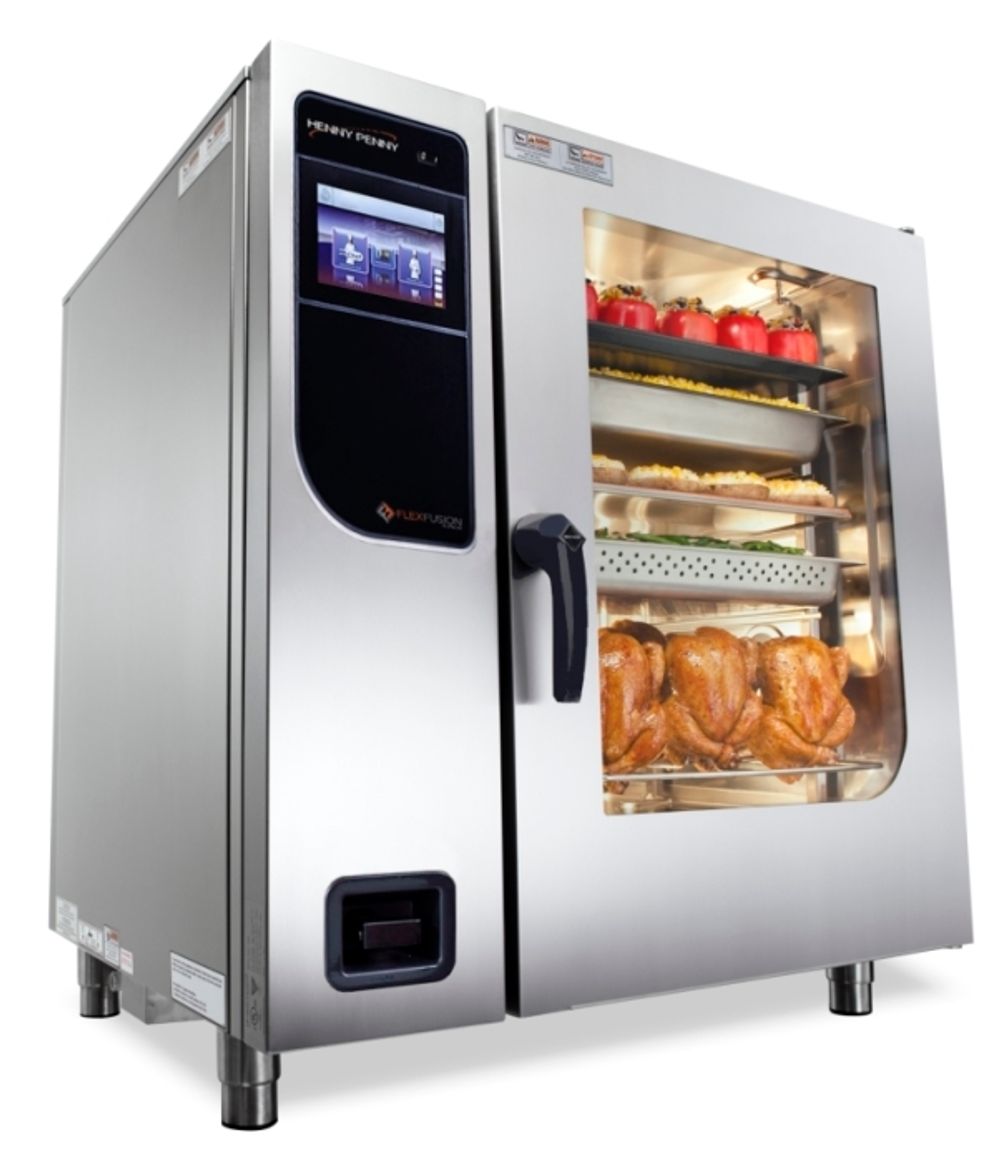
Image of Henny Penny combi ovens available at TFI!
Gas vs Electric Convection Ovens
Both gas and electric convection ovens deliver fast, even results, so the choice usually comes down to your utility costs and existing kitchen infrastructure. Gas models heat quickly and often cost less to run where natural gas is inexpensive, which covers much of Ontario. Electric models tend to hold temperature with tighter precision, suit locations without a gas line, and frequently reach higher cooking-energy efficiency.
The efficiency gap is measurable. ENERGY STAR certified full-size electric convection ovens must hit 76% cooking energy efficiency, while certified gas convection ovens are held to a 46% standard. Electric units convert more of their input energy into actual cooking, but gas can still win on operating cost where gas rates are low relative to electricity. The practical answer depends on your provincial utility prices and whether a gas line is already in place.
For most Canadian operators, the decision is settled by what is already installed. If you have the gas infrastructure, a gas convection oven is usually the lower-friction upgrade. If you are fitting out a new space or a unit without gas service, electric removes the cost of running a line. TFI's team can model both against your local utility rates before you commit.

How to Choose the Right Commercial Convection Oven
The best commercial convection oven is the one sized and specified for your actual production, not the largest unit on the showroom floor. Oversizing raises both the purchase price and ongoing energy losses, while undersizing turns the oven into a service-time bottleneck.
Work through these criteria in order:
Capacity: Count your peak-service pan volume and choose deck count accordingly. A double deck buys output without extra floor space.
Fuel type: Confirm whether gas service exists and compare your provincial gas and electricity rates.
Controls: Manual dials are simple and cheap to repair; programmable digital controls deliver repeatable results across shifts and staff.
Footprint and ventilation: Measure the line and confirm your hood and clearances accommodate the unit.
Serviceability: Choose equipment backed by local parts and technicians, because an oven down during service costs covers and revenue.
That last point is where total cost of ownership is won or lost. An oven is only an asset while it is running, so buying from a partner that also services the equipment protects uptime. TFI's factory-trained technicians provide commercial oven repair and maintenance using genuine OEM parts, with 24/7 emergency support across its service region.
Energy Efficiency and Total Cost of Ownership
The purchase price is only the first number in a convection oven's cost. Over a typical 12-year service life, energy is the larger figure, and efficiency choices made at purchase compound every day the oven runs.
ENERGY STAR certified convection ovens are on average about 27% more efficient than standard models. That efficiency shows up on the utility bill: the U.S. Department of Energy estimates a qualifying full-size gas convection oven delivers up to $2,098 in lifetime energy savings versus a less efficient unit, while an efficient half-size electric model saves up to $531 over its life. Across a multi-oven kitchen, those numbers add up to thousands of dollars.
Over a 12-year life, a single efficient full-size gas convection oven can save up to $2,098 in energy costs alone, which is why operating cost, not sticker price, should drive the purchase decision.
Three habits cut operating cost further: minimize idle time when the oven sits hot but empty, use the lower temperatures convection allows, and keep door gaskets and fans maintained so heat stays inside the cavity. Financing also matters to cash flow. TFI offers equipment rentals and lease-to-own options, plus certified used convection ovens with warranty for operators who want production capacity without the full new-equipment outlay.
Convection or Combi: Which Oven Fits Your Kitchen?
A standard convection oven cooks with dry, circulating heat. A combi oven adds steam, combining convection and humidity in one cavity so a single unit can roast, bake, steam, and hold. For operators whose menus span proteins, vegetables, and baked goods, a combi removes the need for separate pieces of equipment and tightens consistency.
The trade-off is cost and complexity. A dedicated convection oven is simpler and less expensive up front, while a combi delivers more versatility and menu flexibility for kitchens that need it. The right choice depends on how varied your menu is and how much you value consolidating equipment into one footprint.
TFI supplies Henny Penny combi ovens, including the FlexFusion line, for operators who want convection plus steam in one footprint. The Henny Penny equipment programme is built around rapid ROI and lower operating cost, and our team can model whether a convection oven or a combi gives you the better return.
Buying a Commercial Convection Oven in Ontario and Atlantic Canada
For over 60 years, TFI Food Equipment Solutions has been one of Canada's largest suppliers of specialty foodservice equipment, serving operators from quick-service chains to independent bakeries. That demand is growing: Canada's commercial foodservice sector posted rising sales through 2025, supported by the GST/HST holiday and a surge in domestic tourism, which keeps pressure on kitchens to add reliable cooking capacity.
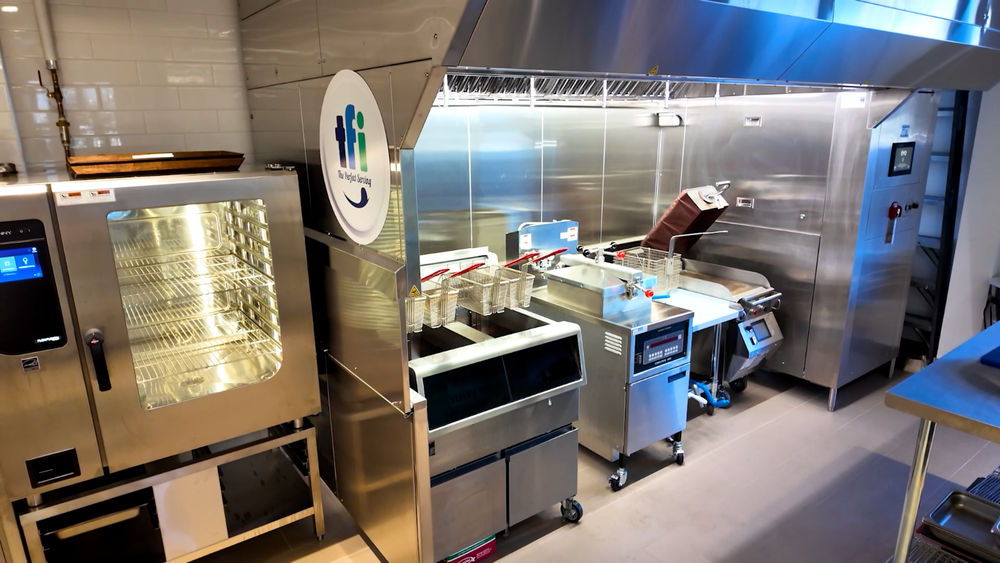
TFI supports operators across Ontario and Atlantic Canada from two locations. Ontario and GTA customers around Toronto and Mississauga can see equipment at the Mississauga showroom, while operators in Halifax, Moncton, Charlottetown, and St. John's are served from the Dartmouth location in Nova Scotia. Both offer sales, installation, training, financing, and certified technicians.
Match your kitchen's needs to the right equipment and support:
High-volume baking or roasting: A full-size or double-deck convection oven, sized to peak service and backed by local repair and maintenance.
Versatile multi-cook menus: A Henny Penny combi oven that adds steam to convection in one footprint.
Cash-flow-conscious operators: Rentals, lease-to-own, and certified used options that protect working capital.
Commercial Convection Oven Buyer's Cheat Sheet
Use this quick reference to move from need to decision.
Operator need | What to look for | TFI equipment or programme |
|---|---|---|
High-volume bakery output | Full-size or double-deck, bakery depth | Full-size convection ovens, plus 24/7 service |
Tight footprint, light baking | Countertop or half-size electric | Compact convection models |
Roast, bake, steam, and hold in one | Combi oven with convection + steam | |
Lowest operating cost | ENERGY STAR efficiency, low idle | Energy-efficient models, ROI modelling |
Limited upfront budget | Lease-to-own or certified used |
Frequently Asked Questions
What is a commercial convection oven?
A commercial convection oven is a foodservice oven that uses a built-in fan to circulate hot air around the food, producing faster and more even cooking than a conventional oven. The moving air eliminates hot and cold spots, so it cooks about 25% faster and browns uniformly across every rack. It is the most common production oven in restaurants, bakeries, and convenience stores.
Is a gas or electric commercial convection oven better?
Neither is universally better; it depends on your utility rates and infrastructure. Electric convection ovens reach higher cooking-energy efficiency, with ENERGY STAR full-size models held to a 76% standard, and suit kitchens without a gas line. Gas models heat fast and can be cheaper to run where natural gas rates are low, which covers much of Ontario. TFI can model both against your local rates.
How much does a commercial convection oven cost in Canada?
Purchase price varies widely by size, fuel, and controls, from compact countertop units to full-size and double-deck production ovens. The more important number is total cost of ownership: an efficient model can save up to $2,098 in lifetime energy versus a less efficient one. For a quote matched to your kitchen, including financing and certified used options, contact TFI's team.
What size commercial convection oven do I need?
Size the oven to your peak-service pan volume, not your average. Countertop and half-size units fit cafes and smaller kitchens, full-size single decks handle most restaurant and bakery production, and double-deck ovens double output without taking more floor space. Oversizing raises both purchase price and energy losses, so matching capacity to demand protects your margin.
What is the difference between a convection oven and a combi oven?
A convection oven cooks with dry circulating heat, while a combi oven adds steam to combine convection and humidity in one cavity, letting a single unit roast, bake, steam, and hold. Convection ovens are simpler and less expensive; combi ovens offer more versatility for varied menus. Our combi vs deck vs convection ovens guide compares them in detail.
How do you maintain a commercial convection oven?
Keep door gaskets sealed, fans clean, and interiors free of grease buildup so heat circulates efficiently and the unit holds temperature. Schedule preventive maintenance and address issues early, because a failed oven during service costs covers and revenue. TFI's factory-trained technicians provide repair and planned maintenance with genuine OEM parts and 24/7 emergency support.
Get a Free Equipment Quote Today
Whether you need a commercial convection oven for high-volume baking, a Henny Penny combi oven for a versatile multi-cook menu, or certified used equipment to protect cash flow, our team will help you size the right unit and model the return before you buy.
Ask for an equipment demo in Mississauga or Dartmouth, or request a free quote today.

Nicole Camposeo-Cheung is the Director of Marketing, People & Culture at TFI Food Equipment Solutions, Canada’s leading provider of premium commercial foodservice equipment. She combines her expertise in business management and fashion arts to foster a dynamic, innovative, and people-centric corporate culture. Passionate about empowering teams, building strong client relationships, and driving growth through creativity and collaboration, Nicole plays a key role in shaping TFI’s brand and workplace culture. She also shares her industry expertise and insights through the TFI blog, helping foodservice professionals stay informed about the latest trends, best practices, and innovations in commercial food equipment.
Add a comment
This will be publicly visible.
Your email address will not be published.
Your comment will be reviewed by an admin before it is published.


