
Commercial Coffee Program ROI: Office vs Café vs QSR vs C-Store
A segment-by-segment look at how Canadian operators model commercial coffee program ROI, with profit margin and payback ranges for offices, cafés, QSRs, and convenience stores, plus the Franke equipment that fits each one.

Canadian coffee programmes look similar on paper, then diverge sharply once you put the actual numbers on the table. Cups per day, ticket size, labour load, and revenue model all shift by segment, and a payback period that takes six months in a busy convenience store can take twice that in a small office or a low-volume café. Operators who treat coffee as a single category often overpay for equipment they cannot fill, or underspec a machine that throttles their busiest hours.
This guide breaks the math down by segment, starting with where the Canadian coffee opportunity sits in 2026, then modelling the ROI for office, café, QSR, and convenience store programmes. Every section ties the financial picture back to the equipment that fits, and ends with a single comparison table you can use as a starting point for your own scenarios.
Building or upgrading a coffee programme? Request a free equipment consultation from TFI in Ontario or Atlantic Canada, and the team will model payback for your specific volume, pricing, and segment.
The Canadian Coffee Opportunity in 2026

Coffee remains the single most consumed beverage in Canada. Coffee Association of Canada data shows 71% of Canadians drank coffee yesterday in 2025, with regular drinkers averaging close to three cups per day. Even with elevated bean prices, consumers shifted purchase behaviour rather than dropping the category.
The structural change worth pricing into any new programme is cold. Cold formats now represent 21% of past-day cups in December 2024, more than double December 2023. That shift shows up in chain results, where Tim Hortons reported cold beverage sales rising 8.6% in Q4 2025 and now accounting for nearly 27% of total beverage sales. Year-round iced demand changes how operators spec equipment and how they model attach rates on syrups, milk alternatives, and cold foam add-ons.
On the foodservice side, Canada's commercial restaurant industry posted 3.2% traffic growth and 5.7% spending growth in the first half of 2025. Out-of-home coffee revenue across cafés, restaurants, and convenience accounts now sits at roughly USD 20.93 billion in Canada, with QSR taking the largest profit-sector share of foodservice and coffee-and-tea shops a separate 14.4% slice.
Coffee is no longer a single occasion. Morning hot drip, afternoon iced lattes, and after-dinner specialty drinks each contribute to a programme's day-part economics, and the equipment has to handle all three without a labour spike.
For a deeper read on consumer-level shifts, the TFI Canadian coffee trends breakdown covers cold demand, plant-based milk preferences, and specialty-drink growth in detail.
Why Segment Drives ROI More Than Equipment Choice
Every segment buys coffee equipment for a different reason. A café charges $5.25 for a latte and treats the bean-to-cup machine as the centre of its revenue model. A convenience store charges $2.49 for a 24-ounce drip and treats coffee as the highest-margin item in the store, attached to fuel and snack baskets. A QSR runs coffee through the drive-thru on top of breakfast sandwiches and counts on throughput. And an office gives coffee away for free, justifying spend through retention, recruiting, and reclaimed productivity.
That difference shapes four variables:
Cups per day. Office sites typically run 30 to 80 cups daily, small cafés 150 to 250, busy QSRs 250 to 400, and high-traffic c-stores 150 to 250 with strong morning peaks.
Average ticket. Cafés pull $5 to $6 on milk drinks. QSRs sit at $3 to $3.50 with attach. C-stores price between $1.99 and $2.99. Offices operate on cost-per-cup at the wholesale level.
Labour load. A semi-automatic espresso bar in a café needs trained baristas. A super-automatic in a QSR or c-store needs a teenager who can hit a button. An office programme needs almost no labour beyond restock.
Revenue model. Three segments earn revenue from each cup. The office segment earns nothing direct, so the ROI is measured against employee outcomes and external coffee spend.
Match the equipment to the segment first, and the payback math works itself out. Spec a machine built for a different segment, and the programme either underperforms or overpays.
Office Coffee Programmes: Cost-Centre Math With Retention Upside
Office programmes are usually evaluated by HR or operations, not foodservice, and the question is almost never "how much will this earn?" The question is "how much does it save, and how much does it help us keep people?"

The productivity math is well documented. Quality on-site coffee reclaims roughly 17 minutes per employee per day, or about 72 hours annually. A team of 30 employees at an average loaded labour rate of $40 per hour recovers roughly $86,000 of work hours per year, several multiples higher than the total programme cost. Add the retention layer: Deloitte's 2025 workplace wellness data, summarised by foodservice researchers, links premium coffee access to 22% higher retention at firms offering it, and 65% of employees now expect quality coffee at work.
The cup-level math is straightforward. At 60 cups per business day and roughly $0.40 in beans, milk, and consumables per cup, an office spends about $6,000 per year on coffee ingredients. The same 60 cups bought as $5 takeaway runs at the corner café would cost the company (or the employees) more than $75,000 in retail spend across the same year. The delta funds the equipment several times over, even before counting labour reclaim or retention.
Office coffee programmes built on super-automatic bean-to-cup machines typically recover their hardware cost from labour reclaim alone within 9 to 15 months, before any retention or recruiting value is counted.
Equipment match: the Franke A Series A400 or A600 fits most office sites. The A400 handles up to 100 cups per business day and fits a small-footprint counter; the A600 scales to 170 cups with a wider drink menu, milk system options, and self-serve user interface modes. For sites above 150 employees or multi-floor breakrooms, an A800 with two grinders runs a hot and a decaf bean simultaneously without slowing throughput.
CFOs evaluating office coffee should compare three procurement paths: outright purchase, lease-to-own, and managed rental. TFI's lease-to-own and rental options shift the equipment from a capital expense to an operating expense, which often unlocks faster approval inside HR-led budget reviews.
Café ROI: Premium Pricing, Higher Labour, Stickier Margins
Independent cafés in Canada compete against more than 4,200 Tim Hortons and 1,400 Starbucks locations, plus thousands of regional chains and indie operators. The country has more than 7,000 independent coffee shops, and the differentiator is consistent quality at scale through busy mornings and slower afternoons.

The unit economics favour cafés on a per-cup basis. A typical milk drink at $5.25 with bean, dairy, syrup, and cup costs around $0.95 carries roughly an 82% gross margin at the cup level. Across 200 cups per day, that produces approximately $1,050 daily in coffee programme revenue and $860 in gross profit before labour, rent, and other operating costs. Annualised across 360 days, the coffee programme alone clears $378,000 in revenue with $310,000 in gross profit, putting the 80% gross profit benchmark for Franke programmes within reach for operators.
Where cafés lose ground to other segments is labour. A semi-automatic espresso bar still requires trained baristas, and during a 90-minute morning rush, labour costs can erode the unit margin. Operators moving to super-automatic platforms (or hybrid setups with manual prep for milk art only) typically cut barista labour by 25 to 30%, redeploying staff into upsell positions and food prep. The result is a higher net margin even when gross margin holds constant.
Equipment match: small to mid-sized cafés with a strong milk-drink mix run the Franke S Series S700 for manual-style espresso with assistive automation, or the A800 for full bean-to-cup volume at 250 cups per day with multiple bean hoppers for blends and decaf. Larger flagship cafés add an A1000 or a second machine for cold-beverage and specialty workflows.
On equipment cost, café operators typically face $20,000 to $45,000 for a primary bean-to-cup unit and grinder package. At the modelled $310,000 annual gross profit from a 200-cup-per-day programme, payback inside 6 to 12 months is achievable when ticket sizes hold and ingredient inflation is managed.
QSR ROI: Throughput Wins, Speed-of-Service Math
Quick-service restaurants treat coffee as a high-margin attach to food orders. The Canadian QSR channel accounts for the largest share of commercial foodservice sales, and within that channel, Tim Hortons has more than 70% market share of the morning daypart for brewed coffee alone. For QSR operators outside the dominant chains, the opportunity is in matching that throughput at competitive ticket sizes.
QSR coffee economics differ from cafés in three ways. Ticket sizes run lower ($3.00 to $3.50 typical for coffee plus modifier), volume runs much higher (250 to 400 cups daily at busy stores), and labour is closer to zero because super-automatic machines handle preparation while line staff handle the food order. The result: similar daily revenue to a café, but a thinner labour layer underneath.

At 300 cups per day at an average ticket of $3.25, a QSR coffee programme generates roughly $975 daily. With ingredient cost at 16% (~$0.52 per cup including beans, milk, cup, and lid), gross profit lands near $820 per day. Annualised across 360 trading days, that produces approximately $295,000 in gross profit. The 6 to 10 month payback range TFI publishes for QSR coffee deployments holds at this volume even with $25,000 to $50,000 in equipment cost, because the throughput compresses payback faster than a café at the same revenue level.
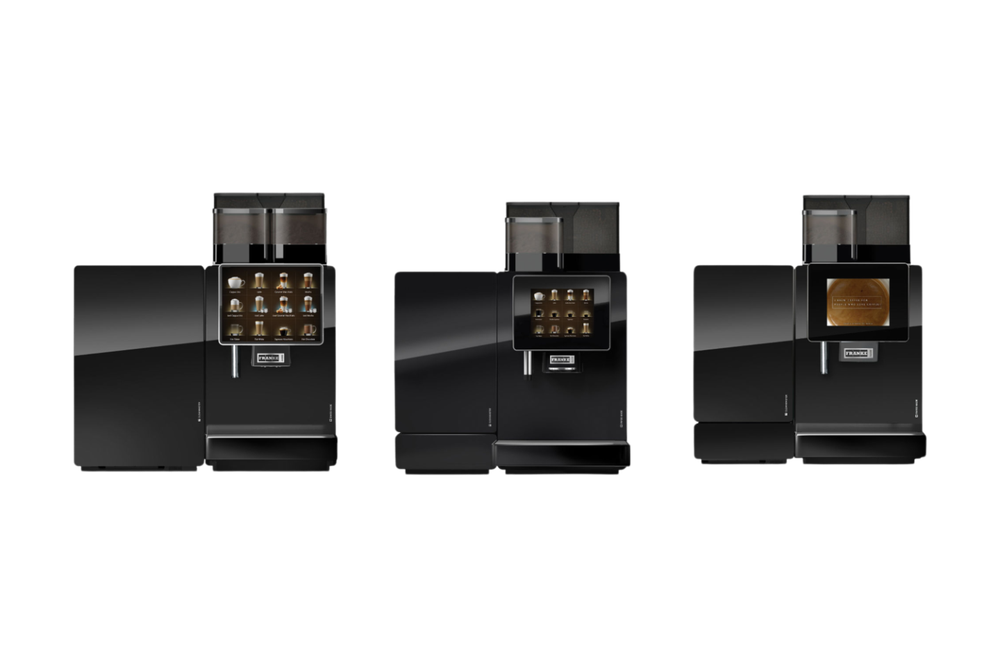
Speed of service drives same-store visit frequency. The Franke A1000 handles up to 300 cups per day, with two milk hoppers (dairy and plant-based) and pre-programmed drink workflows that staff trigger from a touchscreen. For higher-throughput sites or franchise chains running multiple Franke units, the A600 vs A800 vs A1000 comparison guide walks through which model fits which throughput band.
Cold beverage is the QSR growth engine in 2026. Tim Hortons' cold mix at 27% of beverage sales is the benchmark, and independent QSRs and franchise operators outside the dominant chains need iced and frozen capabilities to capture afternoon traffic. Super-automatic platforms with iced workflows and cold-foam attachments meet that demand on a single counter footprint.
C-Store ROI: Self-Serve Margin Machine With Day-Part Growth
Convenience stores have quietly become one of the highest-margin coffee channels in Canada. The category benefits from low labour (self-serve), low ingredient cost (high-volume bean purchasing and minimal milk attach on drip), and high attach rates to fuel, snacks, and breakfast items at the checkout. Canadian c-store dollar sales excluding tobacco rose 10.3% in Canada in the most recent quarter, three times the previous quarter's growth, with foodservice (including coffee) leading the increase.
TFI serves approximately 94% of Canadian c-store chains, which means the segment shapes much of how the equipment line gets specified for Canadian conditions. The competitive bar for c-store coffee in 2026 is no longer "good enough for the price"; it is "barista-quality at convenience-store speed and price."

The cup-level math is the strongest of the four segments. At 180 cups per day at an average ticket of $2.49, a c-store generates roughly $448 in daily coffee revenue. Ingredient cost on a 16-ounce drip cup runs 10 to 13% (bean, water filter, cup, lid, no milk attach beyond a self-serve creamer station), so gross profit per cup approaches 88%, or about $395 daily. Annualised, that produces roughly $144,000 in gross profit on a coffee programme, with almost no labour cost. Multiply that across the c-store coffee day-part where customers buy two or three additional items in the basket, and the programme becomes the highest-margin square foot in the store.
A c-store coffee programme often clears 85% gross margin at the cup level with effectively zero direct labour, which is why convenience operators outpace café operators on payback even at lower ticket prices.
Equipment match: the Franke bean-to-cup line A600 or A800 in self-serve mode fits most Canadian c-stores. The A600 handles up to 170 cups daily with single-button operation; the A800 scales to 250 cups for high-traffic stores near transit corridors and fuel hubs. Larger flagship c-store concepts add an A1000 for hot and iced workflows on a single machine.
Gen Z is the growth engine. NACS research shows younger consumers entering the coffee category through cold formats and flavoured drinks, with two of three young people drinking cold coffee regularly. C-stores that add iced and flavoured workflows capture an afternoon daypart that drip-only setups miss entirely.
Segment-By-Segment Comparison: Where the Math Lands
Every operator's actual numbers will vary, but a modelled comparison at typical volumes shows how segment shapes the same equipment investment. The table below uses conservative cup volumes, Canadian retail price points, and standard ingredient ratios.
Segment | Typical Cups/Day | Avg Ticket | Annual Gross Revenue (Coffee) | Gross Margin | Typical Equipment | Modelled Payback |
|---|---|---|---|---|---|---|
Office (free vend) | 60 | n/a (cost centre) | n/a | Cost avoidance vs $75K+ retail spend | Franke A400 or A600 | 9 to 15 months on labour reclaim |
Independent Café | 200 | $5.25 | ~$378,000 | ~82% at cup level | Franke S700 or A800 | 6 to 12 months |
QSR | 300 | $3.25 | ~$351,000 | ~84% at cup level | Franke A800 or A1000 | 6 to 10 months |
Convenience Store | 180 | $2.49 | ~$164,000 | ~88% at cup level | Franke A600 or A800 self-serve | 6 to 10 months |
Two things stand out. First, the gross margin range across all four segments sits within a tight 82 to 88% band, which is why TFI publishes 80%+ gross profit as a programme-wide benchmark. Second, the payback range is narrower than most operators assume, because higher equipment cost in QSR and café settings is offset by higher volume and ticket size, while lower equipment cost in c-stores and offices is offset by lower revenue (c-stores) or zero revenue (offices).
For a side-by-side look at how the equipment lineup scales, TFI's commercial coffee programmes in Canada page lays out spec sheets and configuration options across the Franke range.
Matching the Franke Lineup to Each Segment
One reason the math holds across segments is that Franke designs the A and S Series in throughput bands that line up with operator volume rather than forcing buyers into oversized hardware.
Franke A400. Compact countertop super-automatic, up to 100 cups per day, fits small offices, satellite locations, and pop-up café concepts. Single milk option and simplified UI.
Franke A600. Step-up unit at up to 170 cups per day, ideal for mid-size offices, growing c-stores, and small cafés that want espresso, milk drinks, and chocolate.
Franke A800. Fresh-brew capable at up to 250 cups per day, fits high-traffic c-stores, growing QSRs, and mainstream cafés. Two grinders allow blend and decaf simultaneously.
Franke A1000. Flagship at up to 300 cups per day, designed for QSR drive-through volume, flagship cafés, and high-traffic c-stores running hot and iced workflows on one machine.
Franke S Series (S700). Manual-prep style with full automation underneath, used by speciality cafés that want barista-driven aesthetics with super-automatic consistency.

The choice between A and S Series often comes down to brand positioning. C-stores, QSRs, and offices typically choose the A Series for speed and self-serve simplicity. Cafés often choose the S Series for the manual-style customer experience, with the A Series as a backup or training machine. For high-volume operators, the A600, A800, and A1000 cover the throughput band where most segment payback math gets decided.
Financing, Service, and the Cost of Downtime
Equipment cost is only the first variable in the ROI calculation. Downtime, service response, and financing terms can swing the payback by months in either direction.
TFI's commercial coffee cost breakdown puts the cost of a single day of downtime at roughly $2,250 in lost gross profit for a mid-volume café. Across the four segments, that figure scales with revenue: a busy QSR loses closer to $1,000 per day, a c-store loses $400 per day, and an office loses productivity rather than revenue. Equipment uptime is the single biggest controllable variable in the ROI model, and it depends on how quickly a service technician arrives.
That is why TFI provides factory-trained service on every machine sold, with technicians carrying genuine OEM parts and renewed certifications annually. For operators outside the major Ontario and Atlantic Canada urban centres, that response model is the difference between an eight-hour fix and a multi-day wait.
Financing also matters. Most segments outside cash-rich franchisees prefer to spread equipment cost over 24 to 60 months, either through a finance lease or an operating lease structure. TFI structures leases that include preventative maintenance, which converts a capital expense into a predictable monthly operating expense and accelerates approval inside any segment.
Ontario and Atlantic Canada Considerations
Coffee programme economics shift slightly by region. Operators in Ontario, particularly the Greater Toronto Area and Ottawa corridor, face the highest retail ticket pricing and the strongest competition from national chains. The math typically favours equipment with full beverage breadth and self-serve UI to compete with Tim Hortons and Starbucks on speed and consistency.
Atlantic Canada operators serving Halifax, Moncton, Charlottetown, and St. John's see lower retail tickets but stronger customer loyalty and longer per-store coffee dwell time. The math favours mid-tier A600 or A800 units that handle morning rush without overpaying for capacity that sits idle during slower hours.
TFI's Ontario showroom in Mississauga right near Toronto Pearson Airport host live demos of the full Franke range, with TFI specialists modelling payback against your specific volume and ticket assumptions before any equipment is quoted.

For a broader view of how Canadian coffee equipment partners stack up on service, financing, and brand support, the TFI overview of Canadian coffee equipment suppliers gives a starting comparison framework.
Frequently Asked Questions
What is a good ROI for a commercial coffee programme in Canada?
A well-run commercial coffee programme on a super-automatic bean-to-cup platform typically clears 80% or higher gross profit at the cup level, with full equipment payback in 6 to 12 months for revenue-generating segments (café, QSR, c-store) and 9 to 15 months for cost-centre programmes (office). Industry benchmarks for café operators show net margins of 15 to 25% after labour and rent, while c-store and QSR coffee programmes typically clear higher net margins because labour load is lower.
Are commercial coffee machines profitable in Canada?
Yes, when matched to the segment correctly. The same machine that pays back in seven months in a high-traffic c-store can take 18 months in a small office. The key drivers are cups per day, average ticket, ingredient cost ratio, and labour load. A 200-cup-per-day café running an A800 at $5.25 average ticket clears roughly $310,000 in annual gross profit on a single machine, well above the equipment cost. A self-serve c-store at 180 cups per day at $2.49 still clears about $144,000 in annual gross profit because labour cost is effectively zero.
How long is the payback period on a commercial coffee machine?
For most Canadian operators on the Franke platform, expected payback ranges from 6 to 12 months in café, QSR, and c-store settings. Office programmes pay back in 9 to 15 months through labour reclaim, with retention and recruiting value layered on top. Faster payback comes from higher volume, lower ingredient cost, and lower labour load. Slower payback usually signals undervolume relative to the equipment's capacity, which means the operator either over specced the machine or needs to grow throughput through menu engineering and cold-beverage expansion.
What is the best coffee programme for an office?
For Canadian offices between 20 and 150 employees, the Franke A400 or A600 super-automatic bean-to-cup machine fits most use cases. The A400 handles up to 100 cups per business day in a compact countertop footprint; the A600 scales to 170 cups with broader drink menus and milk system options. Beyond 150 employees, the A800 with two grinders handles regular and decaf simultaneously and supports multiple floors. Most office operators choose a lease-to-own structure with preventative maintenance bundled in, which converts the programme to a predictable monthly operating cost.
Should I buy or lease a commercial coffee machine?
Both paths work, and the right choice depends on cash position, tax planning, and how quickly the machine pays back at your volume. Outright purchase is most common for established cafés and franchise QSRs with strong cash flow and a long-term site commitment. Lease-to-own or operating leases dominate office programmes, c-stores, and growing café operators because they preserve working capital, smooth monthly cash flow, and often include service and consumables. TFI covers both paths with the same factory-trained service backing.
How does c-store coffee margin compare to café margin?
C-store coffee programmes typically clear a higher gross margin at the cup level than cafés, often 85 to 88% versus the café range of 78 to 82%, because c-store drinks are mostly drip with minimal milk attach and zero direct labour. The trade-off is ticket size: c-store coffee at $2.49 produces less daily revenue than café coffee at $5.25 even at similar cup volumes. Net margin (after rent, utilities, and packaging) usually evens out in the high-teens to mid-twenties for both segments, with the c-store winning on simplicity and the café winning on revenue per square foot.
Take the Next Step
TFI Food Equipment Solutions has supplied Canadian operators with commercial coffee programmes for more than 60 years, serving Ontario, Nova Scotia, New Brunswick, Prince Edward Island, and Newfoundland & Labrador. The team handles new equipment sales and installation, certified pre-owned options, lease-to-own and rental structures, training, and 24/7 factory-trained service across the full Franke A Series and S Series lineup.
Whether you operate a single café, a c-store chain, a growing QSR, or a head-office break room, the team can model your specific programme against the segment benchmarks in this guide and recommend the equipment, financing structure, and service plan that produces the fastest defensible payback.
Request a free consultation or book a live demo at the Mississauga or Dartmouth showroom to see the Franke lineup in action.

Nicole Camposeo-Cheung is the Director of Marketing, People & Culture at TFI Food Equipment Solutions, Canada’s leading provider of premium commercial foodservice equipment. She combines her expertise in business management and fashion arts to foster a dynamic, innovative, and people-centric corporate culture. Passionate about empowering teams, building strong client relationships, and driving growth through creativity and collaboration, Nicole plays a key role in shaping TFI’s brand and workplace culture. She also shares her industry expertise and insights through the TFI blog, helping foodservice professionals stay informed about the latest trends, best practices, and innovations in commercial food equipment.
Add a comment
This will be publicly visible.
Your email address will not be published.
Your comment will be reviewed by an admin before it is published.


