
Repair or Replace Commercial Restaurant Equipment: The Canadian Operator's Decision Guide
Should you repair or replace your commercial fryer, soft serve machine, combi oven, or coffee equipment? This decision guide for Canadian restaurant operators covers cost thresholds, age benchmarks, and the hidden cost of keeping aging equipment running.

Every Canadian restaurant operator eventually faces the same moment: a piece of critical equipment fails, the repair quote lands on your desk, and you have to decide whether to fix it or replace it. Make the wrong call and you either spend money on a repair that buys you six months before the next failure — or you replace equipment that had years of profitable service left in it.
The decision is harder than it looks because it involves costs that don't appear on the repair invoice: downtime revenue lost while you're waiting for a technician and parts, energy costs of running inefficient aging equipment, staff labor compensating for a machine that doesn't hold temperature, and the risk of the next failure happening on a Friday night in July.
This guide gives you a clear framework for making the repair-or-replace call on the equipment categories most common in Canadian foodservice, along with the specific thresholds that separate a good repair investment from one that isn't.
The Core Framework: Four Questions Before You Decide
Before looking at equipment-specific benchmarks, every repair-or-replace decision should run through the same four questions. The answers tell you which direction to lean before you look at dollar amounts.

1. How old is the equipment?
Age is a proxy for remaining useful life. Equipment under five years old has most of its serviceable life ahead of it — repair almost always makes sense unless the failure is catastrophic. Equipment past ten years is statistically closer to end of life, and repair costs are harder to justify because additional failures are increasingly likely. Equipment in the five-to-ten-year window requires actual analysis rather than a default answer.
2. What is the repair cost relative to replacement cost?
The standard industry benchmark is 50 percent. If a repair quote exceeds 50 percent of what a new equivalent unit would cost, and the equipment is past the midpoint of its expected lifespan, replacement is generally the better financial decision. If the repair is under 25 to 30 percent of replacement cost, repair typically wins unless other factors are present.
3. Is this a first failure or a recurring one?
A single, isolated failure on well-maintained equipment is a different signal than the third service call in 18 months. Recurring failures mean you're not paying for a repair — you're paying to extend the life of a unit that is degrading. Each repair buys less time and at higher risk of additional failures, while the cost of unpredictable breakdowns accumulates. A unit with a history of recurring failures should have a much lower repair-cost threshold before replacement becomes the right answer.
4. Are parts readily available, or is the model approaching obsolescence?
Parts availability is a practical limiting factor that the repair quote doesn't capture. If your technician has to source parts from specialty suppliers, wait weeks for international shipping, or fabricate workarounds — the repair is more expensive and less reliable than the base quote suggests. When a manufacturer discontinues a model and parts availability begins to thin, you are borrowing time against an accelerating clock.

The 50 Percent Rule and How to Apply It
The 50 percent threshold is a starting point, not a conclusion. It needs to be applied against the remaining useful life of the unit, not just its age.
A ten-year-old commercial fryer with a $3,000 repair quote should be evaluated against replacement cost differently than a ten-year-old fryer that has been exceptionally well-maintained, runs TFI Total Care preventive service, and has a documented history of minimal repairs. The first fryer's expected remaining useful life is short. The second might have five productive years ahead.
A more precise version of the calculation looks like this: divide the repair cost by the expected additional years of service the repair buys, then compare that annual cost to the annual cost of financing a new unit. If repairing costs you $1,200 per year in amortized repair spending and a new unit on a 60-month lease costs $1,800 per year but comes with a warranty, zero downtime risk, and better energy efficiency, the math is closer than the sticker prices suggest.
The hidden variables like energy savings, reduced downtime risk, improved product consistency on newer equipment — routinely tip the calculation toward replacement sooner than operators expect.
The True Cost of Running Aging Equipment
The repair-or-replace decision is not just about the repair quote. It's about the total cost of the equipment's remaining years, which includes costs that never appear in an invoice.
Downtime cost during repair. A fryer offline during a lunch rush, a soft serve machine down on a summer weekend, or a coffee machine out of service on a Monday morning are not zero-cost events. The revenue and customer experience impact of unplanned downtime often exceeds the repair cost itself. Equipment past 10 years has shorter average intervals between failures and longer parts lead times — the probability-weighted cost of future downtime should factor into the replace decision.
Energy and operating inefficiency. Older fryers consume more oil. Aging refrigeration systems in soft serve and frozen dessert equipment run less efficiently as insulation degrades and components wear. A fryer running $2,000 more per year in oil costs than a current equivalent model is, in effect, transferring $2,000 annually from your margin to your oil supplier. That hidden cost doesn't show up in a repair vs. replace comparison unless you explicitly calculate it.
Product inconsistency and quality drift. Equipment that is technically operational but gradually losing performance reliability produces inconsistent food. Inconsistent food produces customer complaints, remakes, and reduced repeat visits. The relationship between equipment condition and customer-perceived quality is real and measurable — it just rarely gets quantified in the repair decision.
Staff compensation labor. When equipment doesn't perform reliably, kitchen staff build workarounds into their routine. The fryer that takes 20 extra minutes to come to temperature. The soft serve machine that requires manual adjustment between rush periods. The coffee equipment that jams and needs clearing three times a day. These workarounds consume labor time that has a dollar value — often more than operators recognize.

The Third Option: Used or Refurbished Equipment
Repair and full replacement aren't the only options. For operators facing a significant repair cost on aging equipment where full replacement feels financially difficult, refurbished or used equipment from TFI is worth considering.
TFI carries used and refurbished Taylor and Henny Penny equipment that provides known performance at a lower price point than new. A refurbished unit comes with TFI inspection and service history. A meaningful advantage over buying used equipment without provenance. It also supports a financing or leasing structure that keeps monthly cash flow predictable.
For a secondary fryer station or a new location where new equipment isn't in the budget, a TFI-refurbished unit can be the right call.
When to Move from Break-Fix to Preventive Service
Many Canadian operators manage equipment on a break-fix basis — call a technician when something fails, pay the invoice, carry on. That approach is financially rational for equipment in its first few years, but it becomes increasingly expensive as equipment ages.
TFI Total Care is a preventive maintenance program that covers Taylor, Henny Penny, LightFry, and Franke equipment under a predictable monthly fee. It includes planned preventive visits, reactive service calls, parts shipping, technical support, staff training, and no overtime fees for weekend or after-hours calls.
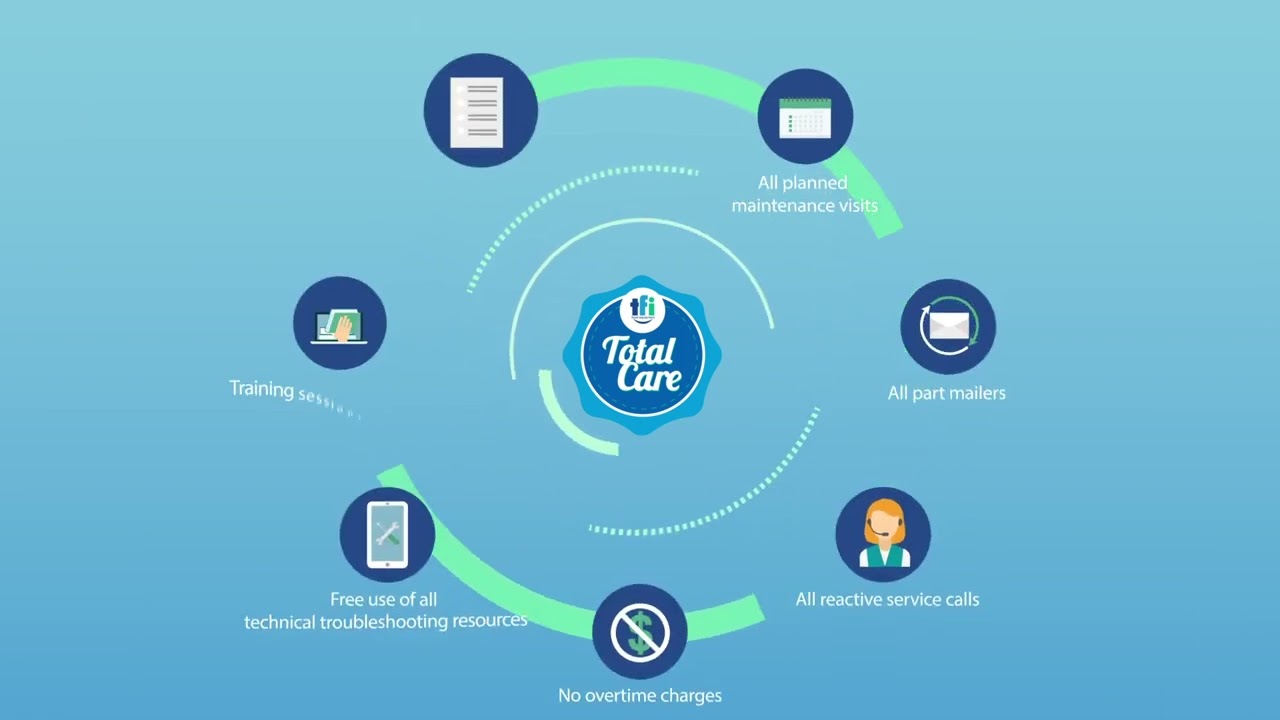
The argument for moving to Total Care isn't primarily about cost per service call, it's about changing the failure pattern. Preventive maintenance extends equipment life, catches developing issues before they become emergency failures, and documents service history that makes the eventual repair-or-replace decision much clearer. An operator with three years of documented TFI Total Care service records on a Taylor machine is in a fundamentally better position to evaluate remaining useful life than one making the call based on guesswork.
A Quick Reference: Signals by Direction
Equipment repair is almost certainly the right call when: the unit is under five years old, the failure is isolated and clearly identified, the part is available and the repair can be completed within 48 hours, the cost is under 25 percent of replacement, and there's no history of recurring failures.
Get a proper cost analysis before deciding when: the unit is five to ten years old, this is the second or third service event in the past 18 months, the repair cost is between 30 and 50 percent of replacement, or the quote involves a major subsystem like a compressor, heat exchanger, or control board.
Replacement is likely the right call when: the unit is past ten years without documented maintenance history, repair cost exceeds 50 percent of replacement, parts availability is thinning or the model is discontinued, the failure involves a core system and the unit has existing wear elsewhere, or a newer model's operational savings would meaningfully offset the replacement cost within three to five years.
Frequently Asked Questions
How do I know when to replace a commercial fryer?
Replace a commercial fryer when the repair cost exceeds 50 percent of a new equivalent unit and the fryer is past 10 years old, when parts are no longer available, when safety systems have failed, or when recurring failures in the past 18 months suggest systemic degradation. A new low-oil-volume fryer may also justify replacement earlier if energy and oil savings will offset the cost.
What is the average lifespan of a commercial fryer in Canada?
A well-maintained commercial fryer lasts 10 to 20 years. Henny Penny equipment with documented preventive service commonly reaches 15 years or more. Without regular oil filtration, cleaning, and technician inspection, lifespan can shorten considerably.
How long does a Taylor soft serve machine last?
Taylor soft serve machines typically last 10 to 15 years under normal commercial use with proper maintenance. Taylor machines on a preventive service program like TFI Total Care routinely exceed that range.
Is it worth repairing a combi oven that's 8 years old?
It depends on the failure type and cost. Combi ovens have a 7 to 10 year average lifespan. At 8 years, a minor repair costing under 30 percent of replacement is likely worth doing. A steam generator or control board failure on an 8-year-old unit should be evaluated against current replacement cost and the availability of the specific model's parts.
What is TFI Total Care and how does it help with this decision?
TFI Total Care is a preventive maintenance program covering Taylor, Henny Penny, LightFry, and Franke equipment. It provides planned maintenance visits, reactive service calls, parts logistics, and predictable monthly pricing with no overtime fees. Operators on Total Care have documented service history that makes repair-or-replace decisions much clearer and reduces the risk of major emergency failures.
Does TFI sell refurbished or used commercial equipment?
Yes. TFI carries used and refurbished Taylor and Henny Penny equipment, which can be a cost-effective option when new equipment isn't in the budget. TFI-refurbished units are inspected and serviced before resale.
Key Takeaways
The repair-or-replace decision is almost never purely about the repair quote. It's about the total cost of the equipment's remaining life — including the probability of future failures, the cost of downtime, the efficiency gap versus current models, and the value of predictability in your monthly operating costs.
If you're facing a significant repair decision on Taylor, Henny Penny, LightFry, or Franke equipment, TFI can assess the unit's condition, provide a repair quote, and give you a side-by-side comparison with replacement options including financing. That conversation costs nothing and puts the actual numbers in front of you.
Contact TFI to assess your equipment: Get a repair or replacement assessment.

Nicole Camposeo-Cheung is the Director of Marketing, People & Culture at TFI Food Equipment Solutions, Canada’s leading provider of premium commercial foodservice equipment. She combines her expertise in business management and fashion arts to foster a dynamic, innovative, and people-centric corporate culture. Passionate about empowering teams, building strong client relationships, and driving growth through creativity and collaboration, Nicole plays a key role in shaping TFI’s brand and workplace culture. She also shares her industry expertise and insights through the TFI blog, helping foodservice professionals stay informed about the latest trends, best practices, and innovations in commercial food equipment.
Add a comment
This will be publicly visible.
Your email address will not be published.
Your comment will be reviewed by an admin before it is published.


