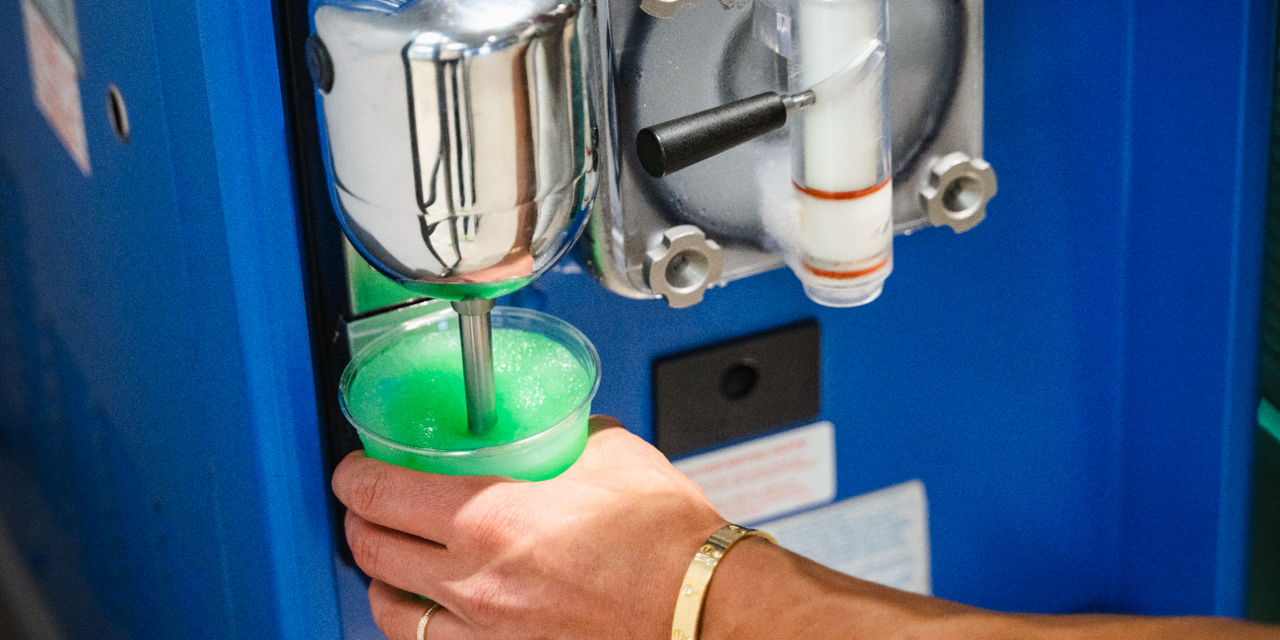
Frozen Beverage Machines: A Buyer's Guide for C-Stores and QSRs in Canada
A practical 2026 buyer's guide to commercial frozen beverage machines for Canadian convenience stores and quick-service restaurants, covering machine types, throughput, mix supply, profitability, and how to match equipment to menu and footprint.

Frozen beverage machines have moved from summer novelty to year-round profit centre for Canadian convenience stores and quick-service restaurants. In 2026, operators are evaluating commercial frozen beverage machines not only for slush, but for frozen carbonated drinks, frozen lemonades, frappes, milkshakes, and frozen coffee. The category sits inside a global frozen drinks market reaching roughly USD 10 billion in 2024 and growing at over a 4% compound annual rate. This guide compares the main commercial machine types, the buying criteria that matter for C-stores and QSRs, and the equipment programmes available through TFI Food Equipment Solutions in Ontario and Atlantic Canada.
Looking to launch or expand a frozen beverage programme this year? Request a free equipment consultation from TFI's team in Mississauga or Dartmouth.
Why Frozen Beverage Machines Matter for Canadian C-Stores and QSRs
Frozen beverages are one of the highest-margin menu categories available to Canadian operators. Programmes built around Taylor and Icetro equipment regularly deliver 70 to 80% gross profit with payback in 6 to 18 months, depending on volume, mix supply, and product mix. The economics work because the syrup, juice base, or shake mix is a small share of the cup price, while customers perceive the frozen format as a treat with strong impulse appeal.
Demand is structural, not seasonal. Canadians purchase roughly 30 million Slurpee drinks per year through 7-Eleven alone, and Winnipeg has been crowned the Slurpee Capital of the World for over twenty years running, despite winters that regularly drop below minus 30. Convenience served 67% of all slush soft drinks in 2024, up from 56% in 2019, and 19% of c-store shoppers in Canada bought a frozen drink in the past month according to C-Store IQ research.
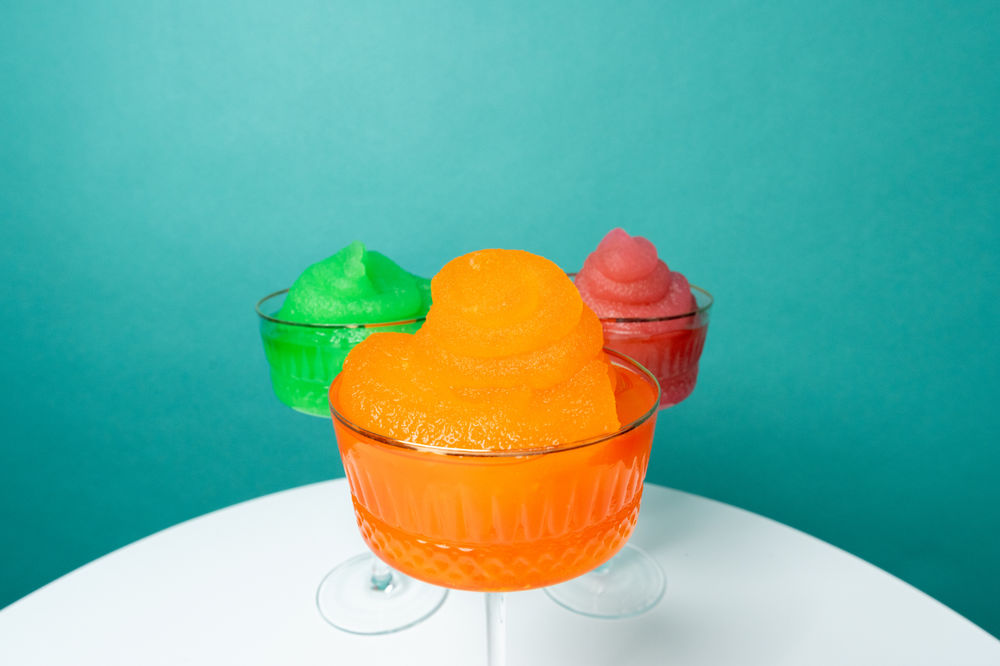
Frozen beverage programmes routinely deliver 70 to 80% gross profit with 6 to 18 month equipment paybacks, anchored by Taylor and Icetro machines built for high-volume Canadian sites.
QSRs are a parallel growth lane. Limited-service eating places grew sales by $2.3 billion in 2024 to $44.8 billion, with Ontario up 5.5% year over year. Operators in burger, chicken, and coffee formats are adding frozen beverage SKUs as cheque-builders and as a defence against competing brands that already have a frozen programme. For a deeper view of consumer demand, the trend lines for Canadian operators are mapped in TFI's Frozen Beverage Trends in Canada and Coffee Trends in Canada reports.
The Five Main Types of Commercial Frozen Beverage Machines
Commercial frozen beverage equipment is not a single category. The right machine depends on the drink type, target throughput, and how much labour the operator wants to assign to product preparation and cleaning. Five main types cover almost every C-store and QSR application.
1. Frozen Carbonated Beverage (FCB) Machines
A frozen carbonated beverage is a mixture of flavoured syrup, food-grade CO2, and filtered water that is frozen into a fine, smooth slush with suspended carbonation. The CO2 creates expansion or "overrun" inside the cup, which is part of why FCBs deliver such strong margins. According to a Marmon Foodservice explainer, 81% of FCB purchases are impulse decisions, and ounce-for-ounce FCBs are typically a lower-calorie option than equivalent soft drinks.
FCB machines are the standard for c-store frozen drink programmes. The Slurpee, ICEE, and Froster formats all run on FCB equipment. They require a CO2 connection and a syrup line, but once installed they run with minimal daily intervention. Taylor's carbonated frozen beverage freezers cover one, two, three, and four-flavour configurations in floor and countertop models.

2. Frozen Uncarbonated Beverage (FUB) Machines
A frozen uncarbonated beverage has a coarser, denser slush texture and is built around water, sugar, juice base, or tea concentrate without carbonation. FUB machines are simpler than FCB units because they do not need a pressure chamber or a CO2 line. Many newer FUB systems use bag-in-box (BIB) technology and a sealed product path that reduces daily cleaning to a fraction of what older granita machines required.
FUB equipment is a fit for frozen lemonade, fruit slush, real-juice slush, alcohol slush in licensed venues, and frozen tea. TFI carries Taylor uncarbonated slush and beverage machines and the Icetro slush line. Operators exploring the slush category specifically can compare brands and capacities in TFI's commercial slush machine buying guide and the explainer on how slush machines work.

3. Frappe, Smoothie, and Blended Frozen Drink Machines
Frappe and smoothie machines produce a thicker, often dairy-based or fruit-based frozen drink with chunkier texture than FCB or FUB. Some are batch blenders triggered per cup, others are dispenser-style machines that hold a frozen base ready to pour. These units suit QSRs running coffee frappes, real-fruit smoothies, and protein shakes, as well as c-stores trying to layer a premium drink above their core slush programme.
Icetro's smoothie and slush machines run real fruit and dairy bases with consistent texture, and they are designed for technician-friendly serviceability that matters in low-staff convenience environments.
4. Milkshake Machines
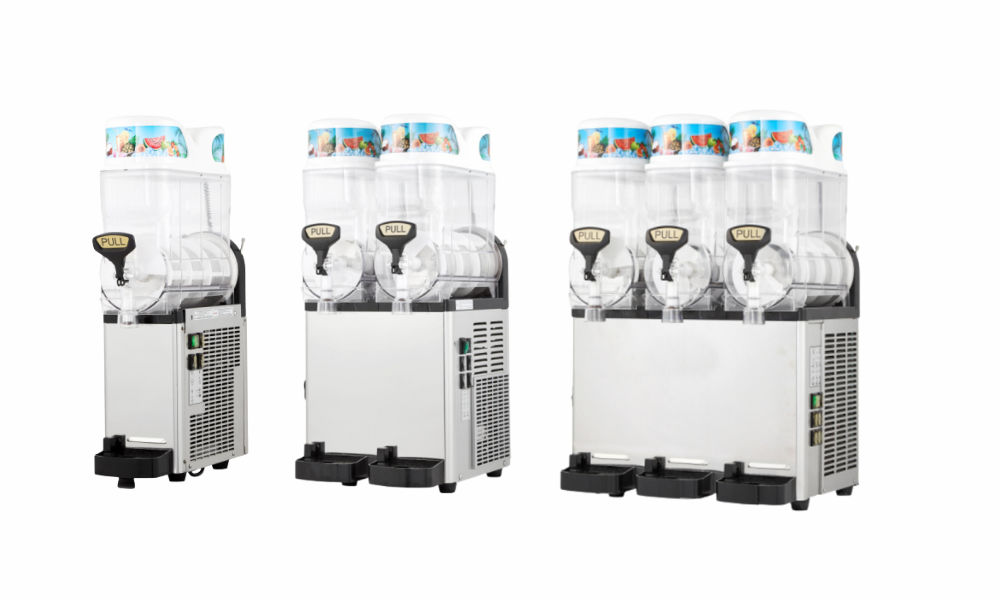
Milkshake freezers deliver thick, dairy-rich shakes on demand, and they are central to QSR formats from burger chains to dessert-led concepts. Taylor's milkshake range covers single, double, and triple-spindle freestanding units that hold mix at serving temperature and freeze it as it pours. The shake category drives strong attach rates with burger and chicken combos, and TFI's commercial milkshake freezers page covers the full Taylor lineup. For brand comparisons, see the best commercial milkshake machines in Canada.

5. Frozen Coffee and Iced Coffee Dispensers
Frozen coffee is the fastest-rising sub-category in the frozen beverage space. The Coffee Association of Canada reports that 21% of past-day cups were cold in December 2024, double the 10% recorded in December 2023. Cold coffee is now a year-round behaviour, not a summer-only one, and frozen coffee machines, blended frappes, and self-serve cold dispensers are how operators capture that demand.
Some operators run frozen coffee through a dedicated machine, others adapt an FUB or frappe unit with a coffee base. Self-serve cold dispense pairs well with the broader self-serve format, which is detailed in TFI's self-serve beverage stations guide.
You can check out TFI's Franke bean-to-cup super-automatic machines to see if those are the right fit!

Frozen Beverage Machine Comparison Table
The five main machine types fit different sites and menus. This comparison table summarises throughput, mix type, footprint, and best use cases.
Machine Type | Typical Drinks | Mix Supply | Daily Cleaning | Best For |
|---|---|---|---|---|
FCB (Frozen Carbonated) | Slurpee, ICEE, Froster, frozen pop | Syrup + CO2 + water | Low (sealed system) | C-stores, theatres, theme parks, high-volume QSR |
FUB (Frozen Uncarbonated) | Slush, frozen lemonade, fruit slush, tea slush, alcohol slush | BIB or syrup base + water | Low to moderate (newer BIB systems) | C-stores, licensed venues, QSR, kiosks |
Frappe / Smoothie | Coffee frappes, real-fruit smoothies, protein shakes | Frappe powder, fruit base, dairy | Moderate | Coffee shops, QSR, juice bars |
Milkshake | Vanilla, chocolate, flavoured shakes, mix-ins | Liquid shake mix (dairy) | Moderate | Burger/chicken QSR, dessert concepts, diners |
Frozen Coffee / Cold Dispense | Iced lattes, frozen mochas, nitro cold brew | Coffee concentrate or brewed cold | Moderate | Coffee programmes, c-stores, QSR coffee |
For a slush-only deep dive, see TFI's types of commercial slush machines and best commercial slush machine brands breakdowns.
How to Choose the Right Frozen Beverage Machine
The fastest way to pick the wrong machine is to start with brand. The right path is to anchor the decision in five operator factors, then match the equipment to those constraints.
Volume and Throughput
Throughput is the first filter. A high-traffic c-store doing 250 to 500 cups a day on a single bowl needs different equipment than a QSR adding a frozen item to a 60 to 100 cup-a-day side menu. Hopper capacity, freezing recovery time, and number of bowls or barrels all drive the throughput math. As a rough guide, a single-bowl FUB machine can sustain 200 to 300 cups per day at peak, while a multi-bowl FCB unit at a c-store regularly clears 500 plus.
Menu and Product Mix
The menu drives the mix supply, and the mix supply drives the machine type. If the plan is multiple slush flavours sourced from BIB, FUB is the right answer. If the plan is a Slurpee-style fizzy frozen drink, FCB is required. If the plan is a real-fruit smoothie or a frappe with dairy, a smoothie or milkshake unit is correct. Mixed menus need either separate machines or a multi-bowl unit with the right configuration.
Footprint and Counter Space
Frozen beverage equipment ranges from compact countertop machines under 24 inches wide to floor-standing four-flavour units over 36 inches. Counter depth, ceiling height for top-load hopper access, and ventilation clearance all matter. C-store operators rebuilding a beverage wall should map every machine, every cooler, and every dispense head before ordering.
Mix Supply: BIB, Powder, or Fresh
BIB systems pull from sealed bag-in-box product, and they shift cleaning from daily to weekly or longer in many cases. Powder or fresh-mix systems deliver more flavour control and ingredient transparency, but they raise daily labour. The trade-off is real, and the right answer depends on staffing, brand positioning, and the food safety culture of the site.
Service, Uptime, and Repair
A frozen beverage machine that goes down on a Friday night is a direct revenue hit. The service plan matters as much as the equipment. TFI runs 24/7 commercial kitchen equipment repair by factory-trained, annually certified technicians using OEM parts, and operators can submit a service request directly through the support portal. Single-source equipment and service from one Canadian partner is a meaningful uptime advantage compared to dealing with separate dealers and third-party repair vendors.
Profitability and Payback for Frozen Beverage Programmes
The math behind frozen beverage equipment is straightforward, and it is one of the strongest cases an operator can build for a capital request.
A typical FCB or FUB cup sells for between $2 and $6 in Canada, depending on size and venue. The mix or syrup cost per drink is generally $0.20 to $0.60 according to industry data referenced in TFI's convenience store beverage programme ROI guide. That spread, combined with strong impulse purchase rates, is why programmes built around Taylor equipment regularly clear 70 to 80% gross profit and pay back the equipment investment in 6 to 18 months at moderate volumes.
A Taylor or Icetro frozen beverage machine doing 200 cups a day at a $4 average ticket and 75% gross profit returns roughly $600 in gross profit per day, which can pay back a typical commercial unit in well under a year.
The broader market context supports the investment case. The global frozen drink and slushy machine segment is projected to grow at a 6.5% CAGR through 2033 according to Verified Market Reports, while the Canadian foodservice industry crossed $96.5 billion in sales in 2024 according to Restaurants Canada. Frozen beverages are positioned as a high-margin lever inside an expanding category.
For a slush-specific business case, see TFI's slush business in Canada startup guide. For dessert-side margin context, the profit case for soft serve is a strong companion read.
Equipment Brands TFI Carries: Taylor and Icetro
TFI's frozen beverage lineup is built around two brand pillars chosen for reliability, parts availability, and Canadian service support.
Taylor is the anchor brand for FCB, FUB, frappe, and milkshake equipment. Models 340, 341, 342, 384, and 390 cover the FUB and slush range with one to four-flavour configurations, and the carbonated freezer range covers FCB applications. Taylor freezers are engineered for high-volume c-store and QSR environments and are the same equipment behind major Canadian and US chain programmes. The full Taylor lineup is on TFI's Taylor brand page.
Icetro is the second pillar, known for technician-friendly serviceability and a strong fit for c-store, kiosk, and lower-volume slush and smoothie applications. The Icetro slush and smoothie range covers single and dual-hopper countertop and freestanding configurations. The full Icetro range is on TFI's Icetro brand page.
For c-store buyers specifically, TFI's slush machine for convenience stores in Canada breakdown maps both Taylor and Icetro models against typical c-store operating profiles.
Service, Repair, Financing, and Used Equipment
A frozen beverage programme is a multi-year commitment, and the equipment partner matters as much as the equipment itself.
TFI Food Equipment Solutions has been Canada's largest supplier of specialty foodservice equipment for over 60 years.
Operators have four paths to acquire frozen beverage equipment through TFI:
New equipment with full warranty, installation, training, and TFI Total Care planned maintenance through Taylor and Icetro programmes
Certified used equipment with warranty for budget-conscious operators starting a programme or replacing a worn unit, available through used restaurant equipment Canada
Equipment rentals for short seasonal pushes, event programmes, or pilot tests through commercial food equipment rentals
Lease-to-own and financing that converts capital purchases into manageable monthly payments
Service and repair is in-house. TFI's commercial kitchen equipment repair team covers hot side, cold side, and beverage equipment with factory-trained, annually certified technicians using OEM parts. Emergency repair is available 24/7 to minimise downtime on revenue-critical machines.
Ontario and Atlantic Canada Buyer Notes
TFI's service area covers Ontario, Nova Scotia, New Brunswick, Prince Edward Island, and Newfoundland and Labrador. Buyer dynamics differ across the regions.
Ontario operators in the GTA, Mississauga, Hamilton, Bolton, Toronto, and Ottawa benefit from the densest service network and same-day or next-day technician response in most metropolitan zones. The Mississauga showroom hosts equipment demos and consultations, with full details on the Mississauga restaurant equipment page. Ontario c-store and QSR density also makes the province the highest-volume frozen beverage market in TFI's coverage area, with strong demand for both FCB and FUB units.
Atlantic Canada operators in Halifax, Dartmouth, Moncton, Fredericton, Charlottetown, and St. John's are supported through TFI's Dartmouth location and a regional technician network. The Dartmouth restaurant equipment page covers Atlantic-specific service availability. Frozen beverage equipment in Atlantic Canada often skews toward FUB slush and milkshake formats given local consumer mix, with FCB and frozen coffee growing as c-store chains expand.
Trend → Action → Equipment Cheat Sheet
Use this table to match a 2026 frozen beverage opportunity to the right operator action and equipment choice.
Consumer Trend | What to Do Next | Equipment or Programme |
|---|---|---|
Year-round frozen drink demand, including winter | Run frozen SKUs all 12 months; do not seasonalise | |
Cold and frozen coffee surging year-round | Add frozen coffee, frozen mocha, or cold-dispense SKUs | Frappe machine or self-serve cold dispense; pair with coffee programme |
Real-fruit slush and lower-sugar formulations | Use real juice base or premium slush mix | Icetro smoothie/slush with real-fruit BIB |
Layered, customisable, social-friendly drinks | Add multi-flavour bowls and customisation | |
Alcohol slush in licensed Ontario venues | Run an FUB unit with frozen cocktail base | Taylor FUB freezer; see slush for alcohol |
Premium milkshakes as QSR cheque-builders | Add or refresh a shake programme | Taylor milkshake freezers |
Self-serve frozen beverage stations | Move from staff-pour to self-serve | Self-serve dispense stations, multi-flavour slush wall |
Frequently Asked Questions
What is a frozen beverage machine?
A frozen beverage machine is a commercial appliance that freezes a liquid mix into a slush, smoothie, milkshake, or carbonated frozen drink for high-volume service. The category includes frozen carbonated beverage (FCB) machines, frozen uncarbonated beverage (FUB) and slush machines, frappe and smoothie units, milkshake freezers, and frozen coffee dispensers. C-stores and QSRs use these machines to run high-margin frozen drink programmes that often deliver 70 to 80% gross profit according to TFI's Taylor profit programme data.
What is the difference between an FCB and an FUB machine?
An FCB (frozen carbonated beverage) machine freezes a mix of syrup, food-grade CO2, and water into a fine, fizzy slush, while an FUB (frozen uncarbonated beverage) machine produces a coarser, denser slush from a non-carbonated base such as juice, water and syrup, or tea concentrate. According to a Marmon Foodservice explainer, FCB equipment requires a CO2 connection and produces drinks like Slurpee, ICEE, and Froster, while FUB equipment is simpler, often runs from bag-in-box mix, and powers traditional slush, frozen lemonade, and frozen tea programmes.
Are frozen beverage machines profitable for convenience stores?
Yes, frozen beverage machines are one of the most profitable categories available to Canadian c-stores. Industry data shows convenience served 67% of all slush soft drinks in 2024, and well-run frozen beverage programmes built on Taylor equipment regularly deliver 70 to 80% gross profit with payback in 6 to 18 months. Cup economics, footprint, and staffing for a typical Canadian c-store rollout are mapped in TFI's convenience store beverage programme ROI guide referenced earlier in this article.
How much does a commercial frozen beverage machine cost?
Commercial frozen beverage machine pricing varies by type, capacity, and number of bowls. Lower-volume countertop FUB and slush machines are typically the entry point, while multi-bowl floor-standing FCB units and milkshake freezers sit higher in the range. TFI does not publish unit pricing online because configuration, installation, mix supply, financing, and service plans all influence the total cost of ownership. Operators planning a programme should request a free quote and a tailored ROI model based on cup volume and menu mix.
What is the best frozen beverage machine for a QSR?
The best frozen beverage machine for a QSR depends on the menu and target throughput. For a milkshake-led QSR, a multi-spindle Taylor milkshake freezer is the standard. For a frozen coffee or frappe programme, a smoothie or frappe unit is the right fit. For a fizzy frozen pop offer, an FCB unit is required. The TFI team in Ontario and Atlantic Canada matches QSR operators to the right Taylor or Icetro unit based on cup forecast, menu, and counter space.
How long do commercial frozen beverage machines last?
A commercial frozen beverage machine that is properly maintained and serviced regularly typically delivers 7 to 12 years of useful life, with some units running well beyond that. According to FBD Frozen, modern FUB equipment is constructed for 7+ years of expected service life when paired with regular preventive maintenance. Operators on TFI Total Care planned maintenance generally see longer lifespan, fewer emergency calls, and higher resale value at end of life. The TFI repair team handles both planned maintenance and emergency service across Ontario and Atlantic Canada.
Do frozen beverage machines need daily cleaning?
It depends on the technology. Older granita and traditional slush machines required daily product change-out and full cleaning. Modern bag-in-box FUB systems, sealed FCB units, and many smoothie machines have shifted that to weekly or longer cleaning cycles, with daily steps reduced to wipe-down and visual checks. Operators choosing equipment for a low-staff c-store environment should prioritise BIB and sealed-system designs, both of which are options inside the Taylor and Icetro lineups TFI carries.
Take the Next Step
TFI Food Equipment Solutions supports Ontario, Nova Scotia, New Brunswick, Prince Edward Island, and Newfoundland and Labrador with new and certified used frozen beverage equipment, installation, training, equipment rentals, lease-to-own financing, and 24/7 OEM-quality service. We carry Taylor FCB, FUB, milkshake, and frappe equipment alongside the full Icetro slush and smoothie line, and our team can model the cup economics, footprint, and payback for a programme tailored to your c-store or QSR. We are Canada's leading distributor of Taylor and Icetro frozen beverage equipment.
Ask for an equipment demo in Mississauga or Dartmouth, or request a free quote today.

Nicole Camposeo-Cheung is the Director of Marketing, People & Culture at TFI Food Equipment Solutions, Canada’s leading provider of premium commercial foodservice equipment. She combines her expertise in business management and fashion arts to foster a dynamic, innovative, and people-centric corporate culture. Passionate about empowering teams, building strong client relationships, and driving growth through creativity and collaboration, Nicole plays a key role in shaping TFI’s brand and workplace culture. She also shares her industry expertise and insights through the TFI blog, helping foodservice professionals stay informed about the latest trends, best practices, and innovations in commercial food equipment.
Add a comment
This will be publicly visible.
Your email address will not be published.
Your comment will be reviewed by an admin before it is published.


