
State of Canadian Foodservice Equipment 2026: Segments, Paybacks, and What Operators Are Buying
A data-backed annual report on Canada's commercial foodservice equipment market in 2026, with segment breakdowns, payback periods, and what operators are actually buying across coffee, frozen beverage, fryer, combi oven, and hot-hold categories.

Canadian foodservice equipment is being bought into a market under real strain in 2026: restaurant sales are slowing, margins are compressed, and operators are pickier than they have been in a decade. Yet the equipment category itself is growing, reaching an estimated USD 916.4 million in 2024 on its way to USD 1.27 billion by 2030, because operators who keep buying are buying differently. This annual report breaks down what is happening across the major equipment segments in Canada in 2026, the payback periods that actually pencil out, and what foodservice operators in Ontario and Atlantic Canada are putting on purchase orders right now.
Planning a 2026 equipment purchase or comparing payback math across categories? Request a free consultation from TFI's team in Ontario or Atlantic Canada.
The 2026 Macro Picture for Canadian Foodservice
Canadian commercial foodservice is a $125 billion industry that supports 1.2 million workers and accounts for 3.9% of GDP, according to Restaurants Canada. Canadians visit restaurants 23 million times every day. For every dollar spent in a restaurant, the sector generates $2.25 in total economic output, well above the national average. That scale matters because it sets the denominator for every equipment decision: even in a flat year, replacement cycles alone drive billions in capital spending.
The headline numbers for 2026 are not pretty. Restaurants Canada's Q1 Quarterly Report projects that real commercial foodservice sales will decline 0.2% in 2026, after 2.3% growth in 2025. Forty-nine percent of operators report lower sales so far in 2026, 54% report fewer guests, and 71% report declining profitability. Quick-service restaurants are taking the hardest hit, with 81% reporting declining profitability compared with 70% for full-service.
Thirty-six percent of Canadian foodservice operators are operating at a loss or breaking even in 2026, triple the level recorded in 2019. That single statistic is the lens through which every 2026 equipment purchase is being evaluated.
Cost pressures stay wide and high: 91% of operators cite food costs as a top concern, 87% cite labour, and 69% report customers dining out less due to affordability. Canada's Food Price Report from Dalhousie University projects overall food prices will rise 4% to 6% in 2026, adding up to $994 to the average family of four's grocery bill. Operators who are still investing in equipment in this environment are investing for one reason: the math works on margin, oil, labour, or all three.
Statistics Canada data tells the same story from the top down. Total food services and drinking places sales reached $101.4 billion in 2025, up 5.6% from 2024 in nominal terms. Limited-service eating places led growth at +5.9%, full-service restaurants gained +5.8%, and drinking places fell 2.3%. The most recent monthly print, February 2026, showed sales of $8.8 billion, up 0.6% from January. The nominal growth masks real-terms stagnation once inflation is netted out, which is why the operator sentiment data and the equipment data tell complementary stories.
Canadian Foodservice Equipment Market by the Numbers
The Canadian foodservice equipment market generated USD 916.4 million in revenue in 2024 and is forecast to reach USD 1,265.4 million by 2030, representing a 5.6% compound annual growth rate from 2025 to 2030. Globally, the commercial foodservice equipment market grew from USD 35 billion in 2025 to USD 37 billion in 2026, with North America accounting for roughly one-third of demand. The growth is being driven by three forces: replacement of aging equipment, regulatory and energy-efficiency requirements, and the steady expansion of food-away-from-home consumption.
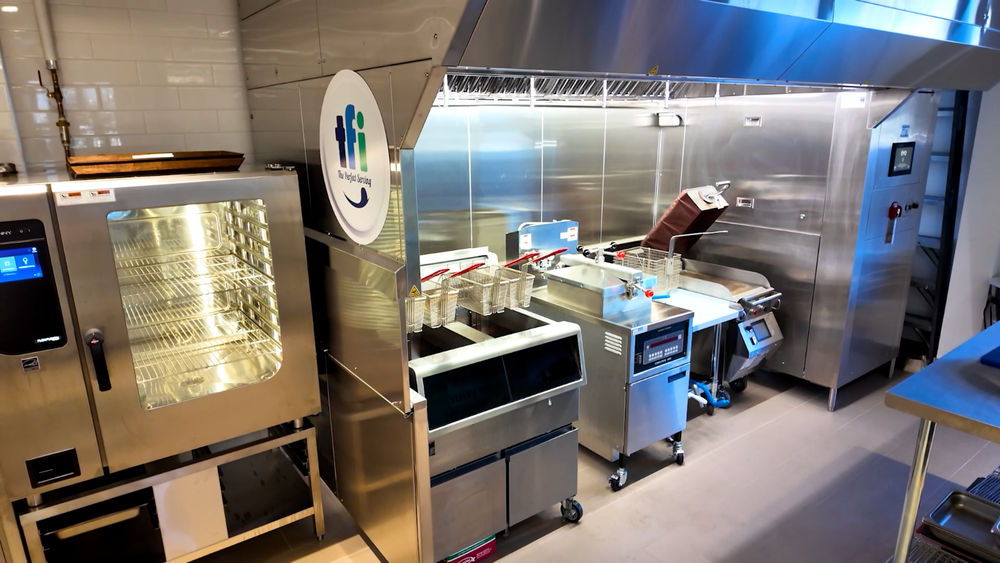
Inside the broader equipment number, segment data tells a sharper story. The Canadian food holding and warming equipment market alone is estimated at CAD 280 to 340 million in 2026, with merchandising display warmers representing 20 to 25% of value and convenience store hot-food programmes a primary driver. Ice and frozen beverage equipment continues to outpace the broader market, with the frozen beverage dispenser category growing at 6% CAGR through 2030 and the global frozen slush machine category expanding at 6.1% CAGR through 2033.
By installation type, freestanding units capture roughly 47% of global commercial foodservice equipment demand because single-asset replacement remains more common than full integrated kitchen redesign. By end-use, quick-service restaurants drive about 46% of equipment demand and full-service restaurants about 39%. The remainder splits across hotels, healthcare, education, corporate cafeterias, catering, and retail foodservice including convenience and grocery.
Segment One: Frozen Beverages and Soft Serve
Frozen beverages and soft serve are the highest-margin equipment category Canadian foodservice operators can buy, and 2026 demand is accelerating. The global frozen drinks market reached approximately USD 10 billion in 2024 and is growing at a 4.5% compound annual growth rate. The narrower frozen slush market reached USD 2.84 billion in 2024 and is on a 6.1% CAGR through 2033. Cold beverage consumption is moving year-round: in the coffee segment alone, 21% of past-day cups consumed in December 2024 were cold, up from 10% the year prior.
In Canada specifically, the frozen carbonated beverage category is anchored by convenience stores. The channel served 67% of all slush soft drinks in 2024, up from 56% in 2019, and 19% of c-store shoppers bought a frozen drink in the past month. North America holds 28.7% of the global soft serve machine market and is the fastest-growing region in the category through 2035.
Frozen beverage and soft serve programmes built around Taylor equipment regularly deliver 70 to 80% gross profit with payback periods of 6 to 18 months. That makes them the single highest-margin equipment investment a Canadian operator can make in 2026.
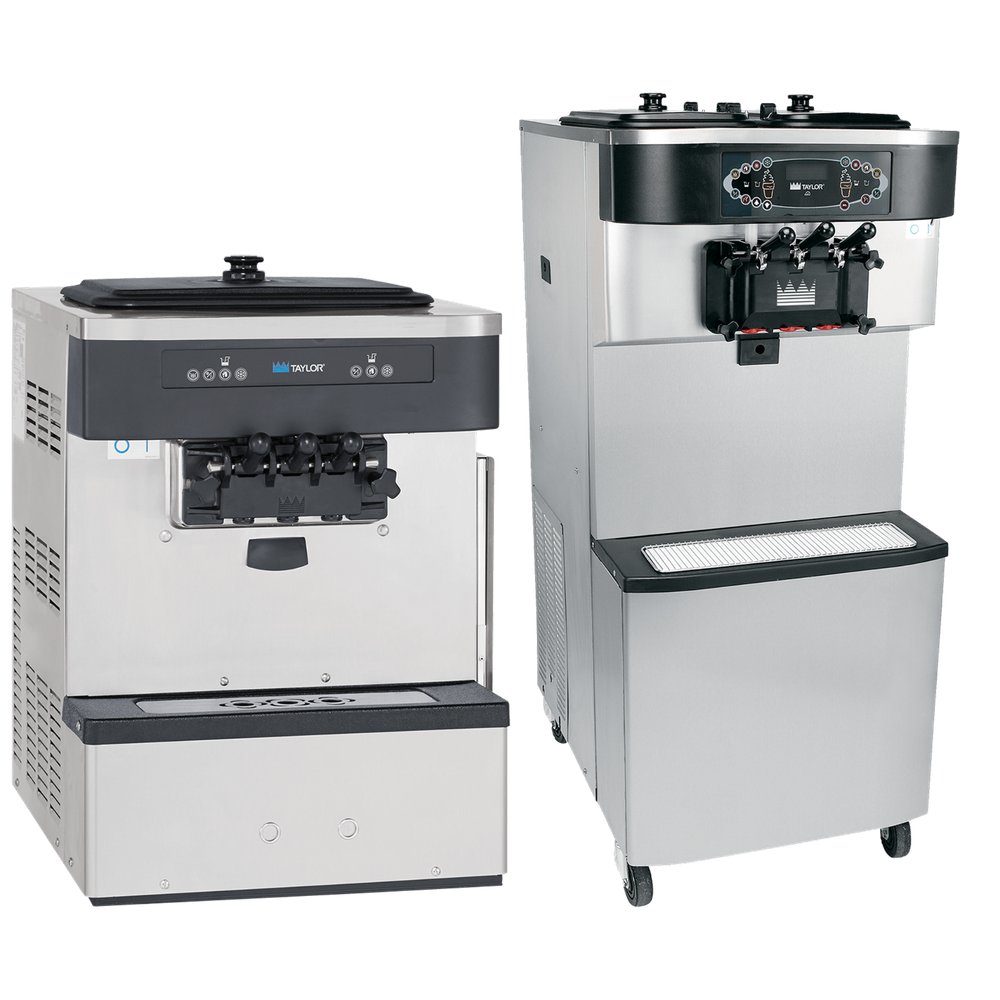
Equipment activity is following the consumer shift. Operators investing in Taylor frozen carbonated beverage machines, uncarbonated frozen dispensers, and soft serve freezers are pairing them with multi-flavour and self-serve configurations to capture both the impulse and the customisation trend. For smaller footprints, Icetro countertop slush machines and compact soft-serve units fit independent cafes, food trucks, and limited-service formats. TFI's think soft serve guide lays out the unit economics for operators evaluating their first machine, and the frozen beverage trends report covers the full category outlook for 2026.
Segment Two: Commercial Coffee Equipment
Coffee is Canada's most-consumed beverage. Seventy-one percent of Canadians reported drinking a coffee beverage yesterday in the Coffee Association of Canada's 2025 study, and the broader coffee market is projected to grow from USD 4.37 billion in 2024 to USD 6.21 billion by 2030, a 5.8% CAGR. Espresso-based drinks are growing inside that total, with 29% of Canadians having an espresso-based beverage in the past day, up from 24% in 2023. Lattes, Americanos, cappuccinos, and mochas are the top movers.
Equipment demand is bifurcating into two camps: convenience and quality. On the convenience side, super-automatic bean-to-cup machines are being chosen by c-stores, offices, hotels, and self-serve formats that want consistent espresso quality without barista labour. Franke's A Series and S Series anchor this segment in Canada, with super-automatic programmes delivering 80%+ gross profit and 6 to 12 month paybacks across volumes from a few dozen cups a day to several hundred.

On the quality side, independent cafes and specialty roasters continue to invest in traditional espresso platforms for differentiation, but the operational reality of 2026 is pushing many to add super-automatic stations as a hybrid model. Tim Hortons announced a $400 million investment in 2026 across 480 Canadian restaurants, with 26 new builds and 188 renovations in Ontario alone. Upgraded kitchen and beverage equipment is one of the four renovation priorities, signalling that even at the largest QSR scale, equipment refresh is core to the growth playbook. TFI's coffee trends guide for Canada covers the consumer side in detail, including the cold coffee shift that is reshaping cafe and c-store programmes.
Segment Three: Commercial Fryers (Open, Pressure, and Air)
Fryers are the workhorse of Canadian quick-service and convenience hot food, and 2026 is the year energy efficiency and oil management finally turned from premium features into table stakes. Energy Star certified commercial fryers use 15 to 30% less energy than conventional gas equivalents, with payback periods of 18 to 36 months even after a 10 to 20% upfront price premium. For operators staring at a 91% food cost concern and an 87% labour concern, that math is hard to argue with.
Henny Penny's Evolution Elite open fryer is the reference point for the low-oil-volume category in Canada, cooking the same volume of food in 40% less oil. Built-in Smart Touch Filtration filters one vat in roughly four minutes while other vats keep cooking, automating a task that used to consume meaningful labour every day. For pressure-fried chicken programmes, the Velocity Series pressure fryer drives the bone-in chicken format that anchors fried chicken QSR menus across Canada.
The third leg of the fryer segment is oil-free. Commercial air fryers and ventless fryers moved from niche to mainstream in 2026, particularly in ghost kitchens, healthcare facilities, schools, and high-traffic venues without conventional ventilation infrastructure. Ventless frying eliminates the need for a hood in many installations, materially changing site economics for new builds and conversions. LightFry's oil-free systems support the menu-health trend at independent restaurants and institutional operators looking to reduce oil costs and waste. TFI's best commercial deep fryers guide compares open, pressure, and air models for Canadian operators sizing a new programme.

A Henny Penny operator running an Evolution Elite at high volume saves thousands of dollars a year in oil costs alone. Combine that with the 18 to 36 month energy-efficiency payback and the fryer category becomes one of the clearest capex stories in 2026.
Segment Four: Combi Ovens and Multi-Function Cooking
Combi ovens (the cooking platforms that combine steam, convection, and combination modes in one cabinet) had the strongest year-over-year specification growth of any cooking equipment category in Canada in 2026. The reason is total cost of ownership math: a combi oven replaces a steamer, a convection oven, and often a smoker or low-temperature hold cabinet, reducing kitchen footprint by approximately 40% and labour hours by 25%. Payback periods of 24 to 36 months are common in mid-volume operations, and faster in high-volume bakery, healthcare, and institutional kitchens.
Henny Penny's FlexFusion combi ovens (offered in Gold, Platinum, and Dual-Chamber configurations) and SpaceSaver combis cover the range from compact independent kitchens to multi-deck high-volume bakeries. The Dual-Chamber model is increasingly specified by operators running breakfast and lunch dayparts that need to switch between roasting, baking, and steaming without cross-contamination. For bakery-led operators in particular, TFI's commercial oven for bakery guide for Canada covers the trade-offs between combi, convection, and deck platforms.

The 2026 combi adoption story is also a labour story. Combi ovens with programmable recipe management let operators deploy junior staff against a controlled cooking process, reducing reliance on skilled labour at a moment when 87% of operators name labour as a top cost concern. Connected combi ovens with remote monitoring and HACCP logging are appearing in multi-unit specifications as chains look to standardise cooking output across regions.
Segment Five: Holding, Warming, and Convenience-Store Hot Food
Hot-hold and food warming equipment is the quiet growth category in Canadian foodservice in 2026, and the driver is convenience stores. The contribution of c-stores to the Canadian foodservice industry could surpass $4 billion in 2026, according to Ipsos Foodservice Monitor data published in Convenience Store News Canada, after double-digit growth in each of the past three years. Generation Z has led a trade-down behaviour from quick-service restaurants to c-stores, and middle-aged Canadians are picking up the same hack. Convenience stores have spent years developing hot-food programmes that compete directly with QSR on quality and price, and the equipment investment is following.
The Canadian food holding and warming equipment market is estimated at CAD 280 to 340 million in 2026, with merchandising display warmers representing 20 to 25% of value and demand growth driven by retail deli and c-store hot-food programmes. The market is forecast to expand at 3.5 to 4.5% CAGR through 2035. For c-store operators, hot-hold cabinets are the back-end of a programme that often opens with a fryer, a roller grill, a coffee platform, and a frozen beverage dispenser. The full equipment lineup is what turns a single hot dog SKU into a $4 billion category contribution.
Half of all Canadian convenience foodservice traffic currently goes to the top two chains, leaving meaningful headroom for gas station brands and independent operators to capture share. The equipment cycle for those operators in 2026 starts with hot-hold and beverage and expands from there.
Payback Periods Across Major Equipment Categories
Payback period is the metric Canadian operators are most focused on in 2026, because the alternative is leaving the equipment as-is and absorbing the productivity, energy, or oil cost penalty. The table below summarises typical payback periods across the major categories, based on manufacturer specifications, and published industry sources. Actual paybacks depend on volume, menu mix, energy rates, labour rates, and financing structure.
Equipment Category | Typical Payback | Margin or Savings Driver | Reference Source |
|---|---|---|---|
Soft serve, slush, and frozen beverages (Taylor, Icetro) | 6 to 18 months | 70 to 80% gross profit on programme | TFI Taylor profit programme |
Super-automatic coffee (Franke A Series, S Series) | 6 to 12 months | 80%+ gross profit on beverage | TFI Franke profit programme |
Open fryers (Henny Penny Evolution Elite, F5) | 12 to 24 months | 40% less oil, reduced filtration labour | TFI Henny Penny profit programme |
Energy Star certified cooking equipment | 18 to 36 months | US DOE FEMP | |
Combi ovens (replacing 2 to 3 single-function units) | 24 to 36 months | Commercial Kitchen Checklist 2026 | |
Pressure fryers (Henny Penny Velocity) | 18 to 30 months | Yield and oil life vs open fryers | Henny Penny manufacturer data |
Hot-hold and merchandising warmers | Operator-specific | Programme contribution rather than direct payback | IndexBox holding equipment report |
Commercial air fryers (LightFry) | 18 to 36 months | Oil cost elimination, lower waste | TFI commercial air fryers guide |
Commercial ice machines | 24 to 48 months | Replacement of bagged ice, reliability | Manufacturer / utility data |
Across every category, the operators reporting the strongest paybacks in 2026 are the ones who model labour and oil savings explicitly, not just food-cost margin. The combi oven and Henny Penny low-oil-volume fryer cases are the clearest examples.
What Canadian Operators Are Actually Buying in 2026
Equipment market size and growth rates describe the bucket. To understand what is actually moving in 2026, the operator-purchase patterns are clearer. Five themes stand out.
Selective capex over comprehensive remodels. Single-asset replacement still drives roughly 47% of equipment demand globally. Operators are deferring full kitchen redesigns where they can and concentrating spend on the unit that delivers the fastest payback. Henny Penny low-oil-volume fryers, Taylor frozen beverage equipment, and Franke super-automatic coffee systems are the three most-asked-about TFI categories in 2026 because the unit-level economics are easiest to model.
Energy efficiency is now a default specification, not a premium upgrade. Energy Star fryers and combi ovens are being specified more often even on tight capital budgets because the 15 to 30% energy delta compounds against rising utility costs. Heat-recovery systems that preheat water or sauces using fryer or oven exhaust can deliver another 15% off energy bills.
Convenience-store hot food is driving compact, high-throughput equipment. With c-stores closing in on $4 billion of foodservice contribution, the equipment going into a typical Canadian c-store hot-food refresh in 2026 includes a roller grill or fryer, a hot-hold and merchandising warmer, a coffee platform (often a Franke super-automatic), and a frozen beverage dispenser. The category contribution from c-stores is rising even as QSR profitability falls, which is rerouting equipment dollars toward the channel that is growing.

Used and refurbished equipment is taking real share. With 36% of operators at break-even or loss, certified used equipment has moved from a budget last resort to a strategic option for QSR multi-unit operators, single-location independents, and even some chain franchisees. The hybrid playbook (buy durable items used, lease high-tech and revenue-generating items new) is the consensus 2026 approach.
Connected and self-serve formats are expanding. Self-serve frozen beverage stations, self-serve coffee platforms, and digitally connected kitchens with remote monitoring are all expanding faster than the baseline market. Seven percent of c-store customers are now making purchase decisions in an app before they reach the store, which is reshaping how operators position visible equipment like coffee and frozen drinks. Tim Hortons' $400 million 2026 investment explicitly names "improved digital ordering and pickup and upgraded kitchen equipment" as core renovation priorities.
Ontario and Atlantic Canada: Regional Equipment Notes
Equipment demand in TFI's service region of Ontario and Atlantic Canada follows national patterns with regional twists worth flagging.
Ontario, anchored by the Greater Toronto Area and Mississauga, is the highest-volume foodservice equipment market in Canada and the centre of national chain headquarters and supply chains. Tim Hortons' 2026 renovation programme includes 26 new builds and 188 renovations in Ontario, the highest share of any province. Independent restaurant density in Toronto, Mississauga, Brampton, Hamilton, and Ottawa keeps demand strong for combi ovens, super-automatic coffee, and frozen beverage equipment. TFI's Mississauga showroom at 5945 Airport Road provides equipment live equipment and chef demos for operators who want to test equipment before they buy.
Atlantic Canada (Nova Scotia, New Brunswick, Prince Edward Island, and Newfoundland and Labrador) has a smaller absolute market but a strong c-store and tourism component that drives concentrated demand for frozen beverage, hot-hold, and coffee equipment. Halifax, Moncton, Dartmouth, Charlottetown, and St. John's all see sharp seasonal spikes in tourism-driven foodservice, with year-round c-store and grocery foodservice providing the baseline. TFI's Dartmouth showroom at 109 Ilsley Avenue supports Atlantic operators with local sales, service, and parts inventory, reducing downtime for chains and independents that would otherwise rely on distant suppliers.
How Operators Are Making the Investment Math Work in 2026
For 60+ years, TFI Food Equipment Solutions has been Canada's largest supplier of specialty foodservice equipment and programmes. TFI serves approximately 94% of Canadian convenience store chains, eight national quick-service restaurant clients, and thousands of independent operators across Ontario and Atlantic Canada. That position gives TFI a clear read on what is moving in the market in 2026 and how operators are structuring their purchases when capital is tight.
Five financing and procurement pathways are taking share in 2026:
Lease-to-own financing. Converts a large upfront purchase into a predictable monthly payment and preserves working capital for inventory, labour, and rent. Learn more about leasing food equipment.
Equipment rentals. TFI rentals let operators trial a frozen beverage, soft serve, or coffee platform without long-term capital commitment, useful for seasonal volume, event venues, or pilot programmes.
Certified used and refurbished equipment. TFI used inventory includes Taylor, Henny Penny, and Franke units that have been inspected, refurbished where needed, and warranted, lowering the entry price for cost-sensitive operators.
Government-backed lending. The Canada Small Business Financing Programme and BDC equipment loans both support foodservice equipment purchases, with TFI's restaurant equipment financing guide for Canada covering the qualification path in detail.
Hybrid buy-versus-lease strategies. TFI's leasing vs buying guide for 2026 lays out when to own (durable, low-tech items) and when to lease (high-tech, revenue-generating equipment).
The single most important shift in 2026 is that operators are running the total cost of ownership math more carefully than they were two years ago. That includes service and maintenance: TFI's preventative maintenance and monthly service program is staffed by 100+ factory-trained technicians (with average tenure of approximately 10 years) covering Taylor, Henny Penny, Franke, LightFry, and Icetro for sales and repair, plus repair-only coverage for Pitco, TurboChef, Blodgett, Desmon, HydraRinse, Nieco, Perfect Fry, and RAM. A single-source equipment and service partner removes the coordination cost that separate dealers and third-party repair companies impose on independents.
2026 Equipment Trend, Action, and Equipment Cheat Sheet
2026 Industry Trend | What Operators Should Do Next | Equipment or Programme Action |
|---|---|---|
Real foodservice sales flat or down 0.2% in 2026 | Focus capex on highest-margin or highest-savings categories first | Prioritise Taylor frozen beverage (70-80% GP), Franke coffee (80%+ GP), Henny Penny low-oil fryers (40% less oil) |
91% of operators name food costs as a top concern | Switch to equipment that yields more product from the same input | |
87% of operators name labour as a top concern | Specify equipment that automates filtration, cooking, and recipe management | Henny Penny Smart Touch Filtration; Franke super-automatic coffee; programmable combi ovens |
Cold beverage consumption up year-round (21% of December coffee cold) | Add frozen and iced beverage programmes alongside hot coffee | |
C-store foodservice nearing $4B with double-digit growth | Build full hot food + cold beverage + coffee programme in c-store format | Roller grill or fryer + hot-hold + Franke super-automatic + Taylor frozen beverage |
Energy efficiency now a default specification | Specify Energy Star wherever available, including fryers and combi ovens | Henny Penny Evolution Elite, FlexFusion combi ovens, induction cooking platforms |
Ventless and low-oil frying mainstream in 2026 | Evaluate ventless and oil-free options for new builds and conversions | LightFry commercial air fryers; Henny Penny low-oil-volume open fryers |
36% of operators at break-even or loss | Use rentals, certified used, lease-to-own, and CSBFP-backed financing |
FAQs
What is the state of Canadian foodservice equipment in 2026?
Canadian foodservice equipment is a USD 916.4 million market in 2024, growing at a 5.6% CAGR toward USD 1.27 billion by 2030, even as the broader Canadian restaurant industry sees real sales decline 0.2% in 2026 per Restaurants Canada. Operators are buying selectively, prioritising high-margin categories (frozen beverage, coffee) and high-savings categories (low-oil fryers, combi ovens, energy-efficient cooking equipment). Convenience stores are an outsized growth channel, contributing close to $4 billion of foodservice sales in 2026.
What is the typical payback period on commercial foodservice equipment in 2026?
Payback periods vary by category. Frozen beverage and soft serve equipment from Taylor delivers 70 to 80% gross profit with 6 to 18 month paybacks. Franke super-automatic coffee systems deliver 80%+ gross profit with 6 to 12 month paybacks. Energy Star certified fryers and combi ovens typically pay back in 18 to 36 months on energy savings alone. Henny Penny low-oil-volume open fryers reduce oil usage by 40%, saving operators thousands of dollars per year and paying back in 12 to 24 months.
What equipment are Canadian foodservice operators buying most in 2026?
The three most-asked-about categories for TFI in 2026 are Taylor frozen beverage and soft serve machines, Franke super-automatic coffee systems, and Henny Penny low-oil-volume open fryers. Combi ovens are seeing the strongest year-over-year specification growth in cooking equipment, driven by their ability to replace multiple single-function units while cutting labour and footprint. Hot-hold and merchandising warmers are the quiet growth category, anchored by the convenience store hot food boom. For a deeper view, see TFI's menu ideas for Canadian restaurants.
How much will food prices rise for Canadian foodservice operators in 2026?
Dalhousie University's Canada Food Price Report 2026 forecasts overall food prices to rise 4% to 6% in 2026, adding up to $994.63 to the average family of four's annual grocery bill. For operators, that compounds the 91% who already name food costs as a top concern in Restaurants Canada's Q1 2026 report. It is one reason that yield-improving equipment (combi ovens, pressure fryers, low-oil-volume fryers) is moving faster than the broader market.
Should Canadian foodservice operators lease, buy, or rent equipment in 2026?
The 2026 consensus is hybrid: own durable, low-tech items (stainless tables, basic ranges); lease or rent high-tech, revenue-generating equipment (frozen beverage, soft serve, super-automatic coffee, low-oil fryers); and consider certified used for selected items where warranty-backed pre-owned units fit the budget. TFI's leasing versus buying guide for Canada covers the trade-offs in detail, and equipment rentals let operators trial a programme without committing to a long-term purchase.
Take the Next Step
Whether you are evaluating a single Taylor frozen beverage machine, a full Franke coffee platform, a Henny Penny fryer upgrade, or a combi oven specification for a new build, TFI's factory-trained team can size the right equipment, model the payback, and keep the programme running with preventive maintenance and rapid-response repairs. We are Canada's leading distributor of Taylor, Franke, and Henny Penny food equipment.
TFI Food Equipment Solutions supports Ontario, Nova Scotia, New Brunswick, Prince Edward Island, and Newfoundland and Labrador with sales, installation, training, rentals, leasing, and 24/7 OEM-quality service.
Ask for an equipment demo in Mississauga or Dartmouth, or request a free quote today!
Sources
Primary sources include Restaurants Canada Q1 Quarterly Report, Statistics Canada monthly food services data, the Coffee Association of Canada 2025 trends study, Dalhousie's Canada Food Price Report 2026, and Ipsos Foodservice Monitor data covered by Convenience Store News Canada. For equipment market sizing specifically, Grand View Research's Canada food service equipment outlook and IndexBox's Canadian food holding and warming equipment report are the most useful starting points.

Nicole Camposeo-Cheung is the Director of Marketing, People & Culture at TFI Food Equipment Solutions, Canada’s leading provider of premium commercial foodservice equipment. She combines her expertise in business management and fashion arts to foster a dynamic, innovative, and people-centric corporate culture. Passionate about empowering teams, building strong client relationships, and driving growth through creativity and collaboration, Nicole plays a key role in shaping TFI’s brand and workplace culture. She also shares her industry expertise and insights through the TFI blog, helping foodservice professionals stay informed about the latest trends, best practices, and innovations in commercial food equipment.
Add a comment
This will be publicly visible.
Your email address will not be published.
Your comment will be reviewed by an admin before it is published.


