Commercial Fryer Oil Filtration: Built-In vs Portable Filter Machines for Canadian Kitchens
Compare fryer oil filter options for commercial kitchens: manual draining, portable filter machines and built-in filtration, with cost math per fryer per year.

A fryer oil filter routine does more to control the running cost of a commercial fryer than any other habit in the kitchen. Oil is the fryer's largest consumable, and how often you filter it decides how often you throw it out and buy it again. Canadian operators have three ways to do the job: manual draining, a portable filter machine that rolls up to the fryer, or filtration built into the fryer itself. This guide compares all three, runs the cost math for one fryer over a year, gives a filtering schedule by volume, and shows how Henny Penny's built-in systems on the Evolution Elite and F5 remove the labour and the hot-oil handling.
Pricing a new fryer? Request a fryer quote with financing from TFI's team in Ontario or Atlantic Canada.
Why Oil Filtration Is the Biggest Lever on Fryer Operating Cost
Filtration sets oil life, and oil life sets your oil bill. Crumbs and batter left in the vat keep cooking, carbonize and speed up the breakdown of the oil around them, so every hour between filters shortens the oil's working life. Filtering pulls those particles out and resets the clock. For the full picture on how oil degrades and what it costs Canadian kitchens, see our guide on how to cut fryer oil costs.
The money follows directly. Oil you discard is oil you buy again, so a vat that lasts seven days instead of four cuts oil purchases by more than 40%. Henny Penny estimates that a lower-oil fryer with frequent filtration and automatic top-off saves the average operation about $5,000 a year in oil. At a 5% profit margin, the manufacturer notes, that saving carries the same profit impact as $100,000 in added sales.
Three Ways to Filter Fryer Oil
Manual draining is the cheapest to set up and the most expensive to run. Portable filter machines filter well but cost crew time on every cycle. Built-in filtration makes filtering fast enough to do several times a day.
Manual Draining and Cone Filtering
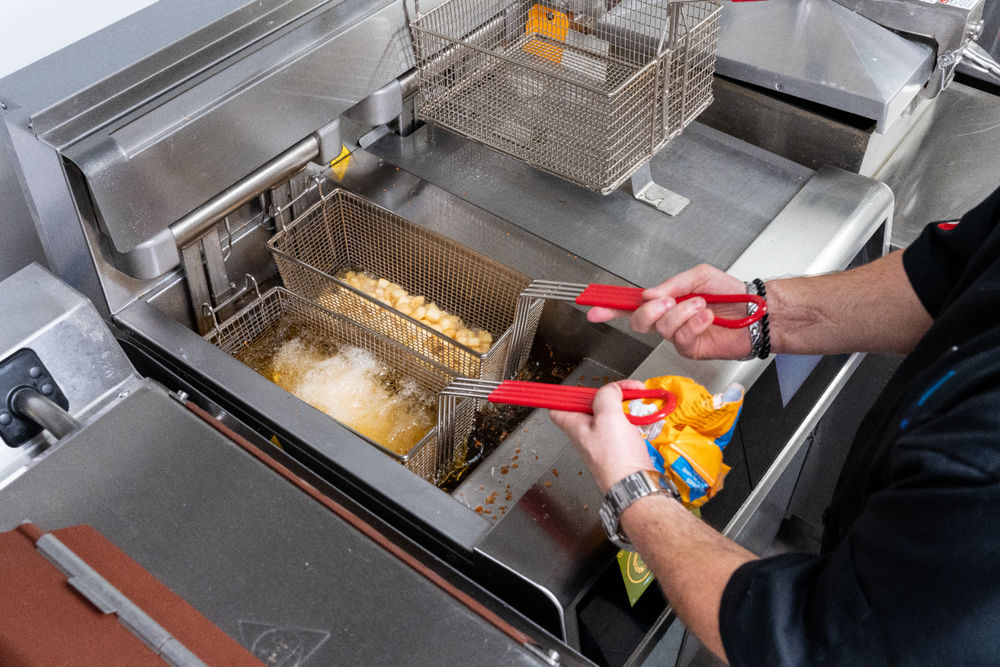
Crew skims the vat, drains oil through the valve into a pot, pours it through a paper cone and returns it to the fryer. It needs nothing beyond a stockpot, a cone holder and filter cones, but it means carrying and pouring hot oil. Restaurant Technologies reports that scalding from hot grease and oil is the leading cause of burns in restaurant settings, with filtering, replacing and carrying cooking oil among the tasks most often involved. Because the job is slow and unpleasant, it gets skipped, and the oil gets dumped early instead.
Portable Fryer Filter Machines
A portable fryer filter machine, often called a filter cart, is a wheeled tank with a pump and filter media. Crew rolls it under the fryer, drains the vat into it, pumps the oil through filter paper or an envelope, and returns it by hose. Current US listings for 50 to 75 lb carts run from about US$1,400 to US$7,500 depending on capacity and pump type. A cart works with almost any fryer, which makes it useful for older or mixed-brand fryer lines. The trade-off is time: every filter means positioning the cart, draining, pumping, returning the oil and cleaning the cart, so most kitchens filter once a day at close and no more.
Built-In Fryer Oil Filtration
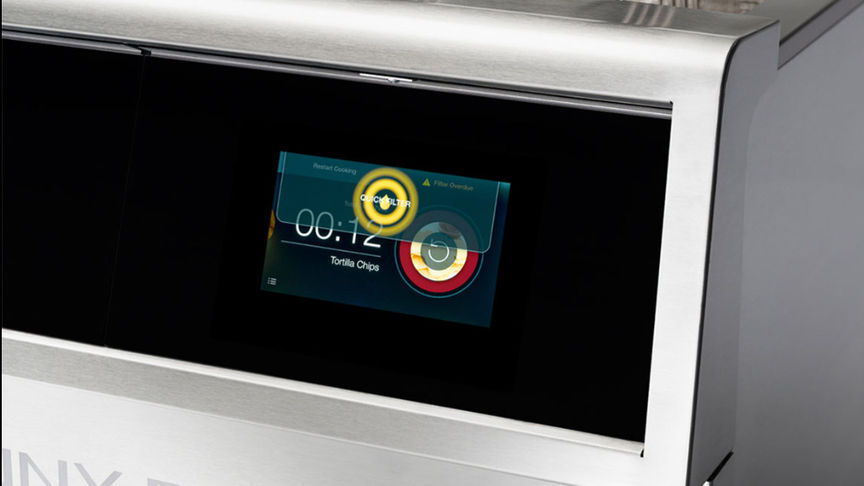
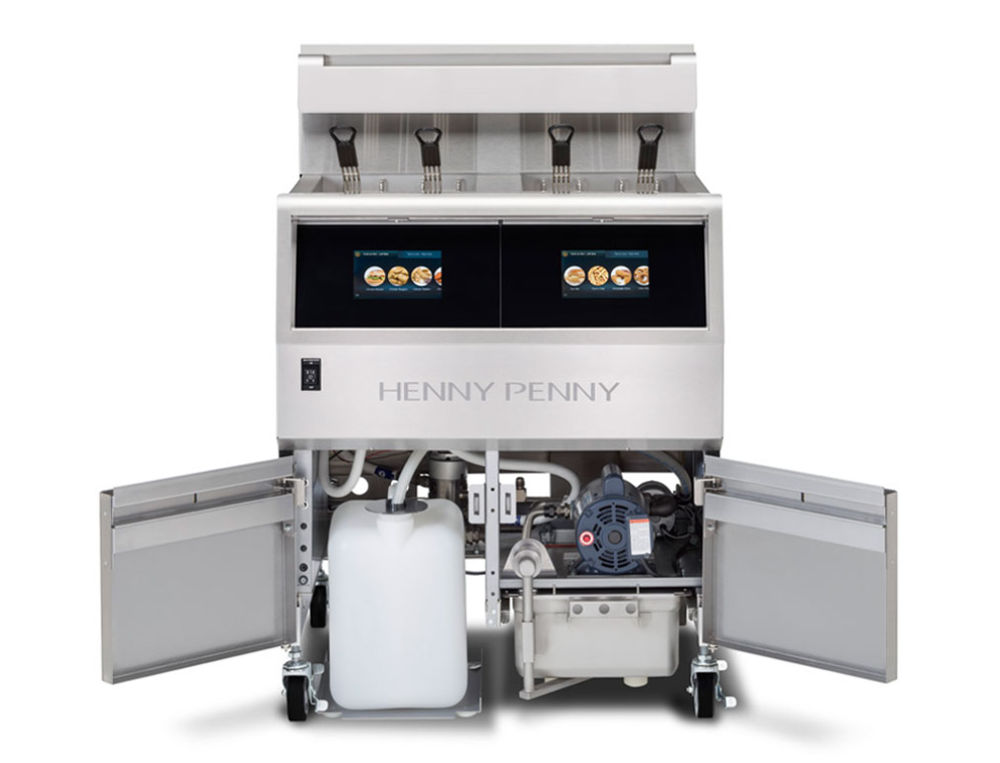
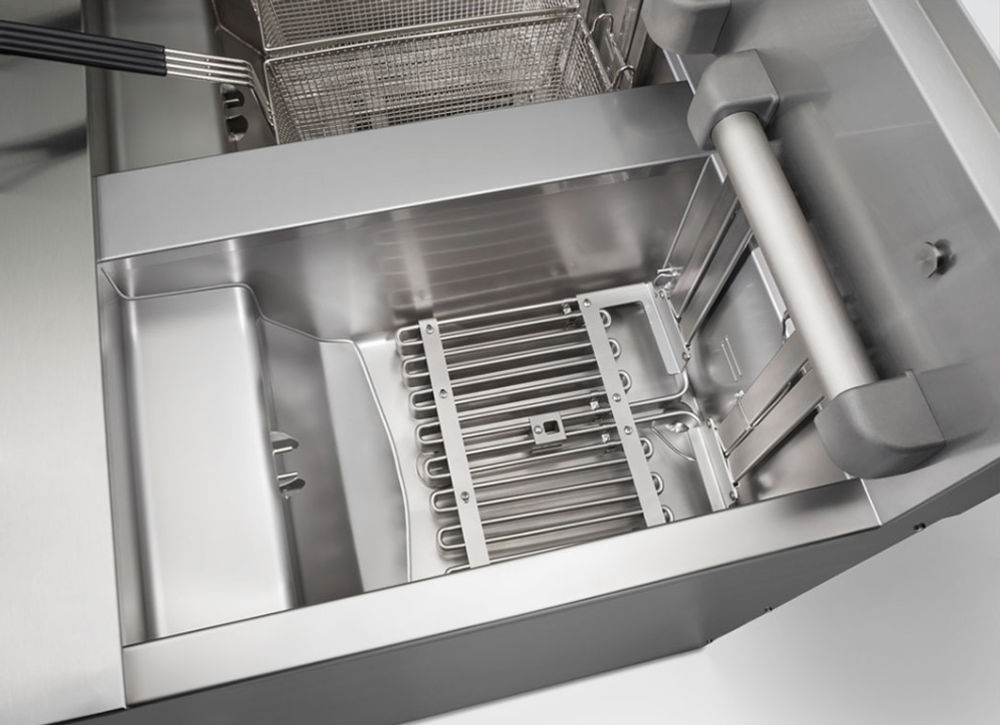
A fryer with built-in filtration keeps the filter pan, pump and plumbing inside the cabinet. Oil drains from the vat into a filter pan underneath, passes through the filter media and pumps back into the vat. On Henny Penny's Evolution Elite and F5, the cycle runs from the control panel in three to four minutes while the other vats keep cooking. No one carries or pours hot oil. Because filtering takes a few touches instead of a 15-minute routine, crews can filter after every rush instead of once a day.
Manual draining | Portable filter machine | Built-in filtration | |
|---|---|---|---|
Equipment cost | Stockpot, cone holder, filter cones | About US$1,400 to US$7,500 per cart | Included in the fryer |
Crew time per filter* | 20 minutes or more | About 15 minutes | About 1 minute (the fryer runs a 3 to 4 minute cycle) |
Hot oil handling | Carried and poured by hand | Drained into a cart and wheeled away | None; oil stays inside the fryer |
Realistic frequency | Irregular | Once a day | After every rush, plus a daily full filter |
Works with | Any fryer | Any fryer | The fryer it is built into |
*Crew time figures are TFI estimates for planning, not manufacturer specifications.
Fryer Oil Filter Cost Math: One Fryer, One Year
In the model below, moving a single-well fryer from manual draining to built-in filtration on a 30 lb vat cuts oil and filtering labour from about $6,580 to about $3,820 a year. Every assumption is listed so you can swap in your own numbers.
Assumptions
Oil price: $46.79 for a 16 L jug of canola, about $2.92 per litre (A1 Cash & Carry, GTA). High-oleic frying oils cost more, which makes every saving below larger.
Vat size: a standard 50 lb vat holds about 25 L. Henny Penny's 30 lb vats hold 14.2 L on the Evolution Elite and 15 L on the F5; the model uses 15 L.
Operating year: 360 days, with crew time costed at $20 an hour including payroll costs.
Oil life: 4 days with manual draining (filtering gets skipped) and 7 days with a daily portable filter. For built-in filtration the model holds oil life at 7 days even though the fryer is filtered four times a day, so the table isolates the effect of vat size and labour. More frequent filtering usually stretches oil life further.
Crew time: 15 minutes per portable filter, once a day. Built-in: one thorough daily filter (about 10 minutes of crew time) plus three quick filters at about 1 minute each.
Per fryer, per year | Manual draining (50 lb vat) | Portable filter machine (50 lb vat) | Built-in, Henny Penny 30 lb vat |
|---|---|---|---|
Oil changes | 90 | 51 | 51 |
Oil discarded | 2,250 L | 1,286 L | 771 L |
Oil cost | $6,580 | $3,760 | $2,256 |
Filters per day | 0 | 1 | 4 |
Crew time filtering | 0 hours | 90 hours | 78 hours |
Filtering labour | $0 | $1,800 | $1,560 |
Oil plus filtering labour | $6,580 | $5,560 | $3,816 |
Three things stand out. First, built-in filtration on a 30 lb vat saves about $1,740 a year per well against a portable cart and about $2,760 against manual draining. Across a four-well fryer that is roughly $7,000 to $11,000 a year, consistent with Henny Penny's estimate of about $5,000 for an average operation. Second, the portable cart barely beats manual draining once labour is counted. Matching the built-in fryer's four filters a day with a cart would add 270 crew hours, or about $5,400 a year. Third, the model leaves out upside: Henny Penny says its Prime filter media can extend oil life by as much as 50%, which at 10.5 days per change would cut the built-in oil line from $2,256 to about $1,500.
A portable filter machine saves oil and then spends much of that saving on labour. Built-in filtration is the only approach in this comparison that filters more often while using less crew time.
The model excludes filter media (covered below), the cost of a cart, and energy. It also excludes oil absorbed by food, which you top off regardless of fryer type.
How Often to Filter Fryer Oil: Frequency Table by Volume
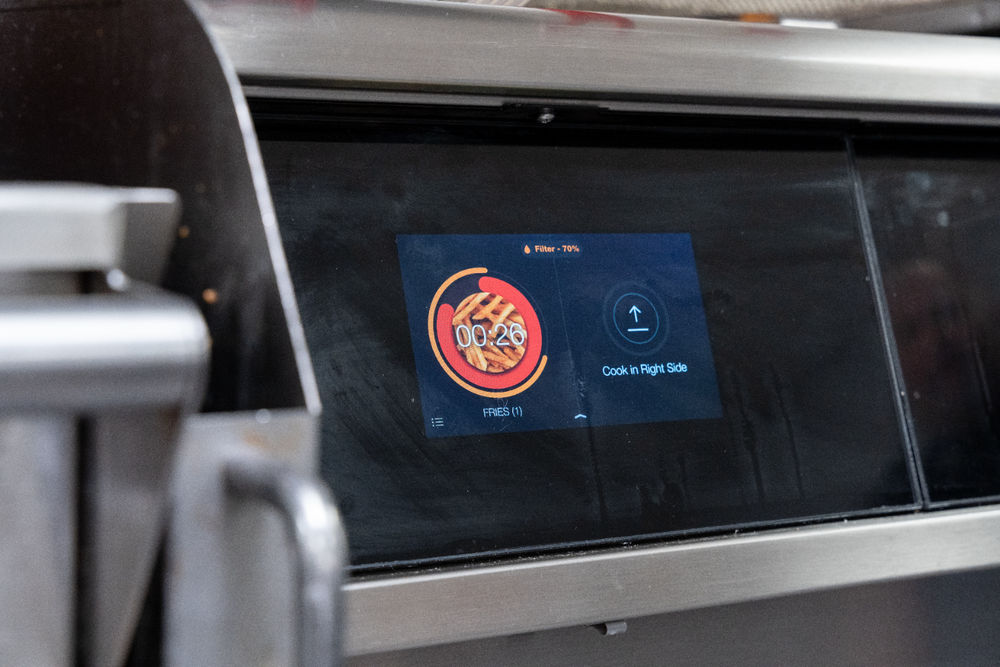
Filter fully once a day, change the filter pad daily, and run a quick filter every time the controller prompts; busier kitchens and fish vats need more. Henny Penny's Evolution Elite operator manual calls for a thorough filter once a day and a new filter pad at least once a day, or twice a day in stores open 24 hours. The controls count cook cycles per product and show a filter prompt when the set count is reached. Managers can also turn on a filter lockout that refuses further cook cycles until the vat is filtered.
Daily fry volume | Typical operation | Quick filter (Smart Touch or Simple Touch) | Full filter | Filter pad | Prime powder or packets |
|---|---|---|---|---|---|
Light: one busy meal period | Pubs, cafés, small independents | When the controller prompts, often 1 to 2 times a day | Once a day | New pad at the first filter of the day | Once a day |
Moderate: two meal periods | Casual dining, c-store hot food, delis | After each meal period, 2 to 3 times a day | Once a day | New pad daily | 1 to 2 times a day |
Heavy: frying all day | QSR, chicken and wing programs, grocery deli | At every prompt, with filter lockout on | Once a day | New pad daily; twice a day if open 24 hours | Twice a day |
Fish and seafood vats | Any volume | Set a lower cook-cycle count than for fries | Once a day | Change the pad after filtering a fish vat | 1 to 2 times a day |
The pad, fish-vat and 24-hour rules come from the Henny Penny manual, and the powder frequency comes from Henny Penny's Prime guidance. Quick-filter counts are TFI starting points: set the cook-cycle count for each product in the fryer controls, then adjust based on oil colour, taste and change intervals.
Filter Paper, Pads and Powder: What Filter Media Costs
Filter media is a daily consumable for every filtration method, and depending on the product it runs from about US$1.30 to US$6.30 a day per filter pan. Henny Penny sells its media under the Prime name in three forms: HD filter pads, pre-portioned filter packets and bulk powder. Henny Penny says its filtration aids can prolong oil life by as much as 50%, and its Prime guidance is to add powder to the oil one to two times a day.
Henny Penny media | Part no. | Pack | US price seen | Per unit | Per year at one a day |
|---|---|---|---|---|---|
Prime Filter HD pad, 11 x 19 in (Evolution Elite) | 12090 | 30 pads | About US$5.02 to US$6.27 | About US$1,810 to US$2,260 | |
Prime Filter Packets, 4.8 oz | 12092 | 90 packets | About US$1.33 | About US$480 (US$960 at twice a day) | |
Prime Filter Powder, bulk | 12088 | 22 lb | Quote | Varies by dose | Varies |
A few points keep media spend under control:
One pad serves the day. The manual calls for a new pad on the first filter of each day, and the same pad can be used for the rest of the day, except after filtering a fish vat.
Media condition affects filter speed. Henny Penny's 3-minute F5 filter time assumes the media is saturated with oil but not overloaded with impurities, and changed at the recommended frequency. A clogged pad slows the pump and can leave the vat underfilled.
Portable carts need media too. Carts use their own paper or envelopes, usually with powder, and they also need fresh media every day, so media spend is broadly similar between portable and built-in filtration. Manual cone filtering uses cheaper cones, but that saving is small next to the extra oil it wastes.
Prices above are US retail figures. Canadian pricing differs, and TFI's parts team can quote genuine Henny Penny filter media in Canadian dollars through our parts ordering page.
Henny Penny Built-In Filtration on the Evolution Elite and F5
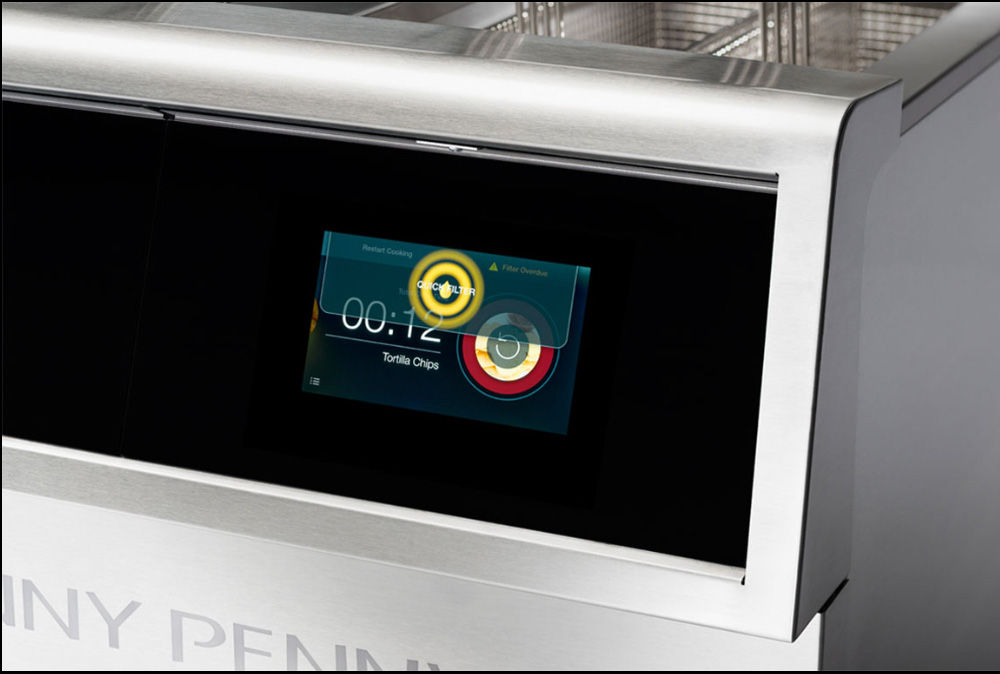
Both Henny Penny low-oil-volume open fryers that TFI sells filter from the control panel, keep the other vats cooking during the cycle, and top off oil automatically. Henny Penny names the systems differently: Smart Touch Filtration on the Evolution Elite and Simple Touch Filtration on the F5.
Evolution Elite: Smart Touch Filtration
The Henny Penny Evolution Elite lets crew filter any vat at any time in 4 minutes at the touch of a button. The controller tracks cook cycles, prompts when a vat is due, and can be set to lock the vat out until it is filtered, so filtering does not depend on someone remembering. Automatic oil top-off refills each vat from a jug-in-box (JIB) or an onboard reservoir, which keeps the oil level steady without anyone pouring oil into a hot vat. Each full vat holds 30 lb (14.2 L). TFI carries the Evolution Elite in electric (EEE) and gas (EEG) models, from one to four wells.
F5: Simple Touch Filtration
The Henny Penny F5 is built on the same 30 lb platform (15 L per full vat) with a 7-inch touch-and-swipe control. According to Henny Penny's F5 data sheet, Simple Touch Filtration starts with three touches or fewer. It drains and filters the oil, rinses away crumbs, and returns hot filtered oil to the vat in as little as three minutes, using an 8 gpm (30 L per minute) pump and nozzles aimed at the corners of the vat. There are no handles, valves or knobs to operate. Henny Penny notes the 3-minute time assumes a kitchen at 22°C or warmer, a drain pan at 71°C or hotter at the start of the cycle, and media changed at the recommended frequency. Automatic top-off draws from a JIB or a reservoir inside the cabinet.
Henny Penny series | Models at TFI | Power | Wells | Oil per full vat | Built-in filtration | Filter cycle (Henny Penny) | Automatic top-off |
|---|---|---|---|---|---|---|---|
Evolution Elite | Electric | 1 to 4 | 30 lb (14.2 L) | Smart Touch Filtration | 4 minutes | Yes, JIB or onboard reservoir | |
Evolution Elite | Gas | 1 to 4 | 30 lb | Smart Touch Filtration | 4 minutes | Yes, JIB or onboard reservoir | |
F5 | Electric | 1 to 4, full or split vat | 30 lb (15 L) | Simple Touch Filtration | As little as 3 minutes | Yes, JIB or cabinet reservoir |
Where Henny Penny's 40% Less Oil Claim Comes From
The 40% figure is a vat-size comparison. Henny Penny's F5 data sheet states that the 30 lb platform "cooks the same size load in 40% less oil than 50 lb vats," based on throughput tests to ASTM standards. The Evolution Elite product page makes the same comparison against standard 50 lb fryers. Thirty pounds is 40% less than fifty, and because the smaller vat cooks the same load, every oil change buys 20 lb less oil.
Henny Penny pairs that smaller vat with frequent filtration and automatic top-off, which it says keep the oil in its quality "sweet spot" for longer. One point to keep in mind when you budget: the 40% applies to the oil held in the vat at each change. Oil absorbed by food is topped off in any fryer, so your total oil bill falls by less than 40% in a kitchen that tops off heavily, and by more in one where oil life also improves.
When a Portable Filter Machine Still Makes Sense
A portable fryer filter machine is still the right tool in a few situations. If your current fryers have no built-in filtration and years of service left, a cart is the fastest way to start filtering daily. Kitchens running several brands of fryer can share one cart across the line. A fryer that only runs a few hours a week may not justify built-in filtration on its own.
The picture changes when a fryer is due for replacement. At that point the money you would spend on a cart, and the crew hours it takes every day, go toward a fryer that filters itself and holds 40% less oil. Whichever route you choose, filter pumps, drain valves and filter pan O-rings wear like any moving part, so include the fryer in a planned maintenance schedule to keep the filter cycle running at full speed.
Get a Henny Penny Fryer Quote with Financing
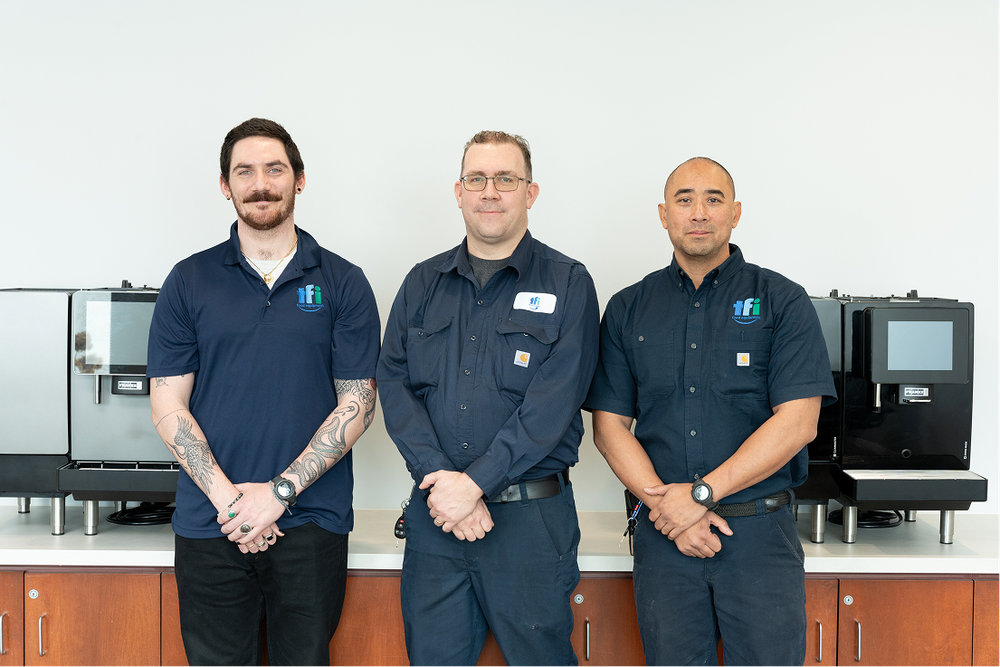
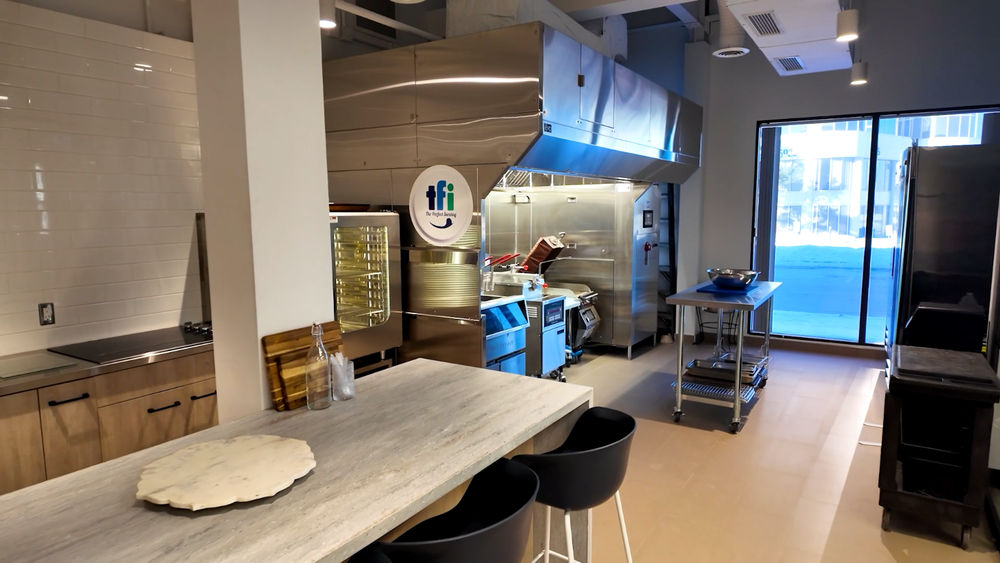
TFI sells, installs and services Henny Penny fryers across Ontario, Nova Scotia, New Brunswick, Prince Edward Island, and Newfoundland and Labrador. Ontario operators can watch the Evolution Elite and F5 filter cycles in person at our Mississauga showroom, and Atlantic Canada operators are supported from our Dartmouth location.
A new fryer does not need to be a cash purchase. TFI offers 12 to 60 month lease-to-own programs through our restaurant equipment leasing partners, and our fryer lease-to-own guide shows how oil savings can offset much of the monthly payment. Tell us how many wells you run and what you fry, and we will size the fryer, estimate your oil savings and quote the financing.
Request a fryer quote with financing and see what built-in filtration saves in your kitchen.
Frequently Asked Questions
What is a fryer oil filter?
A fryer oil filter is the media, usually a paper pad, envelope or cone, often combined with filter powder, that strains food particles and impurities out of frying oil. It can sit in a filter pan built into the fryer, inside a portable filter machine, or in a cone holder for manual filtering. Regular filtering extends oil life, which is the main way to lower a fryer's oil cost.
Is a portable fryer filter machine worth it?
A portable fryer filter machine is worth it for fryers without built-in filtration, because filtering daily beats not filtering. The catch is labour: each cycle takes crew time and involves moving hot oil, so most kitchens only filter once a day. If you are replacing a fryer, a model with built-in filtration usually costs less to run because it filters more often with less crew time.
How often should you filter fryer oil?
Henny Penny's Evolution Elite manual calls for a thorough filter once a day and a new filter pad at least daily, or twice a day for 24-hour stores. On top of that, run a quick filter whenever the fryer controls prompt, which in a busy kitchen can mean after every meal period or more. Fish vats need more frequent filtering and a pad change after each filter.
How long does fryer oil last with filtration?
Oil life depends on your menu, volume and filtering routine, so the reliable answer comes from tracking your own change intervals per vat. Breaded products, fish and salt all shorten oil life, while frequent filtering and steady top-off extend it. Henny Penny says its Prime filter media can prolong oil life by as much as 50% compared with filtering without it.
Can you filter fryer oil while it is hot?
Built-in systems like Henny Penny's are designed to filter hot oil inside the fryer, and the F5 returns hot filtered oil to the vat in as little as three minutes. Manual and portable methods involve draining hot oil into open containers or carts, which is where most kitchen burns happen. Henny Penny's manual calls for an apron, face shield and gloves before starting any filtering procedure.
Do Henny Penny fryers filter automatically?
Henny Penny's Evolution Elite and F5 prompt the crew to filter after a set number of cook cycles, then run the drain, filter, rinse and refill cycle at a touch. The crew still skims the vat and confirms the cycle. On the Evolution Elite, managers can enable a filter lockout that stops further cooking in that vat until it is filtered.

Nicole Camposeo-Cheung is the Director of Marketing, People & Culture at TFI Food Equipment Solutions, Canada’s leading provider of premium commercial foodservice equipment. She combines her expertise in business management and fashion arts to foster a dynamic, innovative, and people-centric corporate culture. Passionate about empowering teams, building strong client relationships, and driving growth through creativity and collaboration, Nicole plays a key role in shaping TFI’s brand and workplace culture. She also shares her industry expertise and insights through the TFI blog, helping foodservice professionals stay informed about the latest trends, best practices, and innovations in commercial food equipment.
Add a comment
This will be publicly visible.
Your email address will not be published.
Your comment will be reviewed by an admin before it is published.


