Is Canada's Fast Food Industry Slowing Down? The 2026 Numbers
The 2026 numbers on Canadian fast food: what sales, prices and chain results show, why quick-service growth has slowed, and how operators protect margin when traffic is flat.

Last updated: October 22, 2026
Canada's fast food industry is slowing, but it is not shrinking. After inflation, quick-service restaurant sales fell 1.9% in January 2026 and rose just 0.5% in February. In dollar terms, food service sales have risen for the seventh month in a row, reaching $8.9 billion in July 2026, and Restaurants Canada now expects real foodservice sales to grow 1.5% in 2026. The growth is coming from higher prices and promotions, not more visits. Here is what the 2026 data shows, why it is happening, and what quick-service operators in Ontario and Atlantic Canada are doing about it.
Running a quick-service restaurant and looking to cut cost per order? Request a free consultation from TFI's team in Ontario or Atlantic Canada.
The 2026 Fast Food Scorecard
Every major indicator points the same way: sales are still growing in dollars, visits are flat to down, and margins are getting thinner.
Measure | Latest number | Source and period |
|---|---|---|
Food service and drinking places sales | $8.9 billion, seventh straight monthly increase | Statistics Canada, July 2026 |
Limited-service eating places sales | +0.4% month over month (full-service +0.8%) | Statistics Canada, July 2026 |
Prices for food purchased from restaurants | +3.1% year over year (fast food and take-out +2.1%) | Statistics Canada, September 2026 |
Quick-service real sales | -1.9% in January, +0.5% in February | Restaurants Canada, May 2026 |
2026 real foodservice sales forecast | +1.5%, up from -0.2% in May | Restaurants Canada, July 2026 |
Operators at a loss or breaking even | 41%, up from 36% in March | Restaurants Canada, July 2026 |
Tim Hortons Canada comparable sales | +0.1% in Q2 (+3.6% a year earlier) | Restaurant Brands International, August 2026 |
A&W Canada same store sales growth | +1.8% in Q3, +1.3% year to date | A&W Food Services of Canada, October 2026 |
Pizza Pizza same store sales | -5.0% in Q2, -4.5% year to date | Pizza Pizza Royalty Corp., August 2026 |
Canadian fast food is still growing in dollars but not in visits. In 2026, the quick-service operators that grow are the ones that win on value, speed and cost per order.
1) What the Sales Data Shows
Fast food sales are still rising in dollars, but most of that rise is price. Statistics Canada reports that food service and drinking places sales rose 0.8% in July 2026 to $8.9 billion, the seventh straight monthly gain. Limited-service eating places, the category that covers fast food, grew 0.4% that month, half the 0.8% gain at full-service restaurants. Over the same period, prices for food purchased from restaurants rose 2.9% from July 2025, so a large share of the dollar growth reflects higher menu prices rather than more orders.
Strip out inflation and the picture gets flatter. Restaurants Canada's analysis shows quick-service real sales fell 1.9% in January 2026 and edged up a "tepid" 0.5% in February. Full-service real sales jumped 7.1% in February, but the association notes that mostly reflects a base effect after a 5.2% drop in February 2025. As Dalhousie's Sylvain Charlebois put it in March, real growth is now negative for quick-service restaurants, the measure that actually reflects volume and traffic.
The forecast has improved since spring. In its Q1 report in May, Restaurants Canada expected real commercial foodservice sales to decline 0.2% in 2026. Its Q2 report in July raised that to growth of 1.5%. That is a recovery in the outlook, but 1.5% real growth still leaves little room for error.

For scale, IBISWorld sizes Canada's fast food restaurant industry at $39.6 billion in 2026, across 21,209 businesses, after growing at a compound annual rate of 4.2% since 2021. The industry is large and still growing. It is growing more slowly, and more of that growth is price.
2) What Canada's Biggest Chains Are Reporting
Public results from three well-known Canadian quick-service chains show the same pattern: growth where there is a strong product or promotion, softness where there is not.
Tim Hortons. Tim Hortons kept Canadian comparable sales positive at 0.1% in the second quarter of 2026, according to Restaurant Brands International, against a strong 3.6% a year earlier.
A&W Canada. A&W Food Services of Canada reported same store sales growth of 2.1% in its second quarter, its strongest quarter in more than two years, driven by a national smash-style burger promotion that lifted both guest counts and average cheque. Its third quarter, reported October 16, added 1.8% same store sales growth, again driven by the smash-style burger promotion, which ran nationally for five of the quarter's 12 weeks. Year to date, same store sales are up 1.3%, with average cheque rising while same-store guest counts declined. The company's full-year guidance remains 0.5% to 3.0%, against 1.2% in fiscal 2025.
Pizza Pizza. Pizza Pizza Royalty Corp. reported same store sales fell 5.0% in the second quarter and 4.5% year to date. Pizza Pizza Limited's CEO pointed to "cautious consumer spending and heightened promotional competition across the QSR sector," along with a tough comparison against the prior year's strong NHL playoff run by several Canadian teams.
The takeaway for independent operators is simple. A strong promotion still brings guests in, as A&W's quarter shows, but it has to be built on items that carry margin, because guests are not adding visits on their own.
3) Why Fast Food Is Slowing in 2026
Fast food is slowing because it is no longer the cheap option, guests are eating out less often, and operators' costs are rising faster than they can raise prices.
Fast food got expensive. Charlebois notes that a combo meal that used to cost under $10 can now easily exceed $15 in many markets. Restaurant food prices were up 3.1% in the year to September. Dalhousie's food price report forecast overall food prices rising 4% to 6% in 2026, with chicken prices set to rise substantially as more shoppers switch from beef, though grocery inflation slowed to 1.7% in September.
Guests visit less often. In Restaurants Canada's Q1 report, 69% of operators said customers are dining out less because of affordability, and 54% reported fewer guests. On the consumer side, 53% of Canadians told the Coffee Association of Canada they are socializing less because going out for food and drinks is so expensive.
Guests trade down. Restaurants Canada reports weak consumer confidence is prompting guests to seek lower-priced menu options. A&W's rising cheque with falling guest counts year to date shows the same squeeze from the other side.
Labour costs keep climbing. Ontario's general minimum wage rose from $17.60 to $17.95 an hour on October 1, 2026, and labour sits alongside food as the top cost concern for Canadian operators.
Fuel and operating costs rose. Restaurants Canada's Q2 report flags rising fuel prices as a double hit: higher operating costs and reduced customer traffic and spending.
Our QSR trends guide covers how value dining became the default strategy for Canadian quick-service chains in response.
4) The Margin Squeeze: Who Is Feeling It Most
Quick-service operators are carrying the heaviest margin pressure in Canadian foodservice. In Restaurants Canada's Q1 report, 81% of quick-service operators reported declining profitability, against 70% of full-service operators. By the Q2 report, 41% of all operators were running at a loss or breaking even, up from 36% in March, and 64% said their profitability was lower than the year before.
Business failures are rising too. Accommodation and food-service insolvencies reached 360 in the first half of 2026, about 7.5% more than a year earlier, and second-quarter filings alone rose almost 19%, according to Charlebois. He has since revised his closure outlook: after forecasting a net loss of about 4,000 restaurants in 2026, he now places the likely net decline between 1,500 and 2,500.

The 2026 squeeze is a margin story more than a sales story: 41% of Canadian operators are at a loss or breaking even, and 81% of quick-service operators report falling profitability.
5) Is It a Fast Food Slowdown or a Restaurant Slowdown?
It is both, but quick-service is holding up better than its early-2026 numbers suggested. By August, Charlebois described quick-service restaurants as "comparatively resilient," crediting drive-thru networks, digital ordering, purchasing scale and value promotions. When budgets tighten, he notes, consumers often trade down from full-service dining to fast food rather than stop eating out.
Put the data together and the 2026 picture is clear. Fast food traffic is flat, not collapsing. The dollars are growing on price. Margins are under real pressure. The operators gaining share are the ones running sharp value on a lean cost base.
6) What Growing Quick-Service Operators Are Doing in 2026
The chains and independents still growing in 2026 are doing four things.
Leading with a value hero, while protecting the cheque. A&W's smash-burger promotion lifted guest counts and average cheque at the same time. The value item brings the guest in, and the add-on carries the margin.
Adding high-margin beverages and desserts. Coffee, frozen drinks and soft serve carry the best margins on a quick-service menu: Franke coffee programs earn 80%+ gross profit with 6 to 12 month payback, and Taylor soft serve and slush programs deliver 70-80% gross profit with 6 to 18 month payback.
Cutting labour minutes per order. With minimum wage rising and traffic flat, every minute saved per order goes straight to margin. Our guide to restaurant automation in Canada covers where the labour savings are.
Protecting uptime. When traffic is flat, a fryer or grill down at lunch is a direct loss. Planned maintenance costs less than a peak-hour breakdown.
7) Equipment Moves That Protect QSR Margin When Traffic Is Flat
When guests are not adding visits, margin comes from the kitchen: less oil, fewer labour minutes, higher-margin add-ons and fewer breakdowns.
Open fryers with automatic filtration. Henny Penny open fryers use up to 40% less oil in the vat, with built-in automatic filtration, a recurring saving on every shift. Our guide to cutting fryer oil costs shows the math.
Pressure fryers for chicken yield. With chicken prices forecast to rise, Henny Penny pressure fryers hold moisture at shorter cook times, which protects yield on the most expensive protein on the menu.
Clamshell grills for speed. Taylor two-sided grills cook both sides at once, which cuts cook times and labour per order during the lunch rush.
Super-automatic coffee. A Franke A Series machine pours espresso drinks without a barista, so beverage sales grow without adding staff hours.
Frozen desserts and drinks. Taylor soft serve and slush machines add a high-margin item to every value order.
Combi ovens for a smaller line. Combi ovens roast, steam and hold on one footprint, which lets a lean kitchen run more menu from fewer stations.
Lower-cost ways to add equipment. Lease-to-own financing and certified used equipment preserve cash in a year when 48% of foodservice companies expect profits to be worse.
Planned maintenance. TFI Total Care bundles planned maintenance, reactive service calls and training for one monthly fee, backed by 24/7 commercial kitchen equipment repair from factory-trained technicians using genuine OEM parts.

8) Ontario and Atlantic Canada
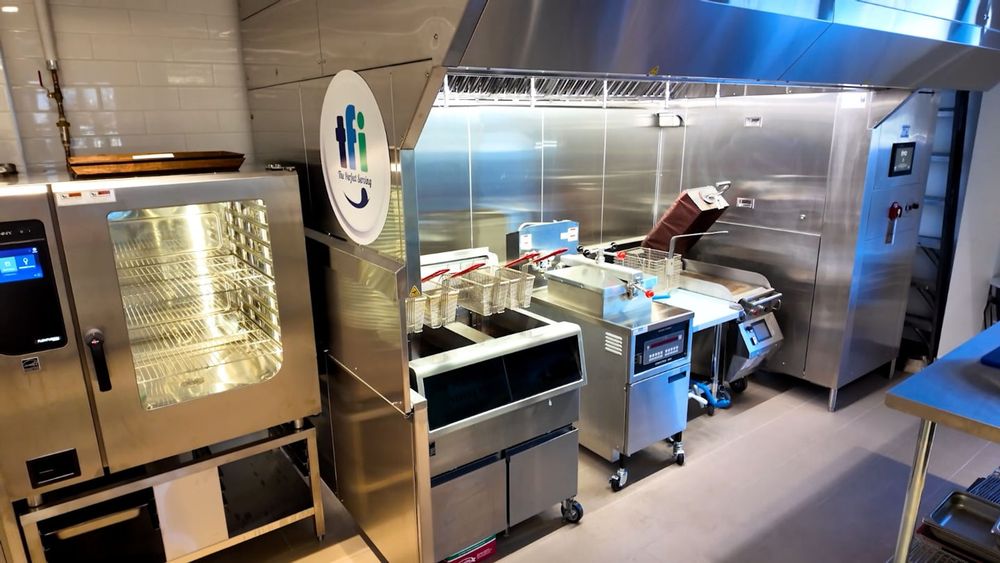
Ontario is Canada's largest food service market, with $3.49 billion in sales in July 2026, and its operators face a tight cost squeeze. The general minimum wage is now $17.95, Dalhousie expects Ontario food prices to rise faster than the national average in 2026, and A&W cited the economic environment in Ontario as a drag on its corporate restaurants this year. For operators in Toronto, Mississauga, Hamilton, Ottawa and London, the fastest wins are equipment moves that cut labour minutes and oil. TFI's Mississauga showroom runs live demos of the fryers, grills and coffee systems above.
Atlantic Canada posted the strongest per-capita foodservice spending gains in the country in 2025, supported by the temporary GST/HST holiday, according to Restaurants Canada, but Nova Scotia and New Brunswick are also forecast to see above-average food inflation in 2026. Quick-service operators in Halifax, Dartmouth, Moncton, Saint John, Charlottetown and St. John's face the same pressure on cheque and cost per order. TFI's Dartmouth location delivers the same Henny Penny, Taylor and Franke programs and service available in Ontario.
9) What to Watch for the Rest of 2026
Four releases will show whether the slowdown is easing or deepening:
Third-quarter results from Restaurant Brands International and Pizza Pizza this fall, the clearest read on Canadian quick-service traffic.
Statistics Canada's monthly food services releases, which track limited-service sales and restaurant prices.
Restaurants Canada's Q3 quarterly report, with an updated 2026 real sales forecast and profitability survey.
Dalhousie's Food Price Report 2027, due in early December, with the next year's food inflation forecast.
We update this page as each one lands.
FAQs
Is Canada's fast food industry slowing down?
Yes, in real terms. After inflation, quick-service sales fell 1.9% in January 2026 and rose just 0.5% in February. The industry is not shrinking, though: food service sales rose for a seventh straight month to $8.9 billion in July 2026, and Restaurants Canada expects real foodservice sales to grow 1.5% this year. Much of the dollar growth is price, not more visits.
Why is fast food so expensive in Canada?
Prices for food purchased from restaurants rose 3.1% in the year to September 2026, and a combo meal that once cost under $10 can now exceed $15 in many markets. Operators face rising food costs, with overall food prices forecast to climb 4% to 6% in 2026 (though grocery inflation slowed to 1.7% in September), plus higher wages and fuel costs. Quick-service restaurants pass part of those costs to menu prices because margins are already thin.
How big is the fast food industry in Canada?
IBISWorld sizes Canada's fast food restaurant industry at $39.6 billion in 2026, across 21,209 businesses. Canadians make 24 million restaurant visits a day, according to Restaurants Canada, and the broader foodservice sector recorded $8.9 billion in sales in July 2026 alone.
Are restaurants closing in Canada in 2026?
Some are. Accommodation and food-service insolvencies reached 360 in the first half of 2026, about 7.5% more than a year earlier, and 41% of operators were running at a loss or breaking even in Restaurants Canada's Q2 report. Charlebois now expects a net decline of 1,500 to 2,500 restaurants in 2026, revised down from his earlier forecast of about 4,000.
Is quick service doing worse than full service in 2026?
Early in the year, yes. Quick-service real sales fell 1.9% in January and rose just 0.5% in February, while full-service real sales jumped 7.1% in February, largely a base effect. In Restaurants Canada's Q1 report, 81% of quick-service operators reported declining profitability, against 70% of full-service operators. By August, quick-service looked more resilient, as price-conscious guests traded down from full-service dining to fast food rather than stop eating out.
How can quick-service restaurants protect margins in 2026?
Lead with a value item but pair it with high-margin add-ons like coffee, frozen drinks and soft serve, cut labour minutes per order, reduce oil use, and book planned maintenance to avoid peak-hour breakdowns. Henny Penny fryers use up to 40% less oil in the vat, and clamshell grills cut cook times. Our guide to restaurant equipment ROI shows how to model the payback before you buy.
Take the Next Step
TFI Food Equipment Solutions supports Ontario, Nova Scotia, New Brunswick, Prince Edward Island, and Newfoundland and Labrador with sales, installation, training, rentals, leasing, and 24/7 OEM-quality service. For more than 60 years we have equipped Canadian quick-service kitchens, including eight national QSR clients and roughly 94% of Canadian convenience store chains, and in a flat-traffic year we will help you model the equipment moves that cut cost per order. We are Canada's leading distributor of Henny Penny, Taylor, Franke, LightFry, and Icetro food equipment.
Ask for an equipment demo in Mississauga or Dartmouth, or request a free quote today.

Nicole Camposeo-Cheung is the Director of Marketing, People & Culture at TFI Food Equipment Solutions, Canada’s leading provider of premium commercial foodservice equipment. She combines her expertise in business management and fashion arts to foster a dynamic, innovative, and people-centric corporate culture. Passionate about empowering teams, building strong client relationships, and driving growth through creativity and collaboration, Nicole plays a key role in shaping TFI’s brand and workplace culture. She also shares her industry expertise and insights through the TFI blog, helping foodservice professionals stay informed about the latest trends, best practices, and innovations in commercial food equipment.
Add a comment
This will be publicly visible.
Your email address will not be published.
Your comment will be reviewed by an admin before it is published.

