

A frozen cocktail machine is a commercial slush machine that holds a batch of spirit and mix at a soft, scoopable temperature of roughly minus 2 to minus 3 degrees Celsius, so a bartender can pour a consistent frozen margarita or frozen daiquiri in seconds instead of blending each one to order. The same unit gets sold as a frozen drink machine, a frozen margarita machine, or a daiquiri machine depending on what goes in the barrel; the hardware is identical. Restaurants and bars reach for one because it turns a slow, noisy, labour-heavy drink into a high-margin item they can serve at patio speed. The catch is that alcohol does not behave like sugar syrup inside the barrel, and getting the blend wrong is the difference between silky slush and a soupy tank that never sets.
Adding frozen cocktails to your menu? TFI Food Equipment Solutions supplies and services Taylor and Icetro commercial slush machines across Ontario and Atlantic Canada, with leasing and financing available. Request a quote for your bar.

Frozen cocktail machine at a glance
What it is: a refrigerated, auger-driven barrel that batches and dispenses frozen alcoholic drinks on demand
Barrel ABV: a ceiling of roughly 12 percent alcohol by volume in the finished mix, with most programs running 6 to 10 percent
Freeze-down time: 45 to 90 minutes for a fresh fill
Serving temperature: approximately minus 2 to minus 3 degrees Celsius
Gross profit: 70 to 80 percent on Taylor frozen beverage equipment, with a 6 to 18 month payback
Common builds: frozen margarita, frozen daiquiri, piña colada, painkiller, frosé
Barrel counts: single, twin, or triple, matched to how many frozen drinks you pour at once
This guide walks through the whole program: how the machine works, why alcohol changes the freeze, how to build a menu that actually freezes, what each serve earns, and how to run it on a Canadian bar line.
What a frozen cocktail machine is, and how it differs from a blender
The machine itself is a refrigerated dispenser with one or more clear barrels, each wrapped in a freezing cylinder and fitted with a turning auger. The auger scrapes ice crystals off the chilled wall and folds them back into the liquid, which keeps the batch at a uniform, pourable slush rather than letting it set into a solid block. Fill the barrel, set the consistency, and the machine holds dozens of servings ready to dispense.
That is a different job from a blender. A blender crushes ice into one drink at a time, ties up a bartender for 30 to 60 seconds per cocktail, and produces a texture that drifts from cup to cup. A slush machine batches the recipe once and pours every serving at the same texture, which is why volume venues use it for frozen drinks. The trade-off is planning: you commit a full barrel to a recipe, so the menu has to be built around what sells. For the mechanical detail on augers, barrels, and consistency settings, see our explainer on how slush machines work.
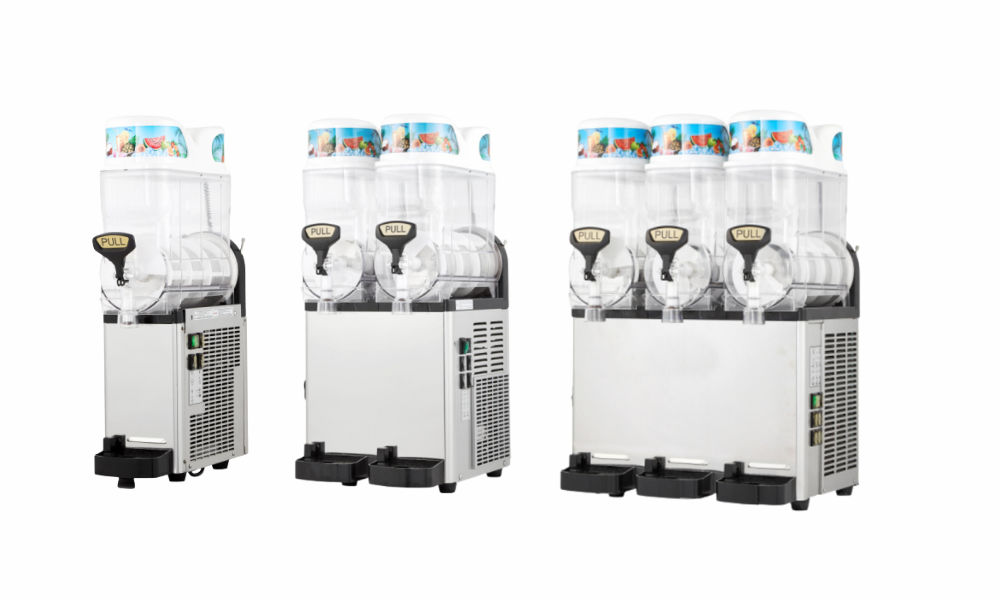
Most commercial frozen drink machines run one, two, or three barrels. A single barrel commits you to one frozen cocktail at a time; a twin lets you pour a margarita and a daiquiri side by side, and a triple adds a non-alcoholic slush for the designated-driver table. The formats and refrigeration types are compared in our breakdown of types of commercial slush machines.

Why alcohol changes the way a slush machine freezes
Here is the fact that catches most first-time operators: the more alcohol in the barrel, the harder it is to freeze. Water freezes at 0 degrees Celsius, but ethanol does not turn solid until roughly minus 114 degrees. Alcohol molecules hold onto each other far more weakly than water molecules do, so they resist locking into a solid structure. Mix the two and the alcohol drags the freezing point of the whole blend downward, an effect chemists call freezing-point depression.
Inside a slush machine that plays out simply. A barrel of straight juice and syrup freezes into firm slush with no trouble. Add a heavy pour of spirit and the freezing point drops below what the machine can reach, so the batch stays loose and watery no matter how long it runs. Push the alcohol too high and you get an expensive tank of cold cocktail soup.
The practical ceiling most operators work to is a finished blend of about 12 percent alcohol by volume or lower in the barrel. That number comes from what TFI sees hold up in the field across Ontario and Atlantic Canada, and it sits inside the wider industry range of roughly 5 to 11 percent for reliable slush, with commercial units starting to struggle past about 13 percent. It is not the strength of a shaken cocktail; it is the diluted, ready-to-freeze mix after the water, juice, and syrup are added. Stay at or under that line and the machine forms proper slush. Creep past it and the texture falls apart. The fix when a batch will not set is almost always the same: it is too boozy, so add more mixer rather than blaming the machine.

A barrel of straight juice and syrup freezes into firm slush with no trouble; the same barrel with a heavy pour of spirit may never set, because alcohol resists freezing until far colder temperatures than water does.
Building a frozen cocktail menu that actually freezes
Start from the alcohol ceiling and work backwards. A good frozen cocktail recipe for a machine is built as a large batch, then diluted with mixer and, often, water until the finished barrel sits between 6 and 10 percent ABV, with 12 percent as the outer ceiling. The sugar matters too: sweetness gives the slush its body, so most machine recipes carry more sugar than a shaken version, and a splash of a stabilizer or a commercial slush base helps the texture hold through a long service.
These are the frozen cocktails that batch well and sell hard on a Canadian patio:
Frozen cocktail | Base spirit | Mixers that build the batch | Target barrel ABV |
|---|---|---|---|
Frozen margarita | Tequila | Lime, orange liqueur, sweet-and-sour, water | ~6-10% |
Frozen daiquiri (strawberry or classic) | White rum | Lime, strawberry puree, simple syrup, water | ~6-10% |
Frozen piña colada | White rum | Pineapple juice, coconut cream, water | ~6-8% |
Painkiller | Dark rum | Pineapple, orange, coconut cream, water | ~6-10% |
Frosé | Rosé wine | Strawberry, lemon, simple syrup | ~8-10% |
Two rules keep the program tight. Pick recipes that share a base where you can, so a single delivery of tequila or rum covers more of the menu. And taste the batch before it goes in cold, because sweetness and acidity read differently once the drink is frozen; a mix that tastes balanced at room temperature often needs a touch more sugar and lime to sing at minus 2. For a deeper list of builds and seasonal ideas, our roundup of frozen cocktail recipes for summer is a useful starting point, and there are more frozen beverage menu ideas that pair with the same equipment.
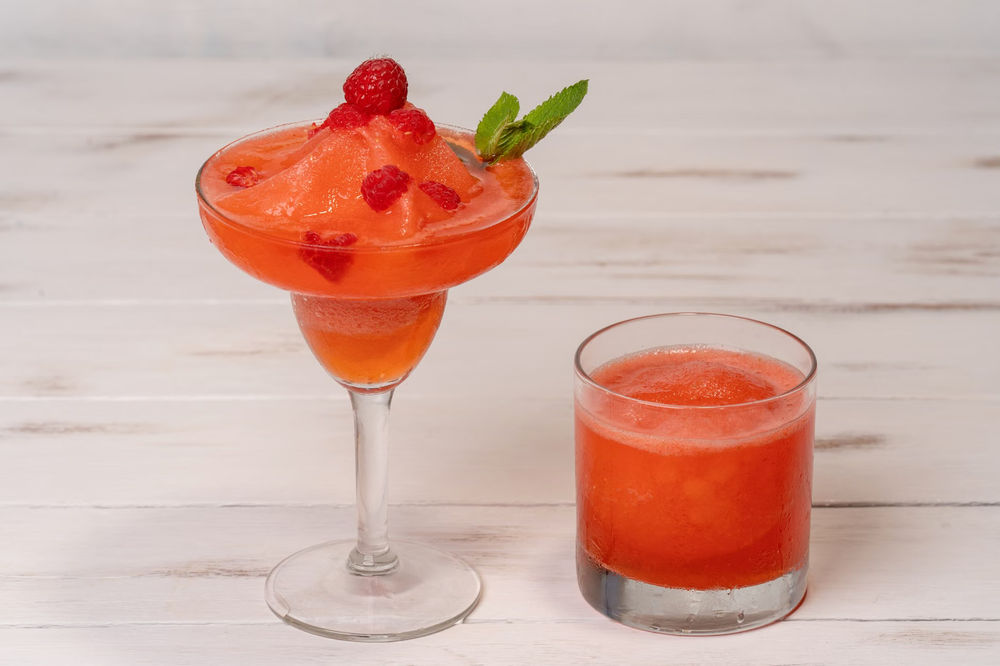
A frozen margarita recipe for a slush machine
This is a worked 10 litre batch. It yields about 28 servings at 355 millilitres, each carrying roughly 1.5 ounces of tequila, and the finished barrel sits at about 6 percent ABV.
Ingredient | Quantity | Notes |
|---|---|---|
Tequila (40% ABV) | 1.25 L | Blanco stands up to lime and cold |
Orange liqueur (30% ABV) | 0.4 L | Triple sec or curaçao |
Fresh or bottled lime juice | 1.0 L | Acidity reads flatter once frozen |
Simple syrup (1:1) | 1.1 L | Sugar builds the body of the slush |
Water | 6.25 L | Dilution is what lets the batch set |
Total | 10.0 L | Approximately 6.2% ABV |
To check any recipe before it goes in the barrel, use the same arithmetic: multiply each spirit's volume in litres by its ABV, add the results, then divide by the total batch volume. Here that is (1.25 × 0.40) + (0.4 × 0.30) = 0.62 litres of pure alcohol in 10 litres, or 6.2 percent.
Worth being clear about the two numbers. The 12 percent figure is the freezing ceiling, not a serving target. Most bar programs land between 6 and 10 percent, because that range gives a standard spirit pour per cup, a balanced drink, and a batch that sets reliably even on a hot patio. Push toward 12 percent only if you are deliberately building a stronger serve, and expect the texture to soften as you get there.
Scale the recipe to your barrel by holding the ratios. The Taylor models 340, 341, and 390 hold a 6.6 litre freezing cylinder, so multiply every quantity by 0.66. A hopper-fed unit such as the model 430 pairs a 3.8 litre cylinder with a 13.2 litre refrigerated hopper, so batch to the hopper volume and let it feed the cylinder.
To convert the batch to a frozen daiquiri, swap the tequila for 1.5 litres of white rum, replace the orange liqueur with 0.4 litres of strawberry puree, and drop the water to 6.0 litres. That holds the total at 10 litres and lands at 6.0 percent ABV.
Frozen cocktail profit margins: what a slush program earns per serve

Frozen cocktails sit in one of the highest-margin categories on the menu. Bars run an 18 to 20 percent pour cost on liquor, with spirits closer to 15 percent, which puts the gross margin on a well-priced drink in the high-70s to low-80s; those bar margin benchmarks hold across the industry. A frozen cocktail improves on that in two ways: the water, juice, and ice you batch into the barrel cost almost nothing yet fill the cup, and the speed of pouring one lets a single bartender clear a patio rush that blended drinks would choke on.
Work an illustrative serve. A 12-ounce frozen margarita poured from the batch recipe above carries roughly 1.5 ounces of tequila plus lime, sweetener, and water. At typical wholesale spirit prices the liquid cost lands near two to three dollars, and a patio menu price of eleven to thirteen dollars leaves a margin in the range bars target. Multiply that by the throughput of a barrel that pours a drink every few seconds, and a single frozen cocktail line can carry a summer weekend.
The equipment side follows the same logic. TFI's Taylor frozen beverage and slush machines run at a 70 to 80 percent gross profit with a 6 to 18 month payback, which is why frozen drinks tend to earn back the machine inside a season or two of steady service. Pouring one drink every few seconds from a batch that costs pennies an ounce is what makes the math work.
Choosing a frozen cocktail machine for your bar
Match the machine to the menu and the room, not the other way around. Three specs decide most of it.
Barrel count sets how many frozen cocktails you can run at once. A single-barrel unit is fine for a taco spot that only wants a house margarita; a bar with a frozen menu wants two or three barrels so it can pour a margarita, a daiquiri, and a non-alcoholic option together. Capacity, measured in litres per barrel, sets how long you can serve before refilling, which matters on a busy patio where nobody has time to rebatch mid-rush. And footprint decides placement: countertop models tuck onto a back bar, while freestanding units handle higher volume but need floor space and clearance.
Venue type | Barrels | What it buys you |
|---|---|---|
Restaurant with one house frozen drink | 1 | Lowest cost and smallest footprint, but the menu is locked to one recipe per service |
Patio bar or Mexican and Caribbean concept | 2 | A margarita and a daiquiri at once, or one cocktail plus a non-alcoholic slush |
Sports bar, rooftop, or event and banquet venue | 2 to 3 | Full frozen menu with a designated-driver option, and a spare barrel during a rush |
Taylor and Icetro build machines with the refrigeration power and serviceability that a bar leans on through a Canadian summer. On the Taylor side, the model 340 is a compact countertop single-flavour unit with a 6.6 litre freezing cylinder, the model 430 pairs a 3.8 litre cylinder with a 13.2 litre refrigerated hopper so the batch keeps feeding through a rush, and the model 432 runs two flavours from independent motors in the same footprint. If you want two barrels in a freestanding unit, the model 342 carries dual 6.6 litre cylinders.

Icetro's SSM series is a comparable alternative. For a full walk through models, barrel sizes, and capacities, our commercial slush machine buying guide covers the selection in detail, our frozen beverage machine buyer's guide compares the wider category, and you can browse TFI's commercial slush machines by type. If cash flow is the sticking point, the machine can be leased or financed so the drink sales cover the payments.
Running the program on a Canadian bar line
Getting the machine and the recipe right is half the job; the other half is service. A few habits keep the machine earning.
Batch ahead of the rush. A barrel takes 45 to 90 minutes to pull a fresh fill down to serving texture, so a room that opens at noon fills the barrels mid-morning, not at the first order. Keep spare pre-mixed batches cold and ready so a sold-out barrel is a two-minute refill rather than an hour of dead menu.
Mind the licence. A frozen cocktail machine is bartender-operated equipment, not a guest self-serve station, and every pour is still alcohol service under the same provincial rules that govern the rest of your bar. In Ontario that means the machine and its pours fall under your liquor sales licence through the Alcohol and Gaming Commission of Ontario, trained staff pour every drink, and they still need their Smart Serve certification. Atlantic provinces run their own equivalents: the Nova Scotia Alcohol, Gaming, Fuel and Tobacco Division, New Brunswick's Department of Justice and Public Safety, the PEI Liquor Control Commission, and the Newfoundland and Labrador Liquor Corporation. Confirm placement and dispensing rules with your regulator before the machine goes live.
Clean on schedule. Alcohol, sugar, and dairy-based mixes such as a piña colada need regular breakdown and sanitizing to stay safe and to protect the auger seals. Building that into the closing routine is what keeps the machine off the repair list. TFI services the cold side it sells, so a machine bought and maintained through one supplier means equipment and service come from the same team.
Is a frozen cocktail program worth it?
For the right room, the demand is real and growing. The global frozen cocktail category, valued at USD 454 million in 2025, is forecast to reach USD 943 million by 2034, a compound annual growth rate of 8.42 percent, as blended and ready-to-pour frozen drinks move from novelty to menu staple. That rides on a Canadian foodservice sector where sales at food services and drinking places reached $8.5 billion in a single month in mid-2025, and where patio and warm-season traffic drives a clear spike in cold, shareable drinks.
The concepts that see the fastest return are patios and rooftops, sports bars, Mexican and Caribbean restaurants, event and banquet venues, and anywhere with a summer rush that outpaces a blender. The machine fits them because it turns a labour bottleneck into a fast, repeatable, high-margin pour. If your menu leans on frozen or blended drinks and your busiest hours are your hottest, the program tends to pay for itself quickly. Our data-backed look at frozen beverage trends in Canada breaks down where that demand is heading.
Frozen cocktail machine FAQ
What is a frozen cocktail machine?
It is a commercial slush machine that holds a batch of alcohol and mix at a soft, scoopable temperature and dispenses consistent frozen drinks on demand. It differs from a blender by batching a whole recipe at once and pouring every serving at the same texture, which is why bars use it for volume frozen cocktail service.
Can you put alcohol in a slush machine?
Yes. Commercial slush machines handle alcoholic frozen cocktails, but the amount of alcohol has to be controlled. Because alcohol lowers the freezing point of the blend, too much spirit stops the batch from setting into slush.
How much alcohol can go in a slush machine?
Most operators keep the finished blend in the barrel at roughly 12 percent alcohol by volume or lower. That is the diluted mix after juice, syrup, and water are added, not the strength of a shaken cocktail. If a batch will not freeze, it almost always has too much alcohol and needs more mixer.
What is the best commercial slush machine for cocktails?
The right machine depends on how many frozen drinks you want to pour at once, your service volume, and your counter space. A twin or triple-barrel unit suits a bar with a frozen menu, while a single barrel fits a restaurant with one house drink. The machine-selection guidance above compares models, barrel counts, and features for alcohol service.
Do frozen cocktails need a special machine, or can I use a blender?
A blender works for a handful of drinks but ties up a bartender and gives inconsistent texture. A dedicated slush machine is the tool once you are pouring frozen drinks at any volume, because it batches the recipe and serves fast at a uniform consistency.
How much does a commercial frozen cocktail machine cost?
Pricing depends on barrel count, capacity, and whether the unit is countertop or freestanding, so operators request a quote for their setup. Many bars lease or finance the machine so the drink sales cover the monthly cost rather than paying up front.
Are frozen cocktail machines profitable for restaurants?
For venues with patio traffic or a frozen-forward menu, yes. Frozen cocktails carry the high margins of the liquor category while filling the cup with low-cost mix and ice, and the speed of pouring from a batch lets one bartender serve a rush that blended drinks could not keep up with.
How long does a frozen cocktail machine take to freeze a batch?
A fresh fill takes roughly 45 to 90 minutes to pull down to serving texture, depending on barrel size, ambient temperature, and how cold the mix was going in. Batch mid-morning for a lunch open, and keep pre-mixed refills cold so a sold-out barrel is a two-minute swap.
Should you rent a frozen cocktail machine or buy one?
Rentals suit one-off events and single-weekend use. For a bar running frozen drinks all season, the rental cost across a summer usually exceeds the payments on the machine, and a rented unit does not come with the service relationship a commercial line needs. TFI supplies units to own, lease, or finance so the drink sales cover the monthly cost.
What is a daiquiri machine?
A daiquiri machine is the same commercial frozen drink machine described here, named for the drink it usually holds. Any slush machine rated for alcohol service will pour a frozen daiquiri, a margarita, or a piña colada; the difference is what goes in the barrel, not the equipment.
Can you run non-alcoholic drinks in the same machine?
Yes. A barrel of juice, syrup, or a commercial slush base freezes more readily than an alcoholic mix, which is why twin and triple-barrel units commonly run one virgin option alongside the cocktails. Break down and sanitize between recipe changes.
Ready to add a frozen cocktail machine to your bar?
Whether you are pouring one house margarita or building a full frozen menu, the program only works when the machine, the recipe, and the service line up. TFI supplies and services frozen beverage and slush equipment across Ontario and Atlantic Canada, from Toronto and the GTA to Halifax, Dartmouth, and Moncton. Book a chef demo in our Mississauga showroom to taste-test a machine with your own recipe, or ask our team to size a setup and model the ROI for your space.

Nicole Camposeo-Cheung is the Director of Marketing, People & Culture at TFI Food Equipment Solutions, Canada’s leading provider of premium commercial foodservice equipment. She combines her expertise in business management and fashion arts to foster a dynamic, innovative, and people-centric corporate culture. Passionate about empowering teams, building strong client relationships, and driving growth through creativity and collaboration, Nicole plays a key role in shaping TFI’s brand and workplace culture. She also shares her industry expertise and insights through the TFI blog, helping foodservice professionals stay informed about the latest trends, best practices, and innovations in commercial food equipment.
Add a comment
This will be publicly visible.
Your email address will not be published.
Your comment will be reviewed by an admin before it is published.


