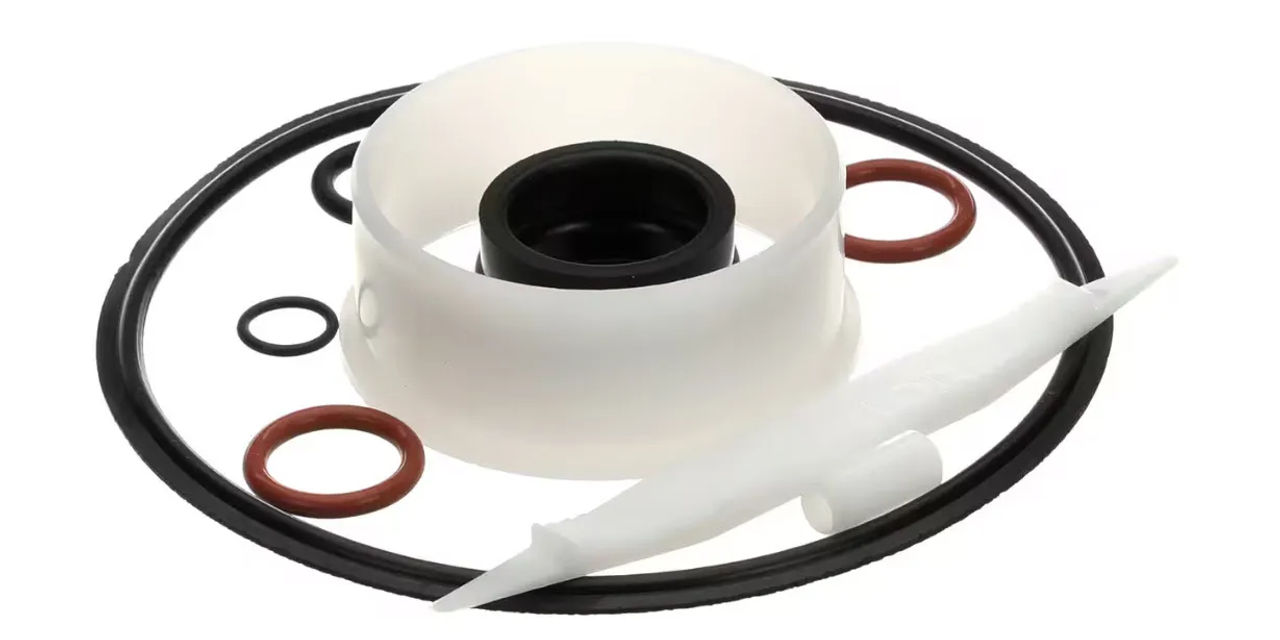
Soft Serve Machine Leaking? Taylor Draw Valve and O-Ring Fix Chart
Find where your soft serve machine is leaking, match it to the exact Taylor O-ring, seal or draw valve for your model, and fix the lubrication mistakes behind most leaks.

Last updated: October 22, 2026
A soft serve machine leaking mix almost always has a worn, missing or poorly lubricated seal. The troubleshooting guides in Taylor's operator manuals trace the two main leaks to specific parts: mix dripping from the door spout points to the draw valve O-rings, and mix collecting in the rear drip pan points to the driveshaft seal. This guide helps you find where your leak starts, matches it to the exact Taylor part number for your model, and covers the lubrication and assembly mistakes behind most leaks. Every part number comes from the parts lists in Taylor's operator manuals, and the parts TFI stocks link straight to the TFI parts shop.
Leak still there after new O-rings? Contact TFI and our factory-trained team in Ontario and Atlantic Canada will help you find the right part or book a technician.
Where Is Your Soft Serve Machine Leaking?
Start with where the mix shows up. A leak at the front of the machine and a leak at the back come from different parts, so check before you order.
Where you see mix | Most likely cause | What to do | Part to check |
|---|---|---|---|
Dripping from the bottom of the door spout | Missing, worn or under-lubricated draw valve O-rings, or the wrong lubricant | Replace the O-rings and lubricate them with Taylor Lube | Draw valve O-rings |
Collecting in the rear drip pan | Worn or under-lubricated driveshaft seal, or a seal installed inside out | Replace or reinstall the seal and lubricate the driveshaft | |
Collecting in the rear drip pan with a good seal fitted correctly | Worn rear shell bearing, beater assembly worked forward, or gearbox out of alignment | Call a service technician | Technician repair |
Around the edge of the freezer door | Nicked or worn door gasket, or hand screws tightened unevenly | Inspect the gasket and retighten the hand screws evenly | Door gasket (048926) |
At the prime plugs on top of the door | Worn prime plug O-rings | Replace and lubricate the O-rings | Prime plug O-rings |
Centre spout on a twist machine | Worn H-ring on the centre draw valve | Replace the H-ring |
The first three rows come straight from the troubleshooting guides in Taylor's manuals. The last three follow Taylor's pre-assembly door check, which tells operators to inspect "the door bearings, door gaskets, draw valves, O-rings, and all sides of the door assembly, including the inside of the draw valve bores" for nicks, cracks or signs of wear, and to "replace any damaged parts."
Leaks From the Door Spout: Draw Valve O-Rings
Mix dripping from the door spout is usually an O-ring problem, not a machine problem. Taylor's troubleshooting guides for the C706, C707 and C709 list three causes of excessive mix leakage from the door spout:
Missing or worn draw valve O-rings. Install or replace them regularly.
Inadequate lubrication of the draw valve O-rings. Lubricate them properly.
The wrong type of lubricant, with petroleum-based lubricant as Taylor's example. Use a proper lubricant such as Taylor Lube.
The C713 and C723 manuals, like the C712's, narrow it to the bottom O-ring on the draw valve being "improperly lubricated or worn."
Taylor's manuals list three causes for door spout leaks, and all three are O-ring problems: worn O-rings, too little lubricant, or the wrong lubricant.
On a three-spout twist door like the C712's, each side draw valve carries three O-rings, and the centre valve uses an H-ring plus an O-ring. Taylor's C712 assembly steps say to lubricate the H-ring and O-rings, and to lubricate the inside of the door spouts, top and bottom, before the valves go back in. Our Taylor C712 cleaning guide, with video, shows how each draw valve and O-ring comes out and goes back in.
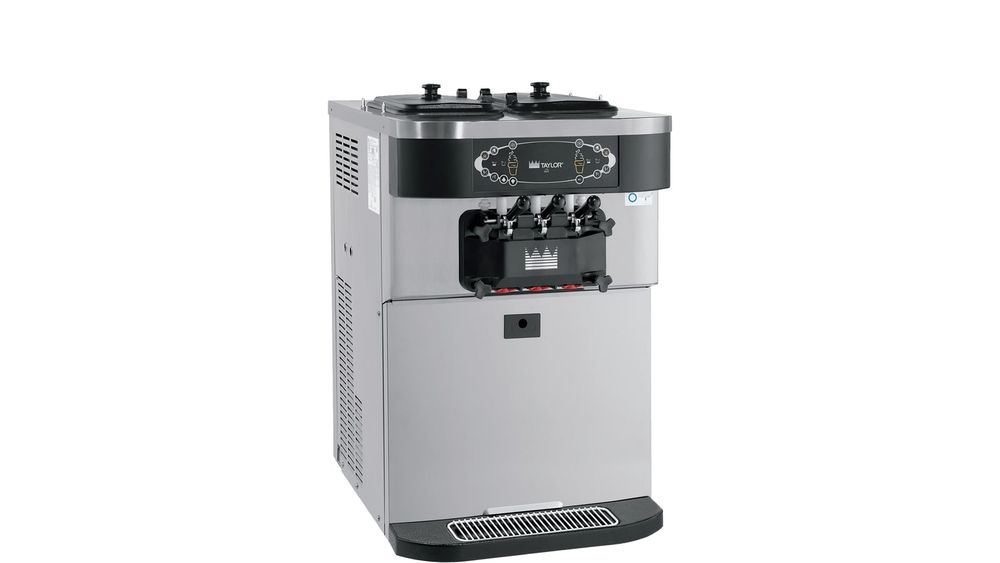
Draw valve O-rings are on Taylor's 3-month replacement list for every current soft serve model, so a leak between tune-ups usually means the O-rings wore early or went back in dry. Our guide to Taylor soft serve tune-up kits matches each model to the kit that replaces them all at once.
Taylor Draw Valve and O-Ring Chart by Model
Find your model, then order the parts beside it. Every part number below comes from the parts list in that model's Taylor operator manual. Parts marked "ask TFI" are not in the online shop yet, so contact our parts team for those. Not sure which model you have? Our Taylor parts guide explains how to identify the right part.

Your machine | Draw valves | Draw valve O-ring | Centre valve H-ring | Prime plug O-ring | Driveshaft seal |
|---|---|---|---|---|---|
X56072 (ask TFI) | None (single spout) | ||||
X56072 (ask TFI) | None (single spout) | ||||
None (single spout) | None listed | ||||
Taylor C717 | None listed | ||||
Sources: parts lists in the Taylor operator manuals for the C706, C707, C709 and C717, C712, C713, C722 and C723.
Three things to know before you order:
Two O-rings, same size. The 014402 and 083693 draw valve O-rings are both 7/8 in. OD x 0.103 in. wide, but the 083693 is the silicone version that Taylor specifies for the C712, C713, C722 and C723. Order the number your manual lists.
Prime plugs differ by model. The C706 and C707 use a single prime plug with the 016137 O-ring. The C712, C713, C722 and C723 use the twin prime plug (059936) with 024278 O-rings, and on the C712 each prime plug takes two of them.
One door gasket for all seven. Every manual in this guide lists the same freezer door gasket, 048926. It sits on Taylor's 3-month replacement list but is not sold on its own in the online shop yet, so ask TFI.
Leaks Into the Rear Drip Pan: The Driveshaft Seal
Mix in the rear drip pan means product is escaping past the back of the freezing cylinder, and the driveshaft seal is the first part to check. Taylor's C709, C712 and C713 troubleshooting guides list these causes for excessive mix leakage into the rear (or long) drip pan:
Cause | Fix |
|---|---|
Missing, worn or improperly lubricated driveshaft seal | Replace the seal or lubricate it properly |
Seal installed inside out | Reinstall it correctly |
Inadequate lubrication of the driveshaft | Lubricate properly |
Driveshaft and beater assembly worked forward | Call a service technician |
Worn rear shell bearing | Call a service technician |
Gearbox out of alignment | Call a service technician |
The inside-out seal is an easy mistake to make during reassembly. Taylor's C712 manual says the middle section of the boot seal "should be convex or extend out from the seal." If it is concave, turn the seal inside out before you install it.
Taylor's regular maintenance checks also tell operators to check the rear shell bearing for signs of wear, flagged by "excessive mix leakage in drip pan," and to keep the bearing and drive socket clean and free of lubricant and mix deposits.
Do not let a rear leak run. Foodservice Equipment & Supplies warns that neglected seals can let mix leak to the back of the machine, potentially compromising the motors and gearbox. Every Taylor soft serve manual in this guide lists the same driveshaft seal (032560), so one spare covers any of these models.
Leaks Around the Freezer Door and Prime Plugs
Leaks around the door edge or at the prime plugs usually come from a damaged gasket, a worn O-ring or a door that is not seated evenly. Taylor's C712 assembly steps cover all three:
Door gaskets: check them for nicks, cracks or wear before every assembly, and replace any that are damaged. Taylor's instructions are clear: "Do not lubricate the gaskets."
Hand screws: use the long hand screws on top and the short ones on the bottom, then "tighten them equally in a crisscross pattern." Replace cracked or missing ones with the short (058764) or long (058765) door hand screws, which every manual in this guide lists.
Prime plugs: slide the O-rings into the grooves on each prime plug, then apply an even coat of Taylor Lube to the O-rings and shafts.
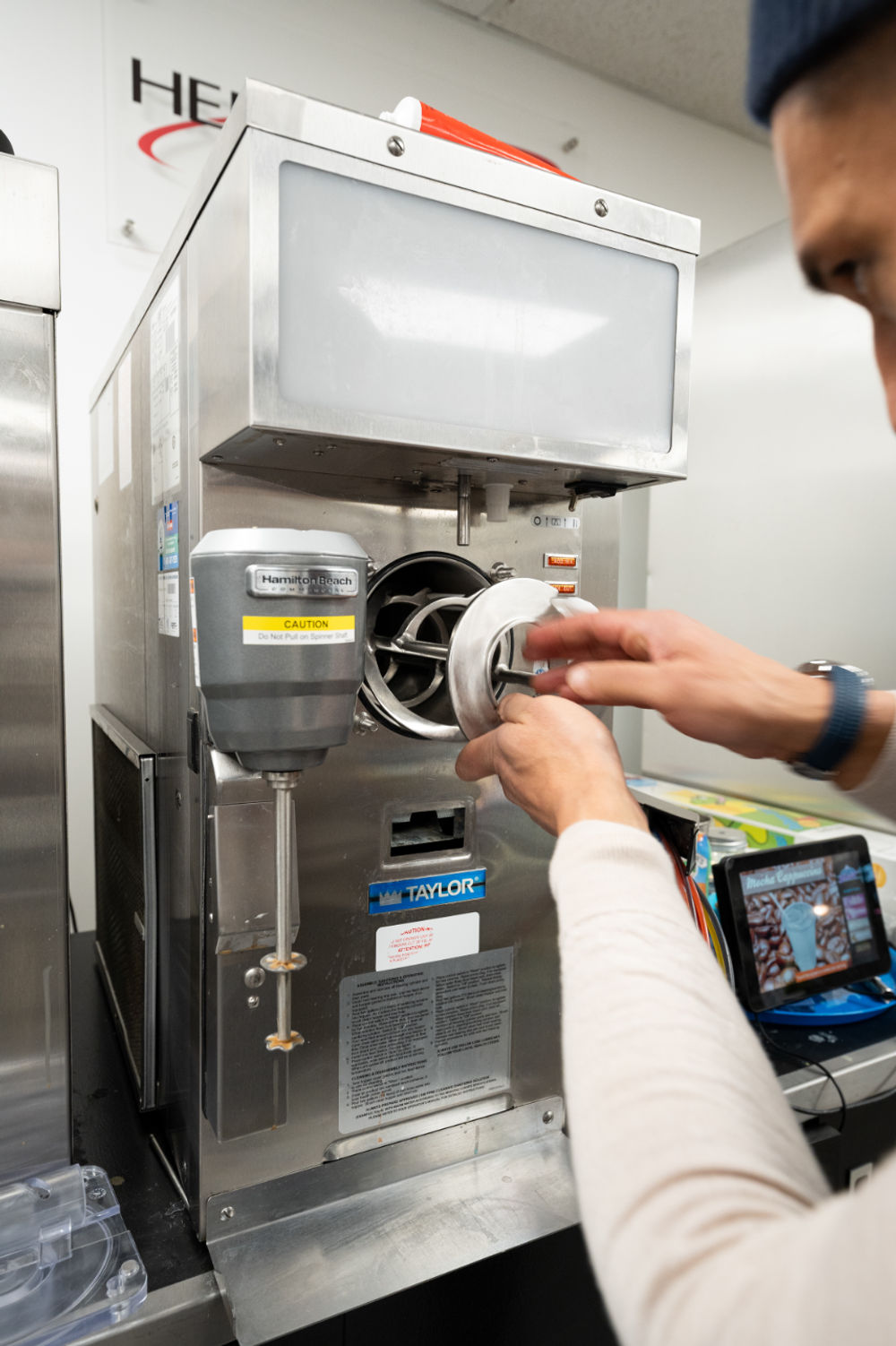
If mix still escapes around the door after a new gasket and fresh O-rings, have a technician check the door and its bearings before the leak spreads.
Lubrication Mistakes That Cause Leaks
Most leaks trace back to lubrication. Taylor's manuals call for "an approved food-grade lubricant (example: Taylor Lube)" whenever you lubricate parts, and they are specific about where it goes and where it does not.
Dry O-rings. Inadequate lubrication of the draw valve O-rings is one of Taylor's three listed causes of door spout leaks.
Petroleum-based lubricant. Taylor lists the wrong type of lubricant as a cause, with petroleum-based lubricant as its example.
Lubricant on the gaskets. Taylor says not to lubricate the door gaskets, and the pump instructions say the same for the pump valve gasket.
The wrong Taylor Lube. Standard Taylor Performance Lube (047518-CS) is the lubricant listed in the C712, C713, C722 and C723 manuals, for non-heat treatment machines. High Performance Taylor Lube (048232-CS) is listed in the C709 and C717 manual, for heat treatment machines.
Reused O-rings. Taylor's maintenance checks say to "dispose of O-rings and seals if they are worn, torn, or fit too loosely, and replace with new."
On pump-fed models like the C706, C712 and C722, the pump needs the same care. Taylor's C712 manual says the pump's O-rings, check ring and gasket "must be in 100% good condition for the pump and entire machine to operate properly." The Simplified Pump Tune Up Kit (X56200-10) covers the pump on every soft serve model with a simplified pump. For the daily and weekly routine that keeps seals in shape between tune-ups, see our soft serve machine maintenance tips.
When a Leak Needs a Technician in Ontario and Atlantic Canada
New O-rings and a correctly installed seal fix most leaks. Taylor's manuals send three causes straight to a service technician: a worn rear shell bearing, a driveshaft and beater assembly that has worked forward, and a gearbox out of alignment. Our soft serve machine repair guide covers the other faults operators can check before calling, from freezing problems to clean-cycle lockouts.
TFI services Taylor soft serve machines across Ontario, Nova Scotia, New Brunswick, Prince Edward Island, and Newfoundland and Labrador, with 24/7 repair using genuine OEM parts. Technicians work out of our Mississauga and Dartmouth locations, and TFI Total Care covers planned maintenance visits and reactive service calls for a monthly rate. Submit a service request to book a visit.

A machine that stays sealed keeps earning: Taylor soft serve programs deliver 70-80% gross profit with 6 to 18 month payback, and a set of O-rings costs far less than a machine down on a busy weekend.
FAQs
Why is my soft serve machine leaking?
Most soft serve machine leaks come from a worn, missing or under-lubricated seal. Taylor's manuals link mix dripping from the door spout to the draw valve O-rings, and mix in the rear drip pan to the driveshaft seal. Check where the mix collects, then match it to the part in the chart above. If new O-rings and a new seal do not stop it, a worn rear shell bearing or a gearbox out of alignment needs a technician.
Why is my Taylor ice cream machine leaking into the drip pan?
Mix in the rear drip pan usually means the driveshaft seal is worn, dry or installed inside out. Taylor's manuals say to replace or lubricate the seal, and the C712 manual says the middle section of the boot seal should point outward. If the leak continues with a good seal, a worn rear shell bearing or a gearbox out of alignment needs a service technician.
How do I stop my soft serve machine leaking from the door spout?
Replace the draw valve O-rings and lubricate them with Taylor Lube. Taylor's manuals list worn O-rings, too little lubricant and petroleum-based lubricant as the causes of door spout leaks. Use the O-ring your manual lists: 014402 on the C706, C707, C709 and C717, or the silicone 083693 on the C712, C713, C722 and C723.
Can I use petroleum jelly on soft serve machine O-rings?
No. Petroleum jelly is a petroleum-based lubricant, which Taylor's troubleshooting guides list as a cause of door spout leaks. Taylor calls for an approved food-grade lubricant such as Taylor Lube: Standard Taylor Performance Lube on non-heat treatment machines, and High Performance Taylor Lube on heat treatment models like the C709.
Should I lubricate the door gasket on a Taylor soft serve machine?
No. Taylor's assembly instructions say "Do not lubricate the gaskets." Lubricate the draw valve O-rings and H-ring, the prime plug O-rings and shafts, and the inside of the door spouts instead, and inspect the gasket for nicks or cracks before every assembly.
How often should I replace draw valve O-rings?
Every 3 months, according to Taylor's operator manuals, along with the driveshaft seal, freezer door gasket and scraper blades. Replace them sooner if they are worn, torn or loose in their groove. A Taylor tune-up kit groups these wear parts for your model under one part number.
Take the Next Step
TFI Food Equipment Solutions supports Ontario, Nova Scotia, New Brunswick, Prince Edward Island, and Newfoundland and Labrador with sales, installation, training, rentals, leasing, and 24/7 OEM-quality service. Order genuine Taylor O-rings, draw valves and driveshaft seals from the TFI parts shop, or let our factory-trained technicians track down a stubborn leak. We are Canada's #1 Taylor distributor, and we also supply Franke, Henny Penny, Icetro and LightFry equipment.
Ask for an equipment demo in Mississauga or Dartmouth, or request a free quote today!

Nicole Camposeo-Cheung is the Director of Marketing, People & Culture at TFI Food Equipment Solutions, Canada’s leading provider of premium commercial foodservice equipment. She combines her expertise in business management and fashion arts to foster a dynamic, innovative, and people-centric corporate culture. Passionate about empowering teams, building strong client relationships, and driving growth through creativity and collaboration, Nicole plays a key role in shaping TFI’s brand and workplace culture. She also shares her industry expertise and insights through the TFI blog, helping foodservice professionals stay informed about the latest trends, best practices, and innovations in commercial food equipment.
Add a comment
This will be publicly visible.
Your email address will not be published.
Your comment will be reviewed by an admin before it is published.

