Commercial Soft Serve Ice Cream Machines in Canada: The Complete Buyer's Guide
How to choose a commercial soft serve ice cream machine in Canada: sizing by peak hour, gravity vs pressurised, real costs, margins, and service coverage.

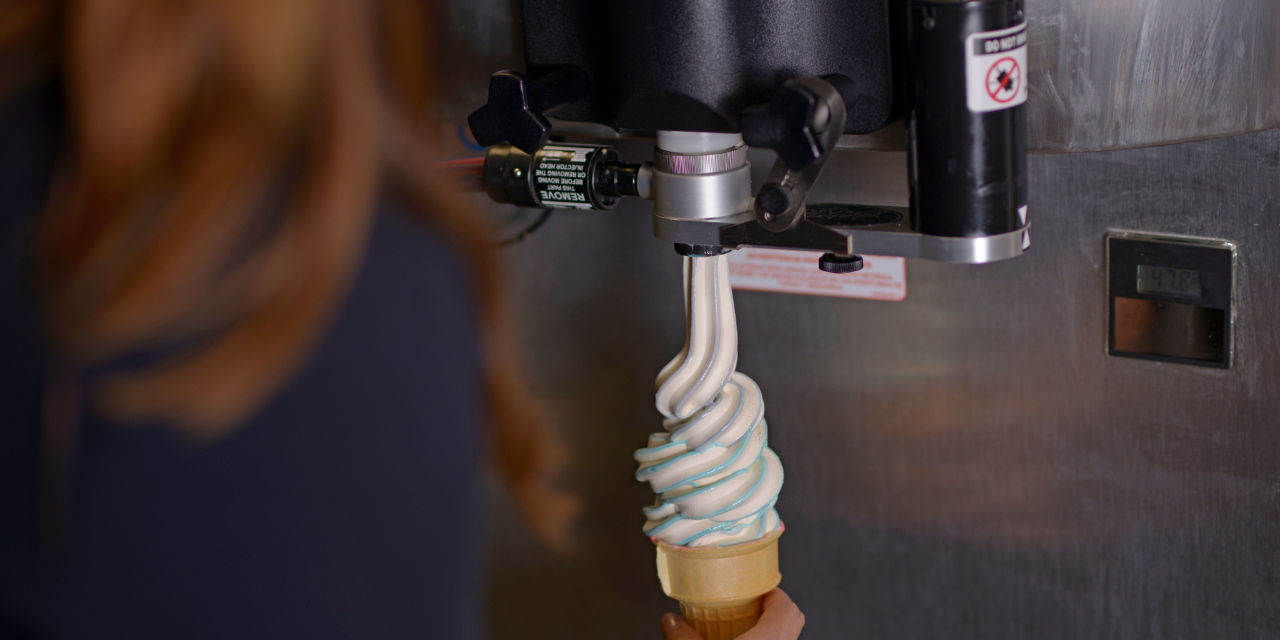
A commercial soft serve ice cream machine is a refrigerated freezer that continuously churns and aerates a liquid dairy mix inside a freezing cylinder, then dispenses it soft through a draw valve. The machine you need is decided by one number: how many servings you have to draw in your busiest hour, not how many you sell in a day.
Get that number wrong and everything downstream goes wrong with it. Undersize the machine and it starves during the rush, freezes up, and hands you a queue. Oversize it and you have paid for capital, floor space, and standing energy you never use. Every other decision in this guide, freeze method, footprint, flavour count, electrical service, follows from peak throughput.
What follows walks the decision in the order a Canadian operator meets it. If you want to see the hardware first, TFI's Taylor freestanding soft serve machines page lists the C712, C713, 791, 8752 and 8756 with specs. If you would rather skip to a spec conversation, TFI's team will model your peak-hour requirement against your menu before you look at a single machine.
How many servings per hour do you need? Sizing a commercial soft serve machine
Sizing is where most soft serve programmes go wrong. Choosing the wrong size is the most common mistake operators make when specifying soft serve equipment, according to Foodservice Equipment Reports. Too small and you cannot meet demand; too large and you are wasting energy, product, and floor space.
Two specs govern throughput. The freezing cylinder determines how much finished product sits ready and how fast the machine recovers between draws. The hopper determines how long staff can serve before refilling. A machine with a generous hopper and a small cylinder will run out of cold product during a rush even though the hopper is full.
Serving size matters more than operators expect. Small machines are often limited to 6-ounce servings, and if you are filling 12-ounce waffle cones or building milkshakes, a small cylinder will be starved, which causes freeze-ups and inconsistent product. The commercial range spans a 1.3-quart cylinder in the smallest countertop units up to hard-wired floor models carrying two 7-quart cylinders.
Then there is the shape of your demand curve. A café that sells forty cones spread evenly across ten hours needs a very different machine from a highway stop that sells forty cones in twelve minutes when a coach pulls in. Size to the spike.
Peak-hour demand | Cylinder capacity to target | Format that fits | Representative models |
|---|---|---|---|
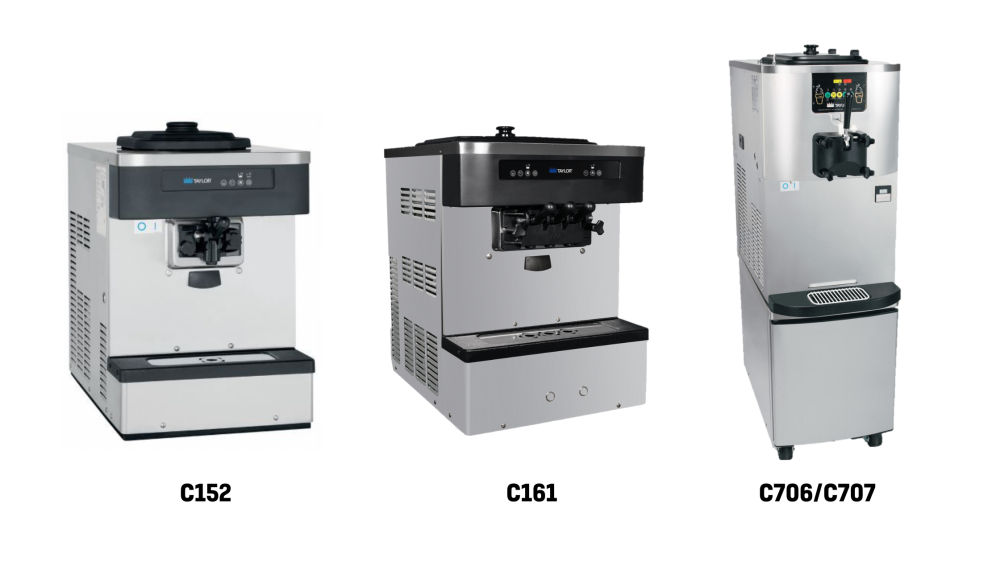
Under 25 servings | 1.3 to 1.7 quart, single cylinder | Countertop, single flavour | Taylor C152, Icetro ISI-161TI |
25 to 60 servings | 1.7 to 3.4 quart, single or twin cylinder | Countertop, single or twin twist | Taylor C161, Taylor C707, Icetro ISI-163TT |
60 to 120 servings | 3.4 quart, twin cylinder | Countertop twin twist or compact floor model | Taylor C722, Taylor C723, Taylor 791 |
120+ servings, or 12 oz portions and shakes | 3.4 quart twin cylinder with pump, large hopper | Freestanding floor model | Taylor C712, Taylor C713, Taylor 8756 |
Treat those bands as a starting point rather than a spec sheet. Menu mix, portion size, and how long your rush lasts all move the answer, which is why TFI runs the numbers with operators before quoting. If you want the underlying mechanics first, our explainer on how soft serve ice cream machines work covers the freezing cycle in detail.
Gravity vs pressurised soft serve machines: which freeze method fits your product
Gravity-fed machines feed mix into the freezing cylinder through a tube using nothing but gravity and a fixed air ratio. Pressurised machines use an air pump to push mix in and control exactly how much air goes with it. That difference decides your product texture, your yield per litre of mix, and how long cleaning takes.
Air content is called overrun, the percentage by which the mix expands as it freezes. It is the single most commercially important spec on the machine, because air is free and mix is not.
Pressurised soft serve machines typically deliver an overrun of 35% to 80%, while gravity-fed machines are limited to roughly 25% to 40%.
Higher overrun means more finished servings from the same case of mix. On a machine drawing a few hundred cones a week, the yield difference compounds fast. Pressurised units also hold overrun more consistently day to day and across multiple locations, which matters if you are running a chain and need every store's cone to look identical.
Gravity has real advantages too. Fewer parts means a lower upfront cost, faster cleaning, and less to go wrong. And if you sell frozen yogurt by weight rather than by cone, the denser gravity-fed product is more profitable, because the same cup volume weighs more on the scale.
In TFI's Taylor lineup the split is clean. The C712, C713, and C723 are gravity-fed. The 8752, 8756, C706, and C722 run air and mix pumps for overrun control. Our deeper piece on gravity-fed soft serve machines walks through the trade-offs if this is your deciding factor.
Countertop vs freestanding soft serve machines
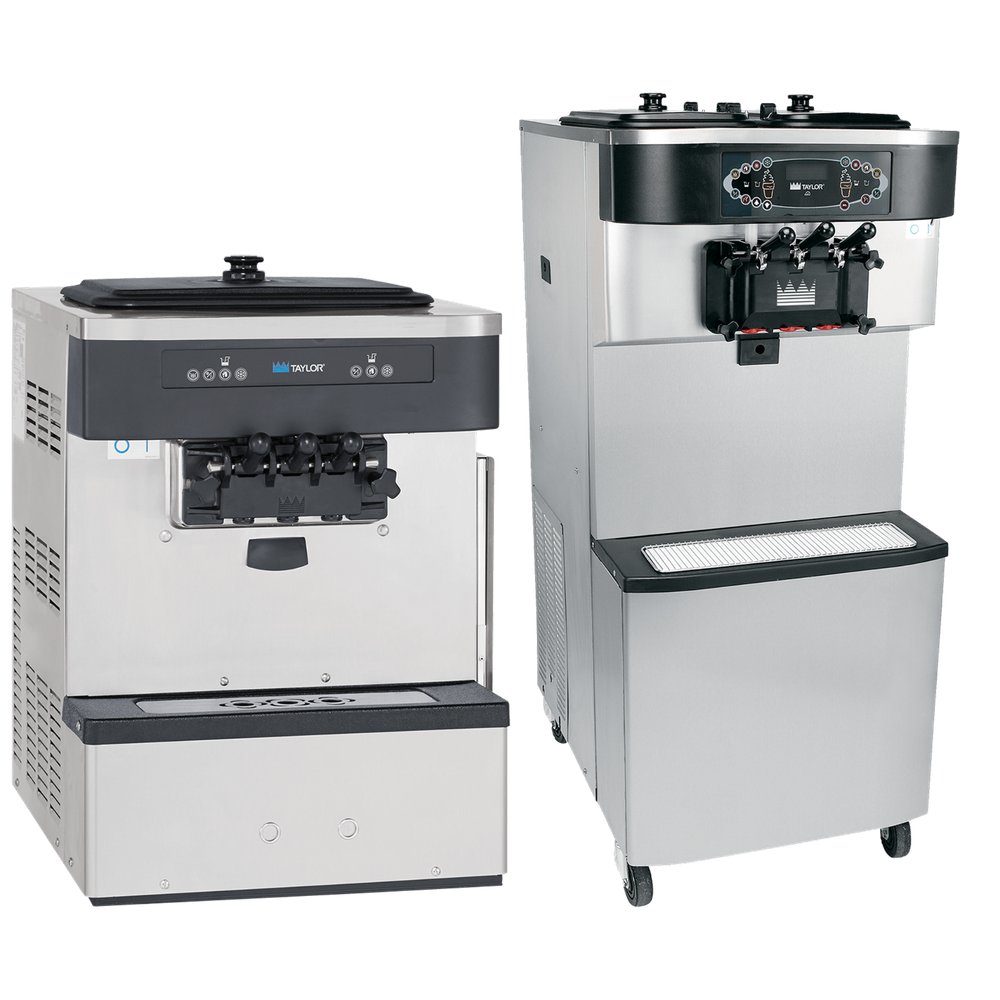
Countertop machines win on footprint and flexibility; freestanding floor models win on capacity, hopper size, and sustained output. The honest test is whether your counter can carry the weight and whether your peak needs more than a couple of quarts of cold cylinder capacity at a time.
Countertop units now reach into territory that used to require a floor model. Icetro's countertop range fits slim 18-inch to 20-inch widths with hoppers up to 4.63 gallons, and its twin-twist ISI-163TT produces up to 52.9 pounds of soft serve per hour from a 20-inch chassis. For a convenience store adding frozen dessert beside an existing coffee programme, that is often the whole answer.
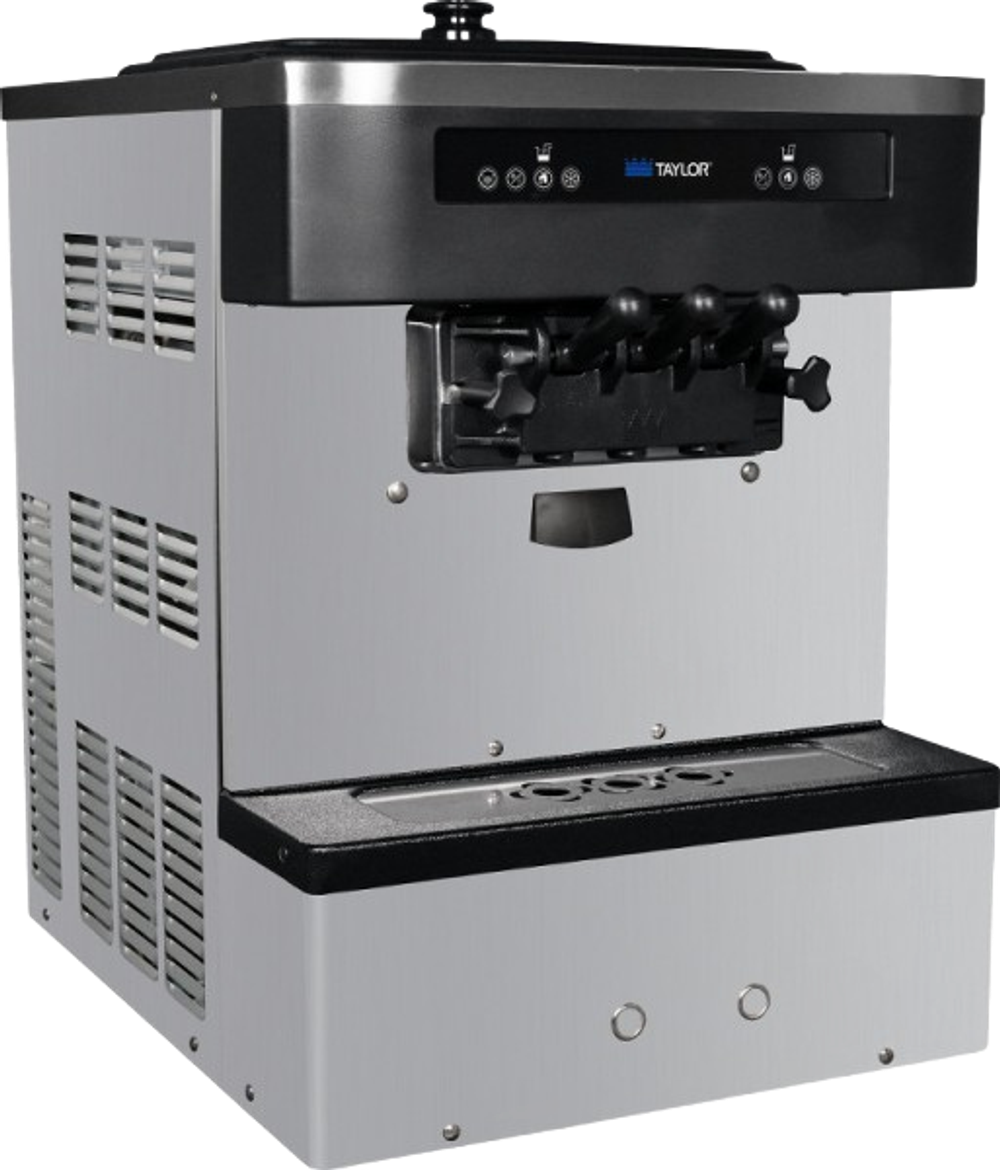
Freestanding machines earn their floor space when volume is the point. The Taylor C712 and C713 pair dual 3.4-quart freezing cylinders with 20-quart mix hoppers, which is enough to hold a lunch rush without a staff member hovering over the hopper. Floor models also tend to be hard-wired rather than plug-in, which pushes them into the install conversation below.
One practical note for small footprints: countertop machines still need clearance for air intake and front service access, and they still need somewhere for the day's mix to live in the walk-in. A 20-inch machine does not mean a 20-inch project. Our Taylor countertop soft serve machine comparison breaks down the models side by side.
Single flavour, twin twist, and multi-flavour soft serve machines
Single-flavour machines dispense one product from one cylinder. Twin twist machines run two cylinders and can serve either flavour separately or swirl both together, which gives you three menu items from one footprint. Multi-flavour systems inject syrup at the draw valve, expanding the menu without adding a second machine.
The menu maths is straightforward. A twin twist unit turns two SKUs into three sellable products at no extra floor cost, and the twist typically outsells either single flavour on its own. Machines like the Taylor C161, C722, C723, and the Icetro ISI-163TT are built for exactly this.
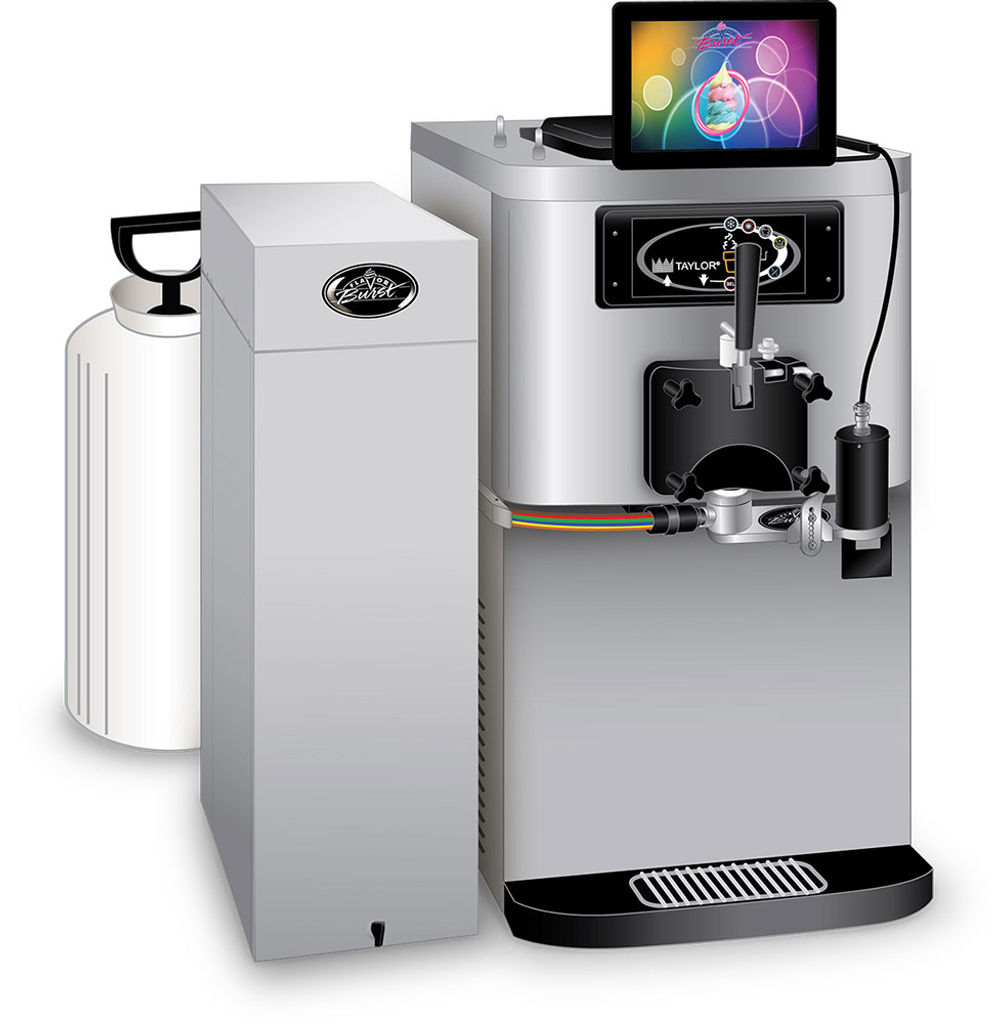
Syrup injection goes further. A Flavor Burst system holds up to eight syrups that can be blended through or striped into the soft serve, turning a single-flavour vanilla machine into a rotating seasonal menu without touching the hardware. Pumpkin spice in October, cotton candy in July, all from the same cylinder.
Where operators overreach is flavour count relative to turnover. Every additional flavour is another hopper of mix that has to sell through before it ages out. Two flavours that move beat four that do not.
Power, cooling, and install requirements for a commercial soft serve machine
Before you fall in love with a model, confirm your building can run it. Compact countertop machines are usually plug-in units on a standard circuit. High-capacity floor models are frequently hard-wired and may require a dedicated circuit at a higher voltage, which means an electrician.
Cooling is the second fork. Air-cooled machines reject heat into the room and need clear intake and exhaust space, typically several inches on the service side, plus a washable filter that someone has to remember to clean. Water-cooled machines run quieter and cope better in hot, tight rooms, but need a water supply and drain, and some municipalities restrict single-pass water cooling.
Most of TFI's countertop range, including the Taylor C707, C709, and C723 and the Icetro ISI-161TI and ISI-300TA, is air-cooled and designed for front service access, which keeps installs simple in retrofit spaces.
Three site checks worth doing before the quote:
Electrical. Confirm available voltage, phase, and whether a dedicated circuit exists or has to be run.
Heat load. An air-cooled machine adds heat to a room that may already be fighting a fryer or an espresso machine.
Access. Measure the doorway, the corner, and the elevator, not just the counter. Freestanding freezers are heavy and do not fold.
Getting this wrong turns a two-week lead time into a two-month one. TFI installs and commissions the machines it sells, which means the site survey happens before the order rather than after the delivery truck arrives.
Which commercial soft serve machines TFI supplies in Canada: Taylor and Icetro
TFI supplies two soft serve brands in Canada: Taylor, the long-standing standard in high-volume QSR frozen dessert, and Icetro, built on 40 years of Korean engineering and backed by Middleby's North American service network. Both are sold, installed, and serviced by the same team.
Model | Format | Flavours | Freeze method | Fits |
|---|---|---|---|---|
Taylor C152 | Countertop | Single | Gravity | Cafés and small counters adding one flavour |
Taylor C161 | Countertop | Twin twist | Gravity | Two flavours plus a swirl in a compact footprint |
Taylor C707 | Countertop | Single | Gravity, air-cooled | Steady single-flavour volume, 3.4 qt cylinder, 20 qt hopper |
Taylor C709 | Countertop | Single | Gravity, heat treatment | Operators cutting daily cleaning labour |
Taylor C722 | Countertop | Twin twist | Pump | High-traffic sites needing overrun control |
Taylor C723 | Countertop | Twin twist | Gravity, air-cooled | Twin twist without pump maintenance |
Taylor 791 | Freestanding | Twin twist | Gravity | Compact kitchens serving yogurt, custard, or sorbet |
Taylor C712 / C713 | Freestanding | Twin twist | Gravity | High volume, dual 3.4 qt cylinders, 20 qt hoppers |
Taylor 8752 / 8756 | Freestanding | Single / twin twist | Air and mix pump | Premium texture and maximum yield per case of mix |
Icetro ISI-161TH | Countertop | Single | Heat treatment | Small-format sites wanting overnight pasteurisation |
Icetro ISI-163TT | Countertop | Two plus twist | Standard | C-stores and QSR counters, 52.9 lb/hr in 20 inches |
Icetro ISI-300TA | Countertop | Single | Direct drive | Large hopper, high output, Flavor Burst compatible |
The choice between the two brands usually comes down to volume profile and budget rather than quality. Our Taylor and Icetro brand pages cover each full lineup.
How much does a commercial soft serve ice cream machine cost in Canada?
Search for a soft serve machine and you will see budget imports listed beside commercial freezers costing many times more, with nothing on the page explaining the gap. The gap is real, and it is not marketing.
What you are paying for in a commercial-grade machine:
Refrigeration capacity and recovery time. Commercial compressors are sized to pull heat out fast enough to serve continuously through a rush. Entry-level units are sized to serve, then rest.
Cylinder and beater construction. Stainless cylinders and properly specified beaters survive years of thermal cycling and abrasive cleaning chemicals.
Controls. Microprocessor viscosity control holds product consistency automatically instead of asking staff to judge it.
Parts availability. A commercial machine has an OEM parts channel and documented service procedures. An import often does not, which means a failed part is a dead machine.
A service network. This is the one operators discount and then regret. A machine nobody can fix on a Saturday in July is not cheaper.

Machine lifespan is the other half of the equation. Manufacturers put the working life of a properly maintained soft serve machine at around 15 years. Spread across that horizon, the difference between an import and a commercial unit stops looking like a price gap and starts looking like an annual cost.
Budget the full installed number, not the sticker. That means the machine, delivery and placement, electrical work, water and drain if water-cooled, commissioning and staff training, your first mix order, and a planned maintenance plan. Our commercial ice cream machine cost guide breaks the components down further, and TFI quotes the installed figure rather than the box price.
Get a free soft serve machine quote today.
Are commercial soft serve ice cream machines profitable?
Yes, and frozen dessert is one of the highest-margin categories a Canadian operator can add. Soft serve programmes built on Taylor equipment generate 70% to 80% gross profit per serving with a 6 to 18 month payback, because the cost of goods on a cone is mix, a cone, and a few seconds of labour.
That margin profile matters more than usual right now. Restaurants Canada revised the 2026 foodservice outlook down to 2.3% sales growth, with 74% of Canadians reporting reduced discretionary spending and 56% cutting back specifically on dining out. When traffic is flat, margin per transaction is the lever that still moves.
Soft serve pulls that lever in two ways. It raises average cheque on an existing transaction, and it draws its own traffic in the afternoon and evening dayparts that most kitchens run quiet. The category behind it is substantial: Canadian ice cream and frozen dessert manufacturing shipped $1.4 billion in product according to Innovation, Science and Economic Development Canada.

Seasonality is the counterweight, and Canadian operators should plan for it honestly. Statistics Canada tracks 4.75 litres of ice cream available per Canadian in 2023, up from 4.51 litres the year before, and notes that production dips through winter before ramping into spring and summer, peaking at 17,310 kilolitres in July 2023. Your machine will earn most of its return in a compressed window, which is exactly why the payback conversation has to include how you finance it.
For the underlying maths on a single machine, see our breakdown of monthly profit on a soft serve machine.
What cleaning a commercial soft serve machine costs you in labour
Nobody quotes you the labour. Soft serve mix is a dairy product held at serving temperature, which puts it squarely in high-risk territory, and the machine that holds it has to come apart on a schedule. This is the line item that quietly decides whether a soft serve programme survives its first summer.
Canadian food businesses are required to document their cleaning procedures, and where equipment is cleaned out of place, that means taking the equipment apart for cleaning and sanitising and reassembling it afterwards, with frequency set by the contamination risk. In practice, your local public health unit sets the cadence for your site. Confirm it before you buy, not after your first inspection.
A full teardown on a conventional machine means shutting down, emptying, and removing the beaters, scraper blades, O-rings, and draw valve assembly, each of which has to be washed, sanitised, dried, and lubricated before it goes back in. On a busy line that is a recurring block of skilled labour, and it has to happen after close.
Heat treatment is the answer to that problem. Machines with a heat treatment cycle pasteurise the mix in place overnight, which stretches the interval between full disassemblies dramatically. Depending on the make, model, and local regulations, heat treatment can extend the gap between manual teardowns to anywhere between 14 and 92 days. The Taylor C709 carries a heat treatment system that extends dairy product safety up to 28 days, and Icetro's ISI-161TH runs an overnight pasteurisation cycle for the same reason.
If you are short on staff, the heat treatment premium usually pays for itself in labour within the first season. Our guide to soft serve machine maintenance in Canada sets out the daily, weekly, and monthly routine either way.
Buying, leasing, or renting a soft serve machine in Canada
Because Canadian soft serve demand concentrates so heavily in the summer months, how you pay for the machine deserves as much thought as which machine you pick.
Buying makes sense when soft serve is core to your concept and you expect year-round volume: a dessert bar, a QSR with a national frozen dessert programme, a c-store chain rolling out across sites. You own an asset with a fifteen-year working life.
Leasing spreads the cost across the full year rather than the season the machine earns in, which protects cash flow through a slow February. Equipment leasing and financing is TFI's most-used route for operators adding a category rather than replacing a workhorse, and it keeps capital free for the rest of the build.
Renting fits seasonal patios, festivals, event caterers, and anyone testing whether frozen dessert works on their menu before committing. Short-term equipment rentals let you run a real summer with real customers and real numbers.
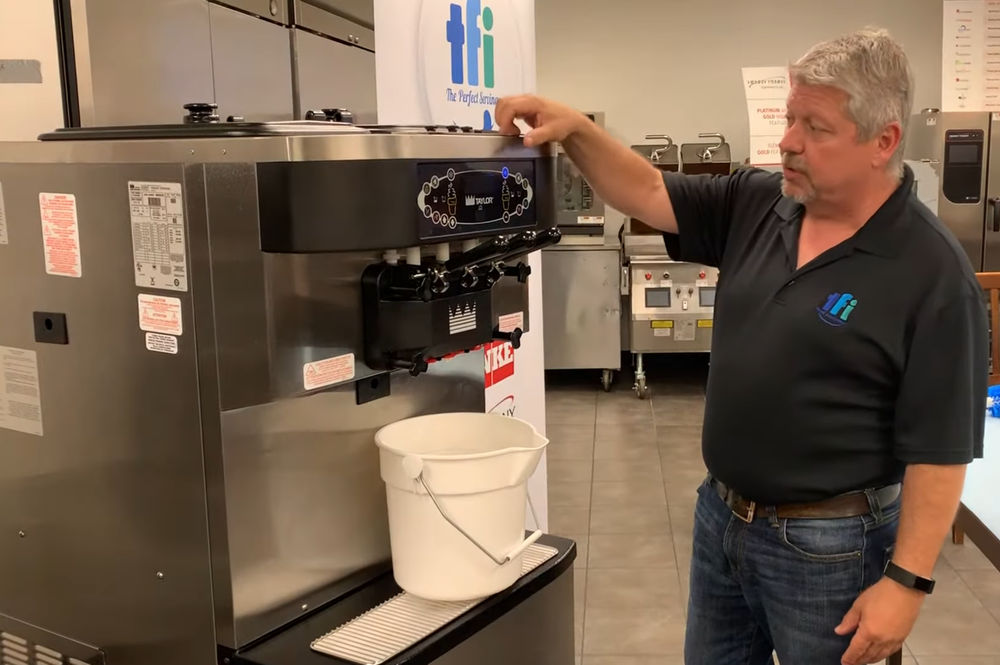
There is a fourth option worth naming: try before you decide. TFI runs chef demos at the Mississauga showroom where you can run your own mix through the machines you are considering and taste the difference between a gravity and a pressurised draw. That taste test settles the overrun question faster than any spec sheet. Our full comparison of renting, leasing, or buying a soft serve machine covers the numbers behind each route.
Soft serve machine service and parts across Ontario and Atlantic Canada
A soft serve machine that goes down in July is not an equipment problem, it is a revenue problem, and the response time on your service agreement is the spec that protects it. Frozen dessert has no workaround: when the machine stops, the category stops.
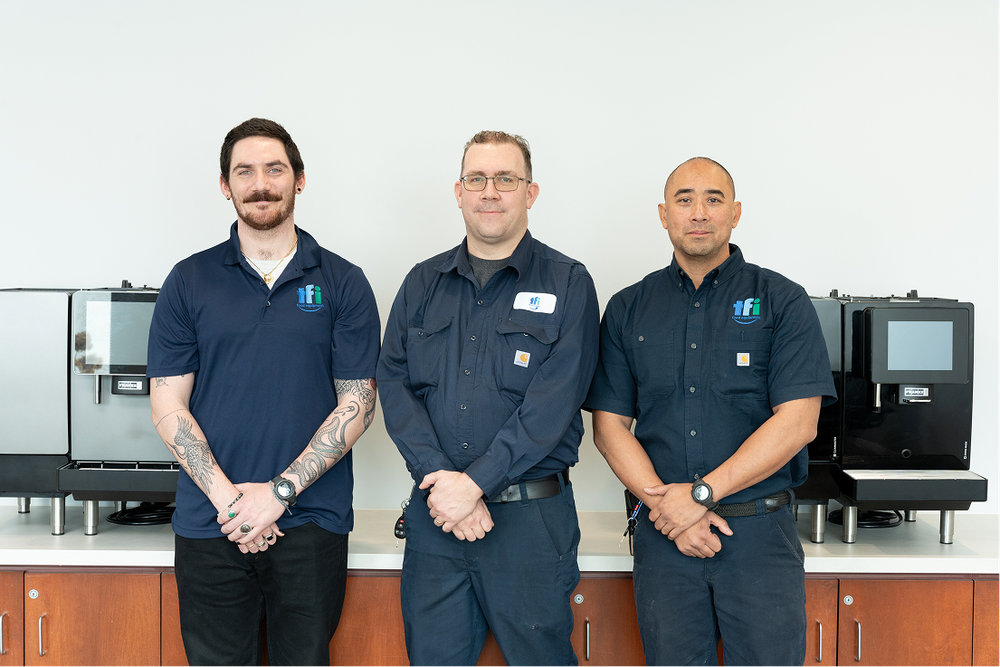
TFI has supplied and serviced Canadian foodservice equipment for more than 60 years from its Mississauga headquarters and Dartmouth showroom, covering Ontario, Nova Scotia, New Brunswick, Prince Edward Island, and Newfoundland and Labrador. Technicians are factory-trained, recertified annually, and work with OEM parts, which matters on a cold-side machine where a substituted O-ring becomes a food safety issue rather than an inconvenience.
Two things to line up before your first summer:
A planned maintenance schedule. TFI Total Care bundles scheduled maintenance, repairs, parts logistics, and training into one predictable monthly cost with no overtime surcharges, which is the difference between a budgeted line and a surprise invoice on a long weekend.
A parts channel you have already used once. Scraper blades and O-rings are consumables. Know where they come from before you need them at 6am.
If a machine is down now, TFI's service request form routes directly to the dispatch team. For everything else, commercial kitchen equipment repair covers the full cold-side and hot-side range.
Commercial soft serve ice cream machine FAQ
Who makes the best commercial soft serve ice cream machine?
There is no single best machine, only the best match for your peak-hour volume, product style, and footprint. Taylor is the standard in high-volume QSR frozen dessert and offers the widest range of freestanding and countertop models in Canada. Icetro competes strongly on compact, high-output countertop units for c-stores and cafés. Both are sold and serviced across Ontario and Atlantic Canada by TFI.
How much does it cost for a soft serve ice cream machine?
Prices range from entry-level imports to commercial freezers costing many times more, and the gap reflects refrigeration capacity, cylinder construction, parts availability, and service support rather than branding. Budget the installed cost, which includes delivery, electrical work, commissioning, training, and a maintenance plan, not just the machine. Request a quote from TFI for a figure based on your actual site and volume.
Are soft serve ice cream machines profitable?
Frozen dessert delivers among the highest gross margins in foodservice, at 70% to 80% gross profit per serving on Taylor programmes with typical payback in 6 to 18 months. Profitability depends on drawing enough volume to cover the machine's fixed cost, which is why sizing to your peak hour and planning for Canadian seasonality both matter.
What is the difference between a soft serve machine and a batch freezer?
A soft serve machine freezes and dispenses continuously at serving temperature for immediate consumption. A batch freezer produces hard ice cream or gelato in discrete batches that are then hardened and scooped. They serve different menus and are not interchangeable, as our comparison of soft serve machines and batch freezers explains.
How often does a commercial soft serve machine need to be cleaned?
Daily cleaning and sanitising of contact surfaces is standard, and full disassembly happens on a schedule set by your local public health unit. Machines with heat treatment pasteurise the mix in place overnight and can extend the interval between manual teardowns considerably, subject to model and local approval.
Can you rent a soft serve ice cream machine in Canada?
Yes. Rentals suit seasonal operations, events, and operators testing a frozen dessert programme before buying. TFI rents commercial soft serve equipment across its Ontario and Atlantic Canada service area with the same installation and service support as purchased machines.
What equipment do I need to open an ice cream shop?
Beyond the soft serve machine itself you will need cold storage for mix, a dipping cabinet if you are also selling hard ice cream, a three-compartment sink, dry storage for cones and toppings, and a point-of-sale setup. Our guide to what you need for an ice cream shop walks through the full list.
Get your commercial soft serve machine sized and quoted
The operators who make money on soft serve are the ones who specified against their busiest twenty minutes rather than their average day. Everything else, gravity or pump, countertop or floor, one flavour or eight, gets easier once that number is settled.
TFI has been sizing frozen dessert programmes for Canadian operators for more than six decades, from single-café counters to national QSR rollouts, and every commercial soft serve ice cream machine it sells is installed and serviced by the same team. Tell us your peak-hour volume and menu and we will model the machine, the installed cost, and the payback before you commit to anything. If you are still building the concept, our guide to adding a frozen dessert programme is the right starting point, and current Canadian ice cream trends will tell you what your customers are asking for.

Nicole Camposeo-Cheung is the Director of Marketing, People & Culture at TFI Food Equipment Solutions, Canada’s leading provider of premium commercial foodservice equipment. She combines her expertise in business management and fashion arts to foster a dynamic, innovative, and people-centric corporate culture. Passionate about empowering teams, building strong client relationships, and driving growth through creativity and collaboration, Nicole plays a key role in shaping TFI’s brand and workplace culture. She also shares her industry expertise and insights through the TFI blog, helping foodservice professionals stay informed about the latest trends, best practices, and innovations in commercial food equipment.
Add a comment
This will be publicly visible.
Your email address will not be published.
Your comment will be reviewed by an admin before it is published.


